[email protected] Exporting to 60+ Countries
0%

Narrow Aisle Pallet Racking can create more storage positions without expanding a warehouse’s footprint. But tighter aisles leave less room for turning, picking, and error. The right system depends on the building, pallet dimensions, handling equipment, and daily movement—not just the rack’s price.

MHI’s 2024 Annual Industry Report, produced with Deloitte, found that 55% of surveyed supply chain professionals planned to increase technology investment. That figure is not specific to racking, but it reflects pressure to make existing operations more productive. Aisle width matters. So do clear heights, floor condition, sprinkler arrangements, and the reach truck’s turning radius. Measure them before comparing sales listings.

John Paxton, MHI’s CEO, is a relevant industry voice on technology investment. I could not verify a direct Paxton quotation specifically about narrow-aisle racking, so this introduction does not invent one. The practical takeaway is simple: choose equipment around a documented operating need, and verify every specification with the supplier. Small mismatches can be costly. A rack that fits on paper may still leave awkward blind spots or slow pallet retrieval. The seven systems below offer a starting point for comparing layouts, capacity, and handling requirements.
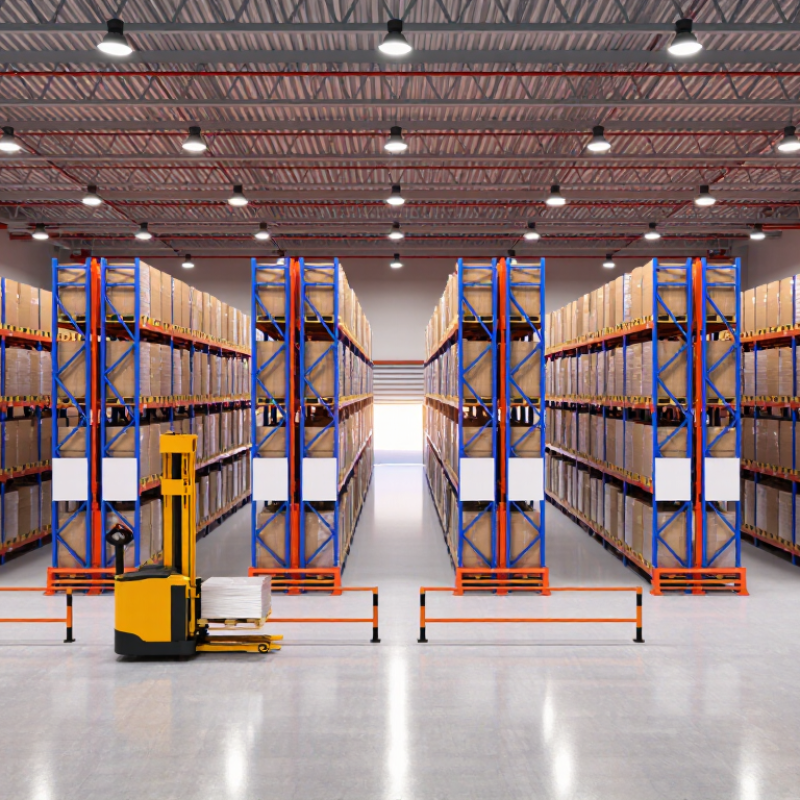
7 Best Narrow Aisle Pallet Racking Systems for Sale

What Narrow-Aisle Pallet Racking Is and How It Works

Narrow-aisle pallet racking is a selective storage layout that reduces the space between rack rows. Each pallet usually remains accessible without moving another load. More positions fit within the same building footprint. Unlike drive-in racking, it does not require a forklift to enter a storage lane. That distinction can make individual pallet retrieval simpler.

The system works with forklifts suited to tighter aisles, such as reach trucks or very-narrow-aisle trucks. The truck lifts a pallet from the aisle and places it on a beam level. Some operations use floor rails or wire guidance to help keep trucks aligned; the right method depends on the truck and warehouse layout. Operators need enough clearance for the truck, pallet, and load—not just the vehicle body.

The trade-off is real. Narrower aisles can increase storage density, but they may require specialized equipment and careful training. Rack height, beam capacity, pallet dimensions, floor flatness, and turning space all affect the design. A plan that looks efficient on paper may feel awkward once workers handle oversized or uneven loads. Measure actual pallets and equipment before choosing a system.

Seven Narrow-Aisle Racking Systems Available for Sale

Seven Narrow-Aisle Racking Systems Available for Sale

Choosing a system starts with pallet dimensions, load weight, and the reach truck’s turning radius. Seven options suit different operations:

Narrow-aisle selective racking offers direct access.
Very-narrow-aisle racking uses guided trucks.
Double-deep racks store pallets in pairs.
Push-back racks provide compact, last-in, first-out storage.
Pallet-flow racks support first-in, first-out rotation.
Drive-in racks store pallets several positions deep.
Mobile racks move on powered bases.

Each trades access, density, and equipment cost differently. MHI’s 2024 Annual Industry Report found that 55% of surveyed organizations planned to increase supply-chain technology investment. That signals growing interest in automation, but does not make automated storage the right choice for every warehouse.

Tips: Ask suppliers to price the full working system, not just the rack frames. Include installation, floor requirements, guards, and compatible handling equipment. Verify beam capacity against actual pallet loads. Small measurement errors matter.

Before purchasing, map the aisle width with the intended truck and load—not an empty pallet alone. Check turning clearance at aisle ends and confirm the floor can support rack and truck loads. A higher-density layout may reduce travel space or slow access to popular stock. That trade-off is easy to underestimate. Compare quotations using the same pallet size, load rating, and storage method, then request drawings showing clearances and operating limits.

How the Systems Differ in Storage Capacity and Pallet Access

Narrow-aisle racking saves floor space by reducing truck aisles, but each layout trades capacity against pallet access. Selective systems offer direct access to every pallet, usually with fewer positions per square foot. Double-deep and push-back racks add positions by storing pallets behind or above one another. Access becomes less immediate. Drive-in racks can use deep lanes for high-volume, similar products, while pallet-flow racks move stock forward by gravity. Mobile racks reduce fixed aisles, and very-narrow-aisle systems rely on specialized trucks and carefully controlled travel paths.

MHI’s 2024 Annual Industry Report found that 55% of surveyed organizations expected supply-chain technology investment to increase. That is not a racking-capacity benchmark, but it reinforces the need to compare measured results with operational needs. Count usable pallet positions, then check how many pallets remain directly reachable during a typical shift. WERC’s DC Measures benchmarking work also emphasizes operational measures such as inventory accuracy and order-picking performance; a denser layout is not a win if retrieval slows or errors rise. Measure clear aisle width, load dimensions, fire-protection clearance, and truck turning paths before selecting a design. Small details matter. One awkward end bay can erase part of the expected gain. I would treat any advertised capacity increase as a planning estimate, not a guarantee, until the actual building and handling equipment are assessed.

How to Choose a System for Your Warehouse and Equipment

Choosing among the 7 best narrow aisle pallet racking systems for sale starts with the warehouse, not the rack brochure. Measure clear aisle width, ceiling height, floor condition, and every column or doorway that could restrict movement. Measure twice. A tidy drawing can still hide a poor turning approach, so check the layout on the floor before ordering.

Your handling equipment sets important limits. Record the lift truck’s turning radius, mast height, load capacity, and required operating aisle. Then compare those figures with the rack depth, beam height, and clearance needed to place pallets safely. Small details matter. Aisles that are too narrow can slow work or increase contact risks; wider aisles may reduce storage density. Confirm proposed clearances with the equipment supplier and a qualified rack designer.

Storage needs help narrow the choices. Selective racks suit varied pallet access, while double-deep, drive-in, or push-back layouts can increase density but may limit access or require compatible equipment. Pallet-flow systems support product rotation, and mobile racks can make better use of floor space, though each adds design considerations. Not always. Consider pallet size, weight, inventory turnover, and future changes—not just the number of locations today. A careful site review is usually more useful than choosing the system with the highest advertised capacity.

Layout, Safety, and Maintenance Requirements

Narrow-aisle pallet racking can increase storage density, but the layout must match the equipment and the building. Measure the actual truck turning radius, pallet overhang, and load dimensions before setting aisle widths. Check floor condition and slab capacity with a qualified professional; a compact plan is not automatically a safe plan. Leave room for sprinkler coverage, lighting, and clear sightlines. Measure twice. Small gaps matter.

Protect the rack and the people working around it. Install column guards where trucks turn, anchor frames as specified, and post clear load limits at visible points. Keep pedestrian routes separate from lift-truck paths where practical. Train operators to report bent uprights, loose anchors, or displaced beams immediately. Do not straighten damaged parts by guesswork. Even a small impact can affect the frame’s capacity, though the damage may look minor.

Set a simple inspection routine: check heavily used aisles frequently, and arrange documented inspections by a competent person at appropriate intervals. Look for cracks, corrosion, missing locking clips, and changes in frame alignment. Keep the floor free of wrap and broken pallets; clutter can hide damage and create trip hazards. Record repairs and replacement parts. One trade-off deserves thought: tighter aisles save space, but they leave less room to correct handling errors. Review the layout after operations begin, since real traffic may differ from the plan.

FAQS

How do narrow-aisle racks increase storage capacity?

They reduce the space used by truck aisles, leaving more floor area for pallet positions. Measure actual usable positions; a brochure estimate is not a guarantee.

Which rack types offer direct access to every pallet?

Selective racks generally provide direct access to each pallet, but use more aisle space. Double-deep and push-back systems add positions while making some pallets less immediately reachable.

When are drive-in or pallet-flow racks useful?

Drive-in racks suit deep lanes holding large quantities of similar products. Pallet-flow racks move stock forward by gravity, supporting product rotation.

What should a warehouse measure before choosing a system?

Check clear aisle width, ceiling height, columns, doorways, floor condition, and slab capacity. Measure twice. Also check pallet dimensions, loads, sprinkler clearance, and turning paths.

How does lift-truck equipment affect rack selection?

Record the truck’s turning radius, mast height, load capacity, and required operating aisle. Compare them with rack depth and beam height, then confirm clearances with qualified professionals.

Can the narrowest aisle always provide the most useful layout?

No. Narrower aisles can increase density but may slow work and leave less room for handling errors. I might be overvaluing neat drawings here; busy shifts rarely stay neat.

What safety features and practices matter around pallet racks?

Use column guards where trucks turn, anchor frames as specified, and post visible load limits. Separate pedestrian routes from truck paths where practical, and report damaged parts promptly.

What should routine rack inspections look for?

Check for cracks, corrosion, missing locking clips, bent uprights, loose anchors, and misaligned frames. Keep floors clear of wrap and broken pallets, and record repairs. Small gaps matter.

Conclusion

Narrow Aisle Pallet Racking helps warehouses store more palletized goods within a limited floor area by reducing the space needed between rack rows. This overview introduces how the system works and compares seven configurations available for sale, explaining how each can affect storage capacity, access to individual pallets, and the flow of goods through a warehouse. The right option depends on the inventory being stored, the desired balance between density and selectivity, and the handling equipment available.

Before choosing a system, warehouse operators should consider aisle dimensions, building layout, pallet sizes, and how frequently goods need to be retrieved. Equipment must be compatible with the rack design and have enough room to operate safely. Careful planning should also account for clear travel paths, suitable protective measures, routine inspections, and ongoing maintenance. Matching these factors to daily operations can help create an efficient, accessible, and dependable storage layout.

Elowenancy

Elowenancy

Elowenancy is a highly experienced marketing professional dedicated to helping businesses communicate their value with clarity, confidence, and purpose. With a strong understanding of market trends, customer needs, and digital communication strategies, Elowenancy regularly contributes insightful......