Choosing the best Standard Pallet Racking in China requires more than comparing prices or catalog photographs. A reliable system must fit your warehouse, pallet dimensions, forklift routes, and daily loading rhythm. In a busy distribution center, a small beam mismatch can create repeated handling problems. Details matter.
This guide examines how experienced buyers evaluate Chinese pallet racking suppliers. It considers steel quality, upright thickness, beam capacity, surface treatment, connection design, and available accessories. It also looks at factory production controls, load testing, engineering documents, and installation support. These details help separate a dependable supplier from a trader with attractive images.
A practical assessment should begin with your real storage conditions. Measure clear heights, aisle widths, floor quality, and pallet weights. Then request drawings, rated capacities, material specifications, and reference projects. Supplier claims should be checked against test reports and consistent technical documentation. Independent inspection can add confidence before shipment.
Still, no rack is automatically “best” for every warehouse. A system designed for light cartons may fail under dense industrial loads. A low quotation may also hide weaker steel, limited support, or expensive adjustments later. This is where buyers sometimes misjudge the decision. The cheapest option is not always economical.
By comparing engineering quality, manufacturing experience, communication, and after-sales responsibility, you can make a more balanced choice. The goal is not simply to purchase racks from China. It is to build a safe, efficient, and adaptable storage system that performs reliably over time.
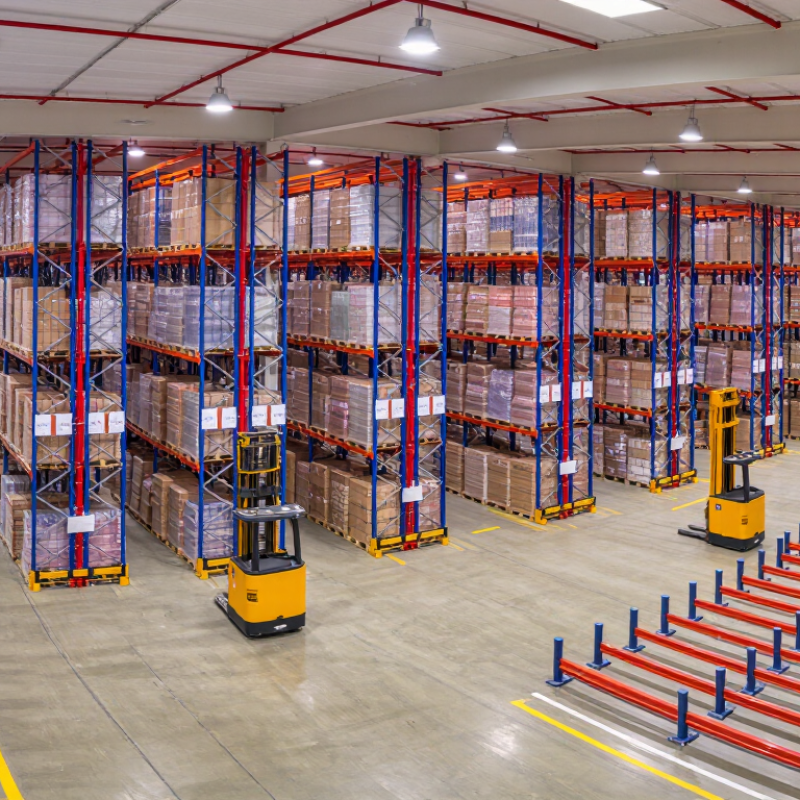
What Is the Best Standard Pallet Racking in China?
Definition and Purpose of Standard Pallet Racking
Standard pallet racking is a modular steel storage system for palletized goods. It usually includes upright frames, horizontal beams, connectors, and safety accessories. Forklifts place pallets on beam levels instead of storing them directly on the floor. In many Chinese warehouses, this layout supports clear aisles and quick stock access. Each bay can be adjusted to suit different pallet heights and load requirements. That flexibility makes it a practical choice for general warehousing.
Its main purpose is organized, vertical storage. A warehouse can use floor space more effectively while keeping product locations visible. Operators can inspect labels, remove individual pallets, and manage stock with fewer unnecessary movements. However, “standard” does not mean one design fits every building. Beam capacity, rack height, aisle width, floor strength, and forklift type must match actual conditions. A small mistake here can create daily handling problems.
From practical warehouse checks, damaged uprights and missing beam locks deserve immediate attention. Load signs should show the permitted capacity clearly. Installation should follow approved drawings, qualified engineering advice, and applicable local safety requirements. Regular inspections matter, even when the rack looks stable. I have seen layouts selected too quickly because they seemed inexpensive and familiar. That decision often limits future expansion. The best standard pallet racking is not simply the tallest or cheapest option. It is the system that safely supports the inventory, equipment, workers, and changing workflow.
What Is the Best Standard Pallet Racking in China?
Key Types of Standard Pallet Racking Available in China
Standard pallet racking in China includes selective, drive-in, double-deep, and push-back systems. Selective racking is the practical choice for warehouses handling many product types. Every pallet remains directly accessible. It also supports clear stock rotation and simpler forklift movement. However, it uses more aisle space than dense storage systems.
Drive-in racking stores pallets in deep lanes, making it suitable for large quantities of similar goods. Double-deep racking increases capacity, but it needs compatible forklifts and careful pallet placement. Push-back racking offers better selectivity than drive-in systems. Gravity moves pallets toward the front. That sounds efficient. Yet, damaged pallets or uneven loads can interrupt smooth operation. In real projects, the “best” system depends on pallet size, load weight, turnover, building height, and forklift reach.
Tips: Confirm upright and beam capacities with structural calculations, not visual estimates. Check floor strength, anchor positions, aisle widths, and local fire requirements before installation. Use safety pins, row spacers, and upright guards where impact risks exist. Inspect beams and frames regularly. One weak connector matters. A warehouse may appear stable while hidden overloading develops gradually. I would also leave room for future product changes, because a dense design can become inconvenient when inventory patterns shift.
| Racking Type | Storage Principle | Typical Storage Density | Pallet Selectivity | Stock Rotation | Typical Forklift Requirement | Suitable Applications | Main Advantages | Key Limitations |
|---|---|---|---|---|---|---|---|---|
| Selective Pallet Racking | Each pallet position is directly accessible from an aisle. | Low to medium; commonly about 30%–50% floor-space utilization, depending on aisle width and layout. | 100% access to every pallet position. | FIFO or LIFO, depending on warehouse procedures. | Reach truck, counterbalance forklift, or narrow-aisle forklift. | General warehouses, spare parts, finished goods, and mixed-SKU inventory. | Flexible beam levels, easy stock control, simple installation, and strong adaptability to different pallet sizes. | Requires more aisle space and generally provides lower density than compact storage systems. |
| Double-Deep Pallet Racking | Two pallet rows are stored one behind the other, reducing the number of access aisles. | Medium to high; usually higher density than selective racking, with reduced direct accessibility. | Approximately 50% access, because the rear pallet must normally be removed before the front pallet. | Primarily LIFO; FIFO is limited unless carefully managed. | Double-deep reach truck with suitable telescopic forks or a specialized attachment. | Warehouses with several pallets per SKU and relatively stable inventory turnover. | Improves storage density while retaining more flexibility than drive-in systems. | Reduced selectivity, more complex handling, and possible access restrictions for rear pallets. |
| Drive-In Pallet Racking | Forklifts enter storage lanes to place pallets on rails, creating compact block storage. | High; often about 60%–80% floor-space utilization, depending on lane depth and building conditions. | Low; access is generally by lane rather than by individual pallet. | Usually LIFO; drive-through configurations can support FIFO. | Counterbalance or reach forklift with suitable dimensions and operating clearance. | Large quantities of homogeneous products, cold storage, and low- to medium-turnover inventory. | Excellent space utilization and reduced aisle requirements. | Lower selectivity, slower access, higher risk of rack impact, and stricter pallet compatibility requirements. |
| Push-Back Pallet Racking | Pallets are loaded from the front and pushed backward on inclined rails or carts. | Medium to high; commonly higher density than selective racking with fewer aisles. | One accessible loading face per lane; individual pallet access is limited. | Generally LIFO. | Reach truck or counterbalance forklift, depending on rack height and load capacity. | Multiple pallets per SKU, medium-turnover products, and facilities requiring compact storage with front access. | Good space utilization, fast loading and unloading from one aisle, and no forklift travel inside storage lanes. | Not ideal for strict FIFO operations; lane depth and pallet condition must be controlled. |
| Pallet Flow Racking | Pallets enter from the loading side and move by gravity on rollers toward the picking side. | High; storage density is improved by reducing the number of operating aisles. | One pallet face per lane, with continuous access to the leading pallet. | Designed primarily for FIFO. | Reach truck, counterbalance forklift, or other forklift suitable for loading from the replenishment aisle. | Food and beverage, pharmaceuticals, perishable goods, and products with date or batch control requirements. | Supports reliable FIFO rotation, separates loading and picking activities, and improves picking productivity. | Higher initial cost, more maintenance than static systems, and stricter requirements for pallet quality and load uniformity. |
| Very Narrow Aisle (VNA) Pallet Racking | Selective rack configuration installed in narrow aisles to maximize building height and floor utilization. | Medium to high, depending on clear height, aisle width, and warehouse geometry. | 100% access to every pallet position. | FIFO or LIFO, depending on operating procedures. | Turret truck or articulated narrow-aisle forklift, generally guided within the aisle. | High-bay warehouses with many SKUs and a need for direct pallet access. | Combines high selectivity with better space utilization and greater vertical storage potential. | Higher equipment cost, tighter installation tolerances, and greater dependence on floor flatness and aisle guidance. |
| Mobile Pallet Racking | Rack rows are mounted on powered or manually operated bases that open only the required aisle. | Very high; can significantly reduce fixed aisle space while maintaining access to stored rows. | High, with access to the selected row when an aisle is opened. | FIFO or LIFO, depending on warehouse procedures. | Forklift appropriate for the rack height and load capacity; floor-mounted guide and safety systems are required. | Cold stores, archives, high-value inventory, and facilities where space is limited. | High space utilization and improved pallet access compared with fixed compact systems. | Higher investment, slower access when another row is open, and greater dependence on floor construction and electrical controls. |
| Radio Shuttle Pallet Racking | A battery-powered shuttle moves pallets within deep storage lanes while forklifts operate mainly at the lane entrance. | High to very high; suitable for deep-lane compact storage. | Lane-based access; better control than conventional drive-in but not full individual access. | FIFO or LIFO, depending on lane configuration and shuttle operating method. | Forklift for loading and unloading, plus a compatible shuttle system. | High-volume goods, cold storage, repetitive pallet handling, and warehouses with many pallets per SKU. | Reduces forklift travel inside lanes, improves safety and throughput, and supports deep storage. | Higher system cost, dependence on batteries and controls, and reduced suitability for highly mixed SKU inventories. |
| Typical performance ranges are indicative planning values rather than guaranteed specifications. Final selection should be based on pallet dimensions and weight, SKU quantity, turnover rate, FIFO/LIFO requirements, forklift type, building height, seismic conditions, floor capacity, fire-protection requirements, and applicable local safety standards. | ||||||||
What Is the Best Standard Pallet Racking in China?
Materials, Design Standards, and Load Capacity
Standard pallet racking in China should begin with verified steel, not a low purchase price. Cold-formed structural steel is common because it provides strength with efficient material use. Uprights need consistent thickness, accurate holes, and protected surfaces. Powder coating helps resist warehouse wear, but it cannot repair poor steel quality. Request mill certificates, coating details, and weld inspection records. Small documents matter.
A sound design reflects pallet dimensions, forklift clearance, floor strength, and seismic conditions. Qualified engineers may reference Chinese requirements, EN 15629, FEM guidance, or other applicable standards. The selected framework must match the installation site. Mixing standards casually creates confusion. It happens more often than expected. Upright spacing, beam connections, base plates, guards, and back bracing should be checked as one system. A drawing can look complete and still miss a practical hazard.
Load capacity is not a single number printed on a beam. It depends on beam span, pallet position, frame height, bay arrangement, and load distribution. Safe working loads should come from calculations and testing, with clear labels onsite. Never assume every bay carries the same weight. Damaged frames need isolation and assessment before reuse. In real warehouses, uneven pallets and rushed forklift movements change the risk picture. Independent inspections should record bent uprights, loose anchors, missing clips, and overloaded beams. A perfect specification still needs careful daily operation.
Choosing standard pallet racking in China requires more than comparing prices. Start with the manufacturer’s engineering evidence. Request load calculations, upright profiles, beam test results, and drawings showing every connection. A reliable supplier should explain steel grade, surface treatment, tolerances, and inspection records in clear language.
The MHI 2024 Annual Industry Report found that 55% of supply chain leaders increased technology and innovation investment. This matters because modern warehouses need safer, more measurable storage systems. Ask whether the factory uses barcode traceability, calibrated testing equipment, and documented quality checks. Visit the production line if possible. Look closely at weld consistency, coating coverage, and beam-lock engagement. Small defects become expensive under repeated loading.
Experience is visible in installation details. Ask for references involving similar pallet weights, aisle widths, seismic conditions, and forklift traffic. Confirm whether the quoted capacity includes safety factors and uniform loading assumptions. EN 15635 offers useful guidance for inspection and rack safety, even when your project follows another local standard. Factory certificates alone are not enough. I would also check packaging, spare-part availability, installation training, and response times after delivery. One weakness remains easy to miss: some suppliers present excellent samples but inconsistent batch production. A pre-shipment inspection can expose that gap. The cheapest offer may still be the costliest choice.
A practical procurement scorecard should prioritize structural safety, verified load capacity, manufacturing consistency, corrosion protection, and technical documentation. The percentages below are recommended evaluation weights for comparing suppliers without relying on company or brand names.
Safety and load verification receive the highest weighting because pallet racking must be designed, tested, installed, and operated according to applicable requirements such as EN 15512, EN 15629, and EN 15635. Actual purchasing decisions should also confirm engineering calculations, material certificates, inspection records, and site-specific load conditions.
Choosing standard pallet racking in China starts with the warehouse, not the catalog. Measure clear height, aisle width, floor strength, pallet dimensions, and forklift turning space. A system for light cartons may fail under dense, high-bay loads. Check beam capacity, upright thickness, bracing, and corrosion protection. Ask for load calculations, material certificates, and a clear drawing. In China, the design should match applicable national standards and local project requirements.
Installation needs trained workers and careful site control. Inspect the concrete floor before drilling. Mark every upright position, then install frames, beams, anchors, and safety pins according to the approved drawing. Keep aisles clear during assembly. A small alignment error can spread across an entire row. Do not accept a rack because it looks straight. Measure plumbness, anchor depth, beam engagement, and bay spacing after installation.
Safety depends on daily discipline. Fix load plaques where forklift operators can see them. Protect corner uprights near busy traffic lanes. Use back stops or mesh panels when pallets could fall into work areas. Train operators to enter slowly and avoid striking frames. Inspect damaged members immediately, even when the damage seems minor. A bent upright is not cosmetic. It may reduce stability without warning. Review the layout after several weeks of operation. Real traffic often differs from the original plan, and that difference deserves attention.
Common options include selective, drive-in, double-deep, and push-back racking systems.
Selective racking provides direct access to every pallet. It supports clearer stock rotation and simpler forklift movement.
Drive-in racking suits large quantities of similar goods. Deep storage lanes improve capacity but reduce pallet selectivity.
Double-deep racking stores pallets farther behind the front position. It needs compatible forklifts and careful pallet placement.
Push-back racking improves selectivity compared with drive-in storage. Gravity moves pallets forward, but damaged pallets can interrupt movement.
Check pallet size, load weight, turnover, building height, aisle width, and forklift reach. The catalog is not enough.
Measure floor strength, clear height, aisle widths, and turning space. Confirm beam and upright capacities through structural calculations.
Install load plaques, safety pins, upright guards, and suitable back protection. Train operators to move slowly near frames.
Check plumbness, anchor depth, beam engagement, and bay spacing. A rack can look straight while hiding a serious alignment problem.
Yes. Product patterns may shift, making dense storage inconvenient. I would leave some flexibility instead of filling every space.
Standard Pallet Racking is a practical warehouse storage system designed to organize palletized goods, improve space utilization, and provide convenient access for loading and retrieval. In China, common options include selective pallet racking, drive-in racking, double-deep racking, and high-bay systems. Each type suits different inventory volumes, turnover rates, warehouse layouts, and access requirements. The best choice should balance storage density, operational efficiency, flexibility, and budget.
When evaluating Chinese pallet racking manufacturers, consider the quality of steel materials, structural design, load capacity, manufacturing precision, and compliance with relevant safety standards. Buyers should request clear technical specifications, load calculations, surface-treatment details, and quality documentation. Proper selection must also account for aisle width, forklift compatibility, floor conditions, and future expansion. Professional installation, regular inspections, correct pallet placement, visible load-limit signs, and employee training are essential for maintaining a safe and reliable storage environment.