Choosing a supplier for Wide Aisle Pallet Racking in China is more than a price comparison. It affects storage capacity, forklift movement, and daily safety. The details matter. Beam capacity, upright dimensions, bracing, and floor anchoring must suit the actual warehouse. Buyers should provide pallet sizes, maximum loads, forklift types, aisle widths, and site drawings before requesting a quotation. Specific information makes proposals easier to compare.
This guide explores how to assess Chinese suppliers, from engineering support and manufacturing experience to quality records and after-sales service. Look for clear layout drawings, material specifications, load calculations, and documented inspection processes. Ask how the supplier handles installation guidance, replacement parts, and changes to the design. A polished catalog is not proof. Even a detailed quotation can overlook an awkward column or uneven floor, so site conditions deserve careful review. Not every low offer is poor, and not every expensive one is better. Compare the evidence, clarify assumptions, and check that the proposed system fits your pallets and handling equipment. These practical checks can help buyers identify a capable supplier without treating any single claim as a guarantee.
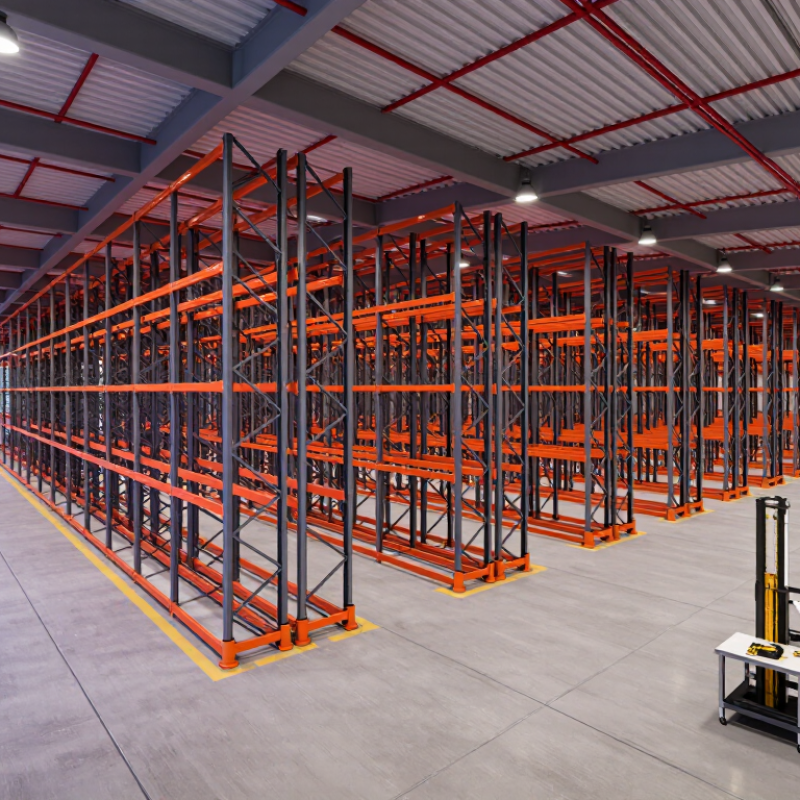
Wide aisle pallet racking is a storage system arranged in rows with generous aisles between them. The space lets counterbalance forklifts turn, approach rack faces, and place or retrieve pallets directly. Each pallet position is usually supported by horizontal beams fixed to upright frames. Workers can access individual loads without moving neighboring pallets.
That access matters. It helps warehouses handling mixed products or frequent order picking. A forklift’s turning radius, pallet size, load overhang, and lifting height all affect the aisle width needed. Measure twice. A layout that looks roomy on paper may feel tight once a loaded forklift turns near a rack end.
Compared with narrow-aisle systems, wide aisles usually use more floor area for vehicle movement. In return, they can work with common forklift types and offer straightforward access. Rack capacity still depends on beam levels, frame ratings, floor conditions, and the weight of each load. Ask suppliers for drawings and load data, then check those details against actual operating equipment. I have seen a tidy plan overlook pallet overhang; small misses can reduce clearance.
Wide aisle pallet racking suits warehouses that need direct access to many product lines. Each pallet position stays reachable without moving another load. This helps operations with mixed stock, frequent picking, and changing order profiles. It can also simplify cycle counts. But it uses more floor space than dense storage systems.
A practical layout starts with the forklift, not a catalogue drawing. Measure its turning radius, pallet dimensions, load overhang, and required operating clearance. Then test aisle widths against real travel paths and pick locations. Measure twice. A wider aisle may improve maneuverability, yet reduce storage capacity; the right balance depends on throughput and available building space. Leave room for staging and pedestrian routes, too.
Investment plans matter as operations change. MHI’s 2024 Annual Industry Report found that 55% of surveyed organizations planned to increase supply-chain technology investment over the following three to five years. That figure does not prescribe a rack layout, but it supports planning for future systems and workflow changes. Wide aisles can accommodate varied handling equipment and straightforward access, though flexibility has limits. Recheck the design when pallet sizes or equipment change. Real warehouses rarely stay tidy for long.
Typical aisle-width planning ranges vary by truck type. The chart plots each range’s midpoint as an indicative comparison—not a fixed specification. Confirm requirements with the truck manufacturer and your load dimensions.
Wide-aisle pallet racking is generally suited to conventional counterbalance trucks and straightforward access. Reach trucks can work in narrower aisles, while very narrow aisle systems require specialized equipment and careful layout planning.
A wide-aisle rack supplier should explain how its design fits your actual loads, forklifts, and floor conditions. Ask for layout drawings, beam-load calculations, upright specifications, and clear load signs. Compare the steel grades and component dimensions, not just the quoted price. ANSI MH16.1, the industry specification for steel storage racks, provides a useful reference for design and testing requirements. A capable supplier should explain how its products meet the relevant requirements and provide supporting documents.
Check how the factory controls welding, coating, dimensional checks, and packing. Request inspection records and photos of similar installations; then verify references with questions about delivery delays and replacement parts. MHI’s 2024 Annual Industry Report says 55% of surveyed supply-chain professionals planned to increase technology investment. That figure is not a rack-quality score, but it reinforces the value of asking suppliers about inventory records, configuration data, and after-sales support.
A neat quote proves little. Ask who checks the final drawings, and what happens if the site measurements change. I would still want to inspect a sample joint: paperwork can look complete while a small fit issue remains.
Wide-aisle pallet racking quotes are comparable only when the design brief is identical. Specify bay width, rack height, beam levels, pallet dimensions, load per level, and expected forklift clearance. Ask each supplier for drawings and load calculations, not just a price per bay. Check steel thickness, finish, connector details, and whether the proposed layout leaves room for turning and future changes. MHI’s 2024 Annual Industry Report found that 55% of surveyed companies planned to increase supply-chain technology investment. That is not a racking-price benchmark, but it signals why buyers should assess whether a supplier can support evolving warehouse operations.
Compare the full service package: site measurement, installation, handover documents, staff guidance, and post-installation inspections. Confirm lead times, warranty exclusions, replacement-part availability, and who handles changes after the first layout. Request itemized prices for racks, protection, delivery, installation, and optional services. A low initial quote may omit important work. Small gaps matter. Even experienced buyers can overlook floor conditions or future pallet changes; revisit assumptions before signing.
Tips: Send every supplier the same pallet and load data, plus a simple floor plan. Compare total installed cost and delivery dates in one table. Ask for two customer references from similar warehouse projects, and get design responsibilities in writing. Then check whether the proposed clearances match the actual forklift and pallet sizes on site.
Before ordering wide aisle pallet racking, check whether the supplier can explain your actual storage needs. Share pallet dimensions, loaded weights, forklift type, aisle width, and building height. Ask for a layout drawing and a written load schedule. The beam capacity should match the specified upright frame and connection details. Numbers without context are not enough.
Request traceable material and inspection records, plus test reports relevant to the proposed system. Confirm how welds, coatings, and finished components are checked. Ask to see production areas and packed goods, or arrange an independent inspection before shipment. A visit helps, but it may show only one shift. A polished brochure is not proof.
Speak with recent buyers who installed similar racks, and ask about delivery accuracy, installation support, and replacement parts. Compare the quotation against the drawing, including anchors, guards, and freight terms. Get any changes in writing. Small omissions add up. If a supplier avoids technical questions or promises a capacity without reviewing your pallet and layout details, pause. I would rather delay an order than discover a mismatch after the racks arrive.
It stores pallets on beams fixed to upright frames, with generous aisles for forklifts. Workers can reach individual loads directly. No shifting nearby pallets.
They suit common counterbalance forklifts and provide straightforward access to mixed products. They can also support frequent order picking. The trade-off is more floor space for vehicle movement.
Consider the forklift’s turning radius, pallet size, load overhang, and lifting height. Check these against the actual rack layout. Measure twice.
Capacity depends on beam levels, frame ratings, floor conditions, and load weight. Ask for load data and compare it with real operating conditions. Paper plans can miss details.
Give each supplier the same bay dimensions, rack height, beam levels, pallet sizes, and load weights. Request drawings and load calculations, not only a price per bay.
Request itemized prices for racks, protection, delivery, installation, and optional services. Compare total installed cost and delivery dates. A low initial quote may leave gaps.
Check site measurement, installation, handover documents, staff guidance, and post-installation inspections. Confirm lead times, warranty exclusions, and replacement-part availability.
Leave room for turning and possible layout changes. Review pallet assumptions and floor conditions before signing. Even a careful plan can miss overhang.
Wide Aisle Pallet Racking is a practical storage system that leaves ample space between rack rows for forklift access, making it suitable for warehouses that prioritize straightforward handling and flexible access to individual pallets. Its layout can be adapted to different building sizes, inventory types, equipment, and order-picking workflows, so choosing the right configuration begins with understanding daily operations and future storage needs.
When evaluating Chinese suppliers, compare rack specifications, materials, load capacities, customization options, installation support, communication, delivery terms, and total costs rather than focusing on price alone. Ask for clear product documentation and itemized quotations, and check that proposed designs match your warehouse requirements. Before placing an order, verify the supplier’s business details, relevant production experience, quality-control processes, references, and sample or inspection options. Careful comparison and verification can help reduce uncertainty and lead to a safer, more suitable investment.