Choosing among China’s top Pallet Racking manufacturers requires more than comparing prices on a supplier website. A warehouse manager must examine load capacity, steel thickness, welding quality, surface treatment, delivery control, and after-sales support. A rack may look strong under bright showroom lights. Its real test begins when pallets are loaded daily, forklifts turn sharply, and small installation errors accumulate.
Dr. James A. Tompkins, a widely cited warehousing expert, has said, “The warehouse is no longer a cost center; it is a strategic asset.” That principle matters when selecting a Chinese manufacturer. The right supplier should understand your product weight, pallet dimensions, aisle width, ceiling height, and future expansion plans. They should provide engineering drawings, clear load data, inspection records, and practical installation guidance. Ask for factory evidence, not only polished brochures. Visit the production line when possible. Speak with existing customers.
Price still matters. It should not lead the decision alone. A cheaper frame may create higher maintenance costs, slower operations, or avoidable safety concerns. Certification claims also require careful verification. Not every attractive label proves consistent manufacturing quality. This is where many buyers become too confident.
A reliable evaluation should compare samples, tolerances, packaging, lead times, and warranty terms. It should also consider communication during design changes. No manufacturer is perfect. Even experienced buyers can overlook floor conditions or changing inventory. This guide explains how to assess China’s leading Pallet Racking manufacturers with practical questions, technical criteria, and a more cautious purchasing mindset.
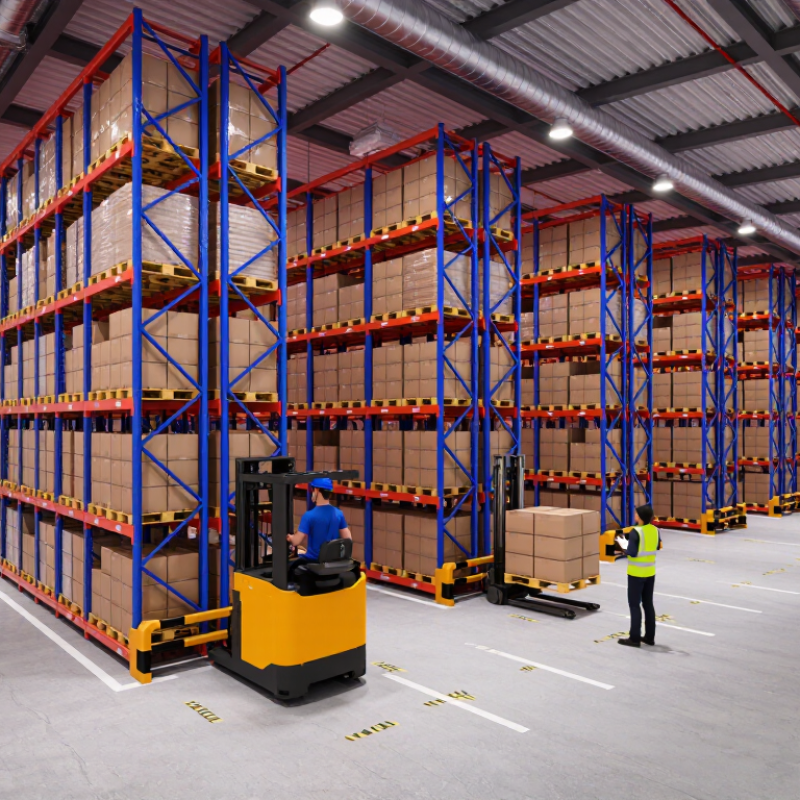
A top pallet racking manufacturer in China combines practical experience with controlled engineering. Its team should understand warehouse traffic, storage density, forklift movement, and changing load patterns. Real project experience matters more than polished photographs. Ask for drawings, load calculations, and examples of similar warehouses. Details matter.
Professional manufacturers test upright frames, beams, connectors, and protective finishes before shipment. They should explain steel grades, welding procedures, coating thickness, and inspection points in clear language. A reliable factory keeps material records and checks dimensions during production. Ask for evidence. Independent testing and certificates for the target market can strengthen confidence, but documents must match the actual product.
Communication also defines quality. Strong suppliers confirm pallet sizes, beam levels, aisle widths, floor conditions, and installation limits before quoting. They identify risks instead of promising everything. A 2.5-ton pallet placed on a high beam needs more than a standard design. It requires verified capacity, stable connections, and suitable forklift clearance. After-sales support should include installation guidance, replacement parts, inspection advice, and a realistic response time.
No factory is flawless. A manufacturer that admits limitations may be safer than one making perfect claims. Buyers should compare samples, factory procedures, delivery records, and technical responses. Sometimes the lowest quotation hides thinner steel, weaker protection, or unclear tolerances. That lesson is easy to learn late. A top manufacturer earns trust through traceable work, measurable performance, and honest discussion before production begins.
China Top Pallet Racking Manufacturers How to Choose?
Key Pallet Racking Systems and Their Warehouse Applications
Choosing pallet racking starts with warehouse behavior, not catalog photos. Selective racking suits mixed products, frequent picking, and direct access to every pallet. It uses clear aisles and adjustable beam levels. Drive-in racking stores many pallets with fewer aisles. It works well for uniform goods moving by batch. Push-back systems support higher density while allowing several stock-keeping units in one lane. Pallet flow racking uses rollers and gravity for first-in, first-out movement. It fits chilled storage and products with expiration dates. Cantilever racking serves long materials, such as pipes, timber, and panels.
The right system depends on pallet dimensions, load weight, turnover, forklift type, and ceiling height. Measure real operating conditions. A drawing may hide turning problems. Leave enough clearance around columns, sprinklers, doors, and pedestrian routes. For example, a narrow aisle can increase storage capacity, but it may slow older forklifts. That trade-off matters. In my experience, warehouses often overestimate future capacity and underestimate daily handling time.
When comparing manufacturers in China, request load calculations, steel specifications, surface treatment details, and installation procedures. Ask for testing records and traceable quality inspections. Confirm whether the design reflects local building conditions and site risks. Check beam connectors, upright protection, base plates, and anchoring details. Small components matter. Visit a completed warehouse if possible, and observe damaged frames, uneven floors, and inspection labels. A reliable supplier should explain maintenance intervals clearly, accept design questions, and revise drawings when site measurements prove wrong.
Choosing a pallet racking manufacturer in China requires more than comparing prices. Product quality begins with traceable steel, accurate forming, and controlled welding. Ask for material certificates, thickness records, and batch numbers. Check upright posts for straightness, clean perforations, and consistent dimensions. Beam connectors should fit firmly without forced alignment. Small defects matter. Look beyond the showroom.
Safety assessment should reflect real warehouse conditions, including load weights, aisle widths, forklift movements, and floor strength. Require signed load tables, structural calculations, and installation drawings prepared by qualified engineers. Confirm beam locking pins, column protectors, floor anchors, and bracing details. Request test reports from independent laboratories when available. Standards may differ by market, so verify local building and fire requirements. Never accept a generic capacity label.
Manufacturing standards become visible through process discipline. A dependable factory should control incoming steel, welding parameters, coating thickness, dimensional inspection, and final packaging. Request verifiable ISO 9001 records, internal inspection forms, corrective-action reports, and production photographs. A factory audit should include storage areas, calibration labels, and rejected-part handling. Do not judge capability from polished samples alone. A rushed audit can miss recurring defects. Include independent pre-shipment inspection, even when the supplier seems experienced. Review how complaints are logged and resolved; reliability is proven after delivery, not during a sales presentation.
| Assessment Dimension | What Good Practice Looks Like | Objective Evidence to Request | Warning Signs | Suggested Weight |
|---|---|---|---|---|
| Design Standard Compliance | The rack design is based on a recognized storage-racking standard, such as EN 15512, and includes the load cases, stability checks, connection design, and permissible deflection requirements applicable to the project. | Design calculations, engineering drawings, declared design standard, load combinations, and a project-specific design review. | Only generic drawings are supplied, or the manufacturer gives load figures without identifying the design standard or assumptions. | 15% |
| Material Traceability | Structural steel grades, thicknesses, coatings, and batch information are controlled and traceable from incoming material through production and shipment. | Mill test certificates, purchase records, heat or batch numbers, incoming inspection records, and material identification procedures. | Material certificates are missing, unrelated to the supplied batch, or show substitutions without engineering approval. | 10% |
| Manufacturing Tolerances | Roll-formed and welded components are manufactured within documented dimensional tolerances so that frames, beams, locking devices, and accessories fit correctly during installation. | Inspection plans, calibrated measuring equipment, first-article inspection reports, dimensional records, and nonconformance reports. | Frequent field modifications, misaligned holes, inconsistent beam levels, or visible distortion after assembly. | 10% |
| Welding Quality | Welding procedures, operator qualifications, inspection methods, and repair controls are documented in accordance with the required application and welding quality level. | Welding procedure specifications, welder qualification records, visual inspection reports, and an ISO 3834-based quality system where applicable. | Incomplete welds, excessive spatter, visible cracks, undercut, porosity, or no documented welding inspection process. | 10% |
| Load Capacity Verification | Beam, upright, connection, baseplate, and floor-interface capacities are calculated for the actual bay configuration, pallet dimensions, load weights, and operating conditions. | Signed load calculations, load plaques, pallet and beam configuration drawings, and test reports where testing is required by the design. | A single capacity figure is used for every configuration, or the stated capacity excludes pallet impact and eccentric loading assumptions. | 15% |
| Safety Components | The system includes suitable locking pins, baseplates, anchors, row spacers, guards, back stops, frame protection, and other accessories required by the risk assessment and layout. | Component specifications, installation drawings, anchor data, accessory test information, and a site-specific risk assessment. | Missing safety pins, undersized anchors, unprotected end frames, or accessories added without checking their effect on the design. | 10% |
| Surface Protection and Corrosion Resistance | The coating system is selected for the indoor or outdoor environment, and surface preparation, coating thickness, curing, and adhesion are controlled. | Coating specification, coating-thickness readings, surface-preparation records, adhesion or salt-spray results when relevant, and visual inspection records. | Uneven coating, exposed bare steel, poor edge coverage, premature rust, or no defined environmental service category. | 10% |
| Factory Quality Management | A documented quality management system controls purchasing, production, inspection, calibration, corrective action, document control, and final release. | Current ISO 9001 certificate issued by an accredited certification body, internal audit records, inspection plans, and corrective-action history. | A certificate cannot be verified, the certificate scope excludes the supplied product, or inspection relies only on informal checks. | 10% |
| Factory and Process Capability | The facility has suitable roll-forming, cutting, punching, welding, coating, inspection, storage, and packaging capabilities for the proposed order volume. | A factory audit, equipment list, production-flow photographs or video, capacity plan, maintenance records, and sample inspection. | Production is heavily subcontracted without disclosure, equipment is poorly maintained, or the factory cannot demonstrate repeatable production. | 5% |
| Installation, Inspection, and After-Sales Support | The supplier provides installation instructions, load notices, maintenance guidance, replacement-part support, and procedures consistent with EN 15635 or the applicable local requirements. | Installation manual, inspection checklist, handover documents, spare-parts policy, response times, and evidence of trained installation personnel. | No handover documentation, unclear responsibility for inspections, or inability to supply matching replacement components. | 5% |
| Total Evaluation Weight | 100% | |||
Choosing among China’s top pallet racking manufacturers requires more than comparing catalog prices. A reliable comparison starts with customization. Ask whether the supplier reviews pallet dimensions, beam spans, aisle widths, and floor conditions. Request stamped drawings, load calculations, and physical samples of connectors or uprights. Production capability matters too. Visit the factory, or arrange a documented remote audit. Check welding consistency, coating thickness, cutting accuracy, and inspection records. Ask how many production lines can run simultaneously. Delivery promises mean little without capacity evidence.
Tips: Compare three quotations using the same technical specification. Record steel grades, load ratings, tolerances, packaging, and delivery dates. Ask for clear explanations, not vague assurances. Small details matter.
Pricing should be measured as installed cost, not unit price. Include engineering, tooling, packaging, freight, installation support, spare parts, and future adjustments. Clarify payment stages and acceptance checks. Ask for test reports and references from warehouses using similar loads. A cheap rack may require extra bracing, longer installation, or early replacement. That risk is easy to overlook. I would also challenge my own assumptions: the largest factory is not automatically the best fit. A smaller, well-documented producer may communicate faster and control custom details better. Choose evidence over impressive brochures.
When verifying a pallet racking supplier, begin with the factory, not the brochure. Request a live video tour or an independent audit. Check production equipment, welding areas, coating lines, and finished stock. Ask for batch records showing steel grade, thickness, and material traceability. A reliable supplier should explain load calculations clearly. They should also provide drawings stamped by qualified engineers. Do not accept attractive prices without checking manufacturing capacity.
Certifications need careful verification. Request the certificate number, issuing body, scope, and expiry date. Then confirm the details through the issuer’s official channel. ISO 9001 can indicate controlled processes, but it does not prove every rack is safe. Ask for test reports, inspection records, and standards relevant to your installation country. Load testing matters. So does installation quality. A certificate copied into a PDF proves very little.
After-sales support should be written into the contract. Confirm warranty coverage, response times, spare-part availability, inspection services, and installation training. Ask who handles damaged beams after delivery. Get a clear escalation contact, not only a general email address. Speak with recent customers, if possible, and request evidence of completed projects. A polished showroom can mislead. One weakness is easy to miss: suppliers may promise fast support but lack local parts. This is where many buyers need more skepticism. Even experienced purchasers sometimes focus too heavily on unit price and overlook future inspection costs.
A reliable manufacturer combines practical warehouse experience with controlled engineering. Ask for drawings, load calculations, and similar project examples. Polished photos are not enough.
Provide pallet dimensions, weights, forklift type, aisle widths, ceiling height, and floor conditions. Mention sprinkler locations and pedestrian routes. Missing details can distort the design.
Selective racking provides direct access to every pallet. It suits mixed inventory and frequent picking. Adjustable beam levels add flexibility.
Drive-in racking suits uniform goods moved in batches. It uses fewer aisles and increases density. Product rotation becomes less flexible.
Request a live factory tour or independent audit. Check welding areas, coating lines, equipment, and finished stock. Ask for batch records and material traceability.
Confirm the certificate number, issuer, scope, and expiry date. Use the issuer’s official verification channel. A copied PDF proves very little.
Review steel grade, thickness, welding procedures, coating thickness, connectors, base plates, and anchors. Small components matter. Check the actual product against the documents.
Written support should cover installation guidance, spare parts, warranty terms, inspections, and response times. Ask who handles damaged beams. A general email is not enough.
Not always. A low price may hide thinner steel, weaker protection, or unclear tolerances. Compare technical responses, delivery records, and future inspection costs.
Many buyers overestimate future capacity and underestimate handling time. A narrow aisle may store more pallets but slow older forklifts. That trade-off deserves honest review.
Choosing a top pallet racking manufacturer in China requires more than comparing product prices. A reliable supplier should demonstrate strong engineering capabilities, consistent manufacturing quality, and a clear understanding of different warehouse requirements. Key systems such as selective, drive-in, double-deep, pallet flow, and automated storage racking should be matched to inventory turnover, available space, load capacity, and operational workflow. Buyers should also examine material thickness, welding quality, surface treatment, structural testing, safety features, and compliance with recognized manufacturing standards.
Customization, production capacity, delivery schedules, and total project cost are equally important when evaluating suppliers. A professional manufacturer should provide accurate technical drawings, flexible design support, transparent quotations, and stable quality control throughout production. Before placing an order, buyers should verify factory qualifications, relevant certifications, export experience, inspection procedures, installation guidance, warranty terms, spare-part availability, and after-sales service. Careful evaluation of these factors can help businesses select a dependable Pallet Racking partner and build a safer, more efficient, and scalable warehouse storage solution.