Choosing among China’s top 10 Selective Pallet Racking manufacturers requires more than comparing prices. A rack may look strong in a catalog yet perform poorly under uneven loading, frequent forklift movement, or humid warehouse conditions. Real selection begins with details: steel grade, upright thickness, beam locking systems, surface treatment, load testing, and installation support.
John J. Bartholdi III, a respected warehouse design specialist, has said, “A warehouse exists to support the flow of goods, not merely to hold them.” That principle matters when evaluating Selective Pallet Racking suppliers. The best manufacturer should understand inventory turnover, aisle width, pallet dimensions, seismic considerations, and future expansion. Certification documents help. So do factory audits, sample inspections, and conversations with existing customers.
This guide examines leading Chinese manufacturers through a practical lens. It considers production capacity, engineering experience, customization, quality control, export performance, and after-sales service. Some suppliers excel at large automated projects. Others provide flexible systems for smaller warehouses. Neither option is automatically better.
There is no perfect shortlist. Mistakes happen.
A low quotation can hide thinner steel, limited testing, or weak installation guidance. Even experienced buyers sometimes focus too heavily on unit price. That approach deserves reconsideration. A dependable Selective Pallet Racking partner should provide clear drawings, calculated load ratings, traceable materials, safe packaging, and responsive technical support. The following manufacturers are assessed with those realities in mind, not with marketing claims alone.
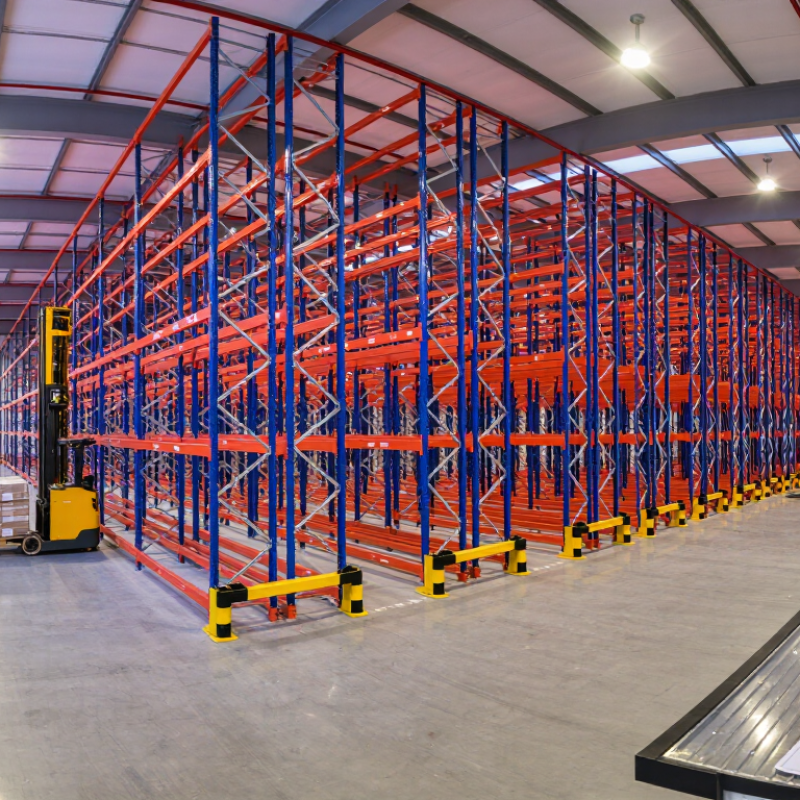
What Is Selective Pallet Racking and Why Is It Widely Used?
Selective pallet racking is a storage system built with upright frames, horizontal beams, and accessible pallet levels. Each pallet can be reached directly by a forklift, without moving stock stored in front. This arrangement suits warehouses handling many stock-keeping units and frequent order changes. In warehouse evaluations, operators often value visibility as much as capacity. Labels remain readable, inspections are faster, and damaged pallets are easier to identify. That matters during busy receiving periods.
The system is widely used because it balances cost, flexibility, and installation speed. Beam levels can be adjusted as pallet heights change, although careless planning may waste vertical space. Compared with denser systems, selective racks usually store fewer pallets per square meter. That is the trade-off. Direct access can still reduce handling steps and support reliable stock rotation. It works well in distribution centers, retail warehouses, spare-parts stores, and manufacturing areas. Load capacity must be verified for each bay, beam level, pallet type, and floor condition. Guessing here is a costly mistake.
Tips: Measure clear height, aisle width, forklift turning space, and pallet dimensions before purchasing. Keep heavier loads lower, protect upright frames, and inspect beams after impacts. Use visible load notices and practical operator training. I would also review seasonal volume, because a layout that works in winter may fail during peak demand. No layout is perfect. Small errors become daily obstacles.
China Top 10 Selective Pallet Racking Manufacturers? — What Is Selective Pallet Racking and Why Is It Widely Used?
The table below summarizes ten practical, manufacturer-neutral benchmarks for evaluating selective pallet racking systems. Actual load capacity, dimensions, seismic requirements, and compliance details must be confirmed through a project-specific structural design.
| No. | Evaluation Dimension | Typical Benchmark or Fact | Why It Matters in Manufacturer Selection | Practical Verification Point |
|---|---|---|---|---|
| 1 | System Definition | A beam-and-upright storage system designed for direct access to individual pallets. | It is the most flexible pallet-storage format for warehouses handling many stock-keeping units. | Confirm the proposed frame, beam, connector, base-plate, and pallet-support configuration. |
| 2 | Selectivity | Normally close to 100% pallet selectivity because every pallet position is directly accessible from the aisle. | High selectivity reduces the need to move other pallets before retrieving the required load. | Check whether every planned pallet position can be reached without relocation of stored goods. |
| 3 | Storage Density | Moderate density; one pallet is commonly stored per position in single-deep layouts. | The system provides a practical balance between access, visibility, and use of floor space. | Compare pallet positions, aisle area, clearances, columns, doors, and fire-protection space—not only rack footprint. |
| 4 | Pallet Access | Direct front access with a suitable forklift or reach truck for the specified aisle width and lift height. | Equipment compatibility affects throughput, safety, aisle planning, and total operating cost. | Verify truck turning radius, mast height, rated capacity at height, aisle width, and operator visibility. |
| 5 | Stock Rotation | Supports both FIFO and selective retrieval strategies when locations and warehouse procedures are properly managed. | Direct access makes it easier to select specific receipt dates, batches, or expiry periods. | Confirm location coding, batch control, expiry control, and whether the operating process requires a flow-rack solution instead. |
| 6 | Typical Load Range | Common beam-level capacities range from approximately 1,000 to 4,000 kg, depending on span, beam section, and design. | Capacity is project-specific and should never be selected from a generic catalog value alone. | Require signed calculations or certified load tables showing beam, frame, connector, and upright capacities. |
| 7 | Typical Rack Height | Many warehouse installations are approximately 3–12 m high; higher systems require specialized design and equipment. | Height influences storage capacity, fire protection, forklift selection, building clearance, and installation methods. | Check clear ceiling height, sprinkler obstruction rules, floor flatness, rack deflection limits, and local structural codes. |
| 8 | Material and Finish | Cold-formed or rolled steel components are commonly finished with powder coating, paint, or galvanized protection. | Material specification and surface treatment affect durability, corrosion resistance, and long-term maintenance. | Request steel grade, coating specification, coating thickness, weld quality controls, and corrosion requirements. |
| 9 | Safety Features | Typical protection includes upright guards, end-of-aisle guards, pallet supports, row spacers, anchors, and load notices. | Protective accessories reduce damage caused by forklift impact and help maintain correct pallet placement. | Confirm guard locations, anchoring details, beam locks, pallet overhang limits, inspection procedures, and repair policies. |
| 10 | Standards and Documentation | A professional project should include layout drawings, load data, installation instructions, inspection guidance, and applicable standard references. | Complete documentation supports safe installation, approval, maintenance, and future system modification. | Ask for engineering calculations, quality records, installation tolerances, warranty terms, and documentation for the destination market. |
FAQS
Compare engineering, steel quality, testing, delivery, installation support, and replacement parts. A low quotation may omit important accessories or site support. Compare complete systems, not prices alone.
Request load calculations, bay drawings, beam deflection limits, and test records. The documents should reflect your pallet weight, rack height, and aisle width. Generic paperwork is not enough.
Check coil storage, roll-forming lines, welding, powder coating, and final inspection. Look closely at bolt holes, frame alignment, welds, and connector fit. Small flaws matter.
Ask for steel grades, profile thickness, and traceable batch records. Measure coating coverage on sample uprights and beams. Photographs cannot prove thickness or coating performance.
Uneven floors, seismic conditions, and forklift impact risks change the design requirements. Ask for anchor details and protection measures. Ignoring the floor can become expensive.
Request references from warehouses with similar loads and operating conditions. Compare aisle widths, pallet sizes, and forklift activity. Past projects help, but they are not perfect proof.
Confirm installation guidance, training, packaging standards, replacement parts, and technical response times. Put warranty terms and delivery dates in writing. Verbal promises fade.
No. Verify each certificate and confirm that it matches the actual product and project. Independent inspections can add useful confidence. Still, inspection is not magic.
Compare at least three technical quotations using identical specifications. Check real pallet weights, rack dimensions, safety accessories, and lead times. Recheck every measurement before production.
Some suppliers communicate clearly but offer limited customization. Others build strong frames but provide weak after-sales support. No manufacturer is flawless. Transparent correction procedures deserve attention.
Conclusion
Selective Pallet Racking is a practical and flexible storage solution designed to provide direct access to individual pallets while making efficient use of warehouse space. This article explains its structure, applications, and advantages, including improved inventory visibility, easier product handling, and adaptable storage capacity. It also outlines the key factors buyers should consider when evaluating Chinese manufacturers, such as production capability, material quality, structural safety, customization options, certifications, delivery reliability, and after-sales support.
The article presents a clear framework for comparing products, quality standards, prices, lead times, installation services, and long-term maintenance. Rather than focusing only on the lowest quotation, warehouse operators are encouraged to assess overall value, supplier experience, communication, and project suitability. By matching rack design and service capabilities with load requirements, warehouse layout, operational processes, and future expansion plans, buyers can make a more informed decision and select a dependable manufacturing partner for their storage needs.