High-Density Industrial Warehouse Racking Portfolio
Explore our export-grade, CE-certified structural racking range engineered for high SKU turnover, optimal volumetric utilization, and rigorous safety compliance.
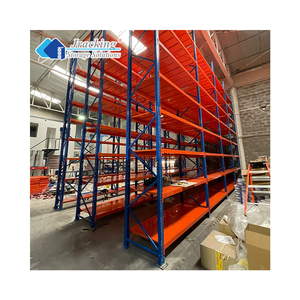
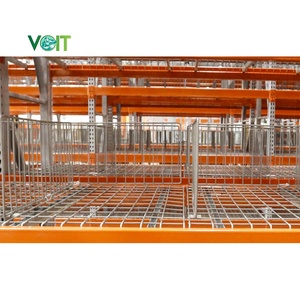
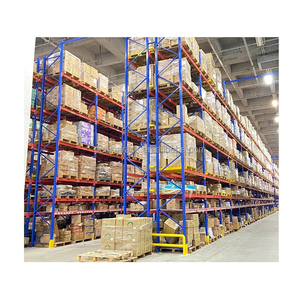
1. Technical Fundamentals of CE Certified Pallet Flow Racking Systems
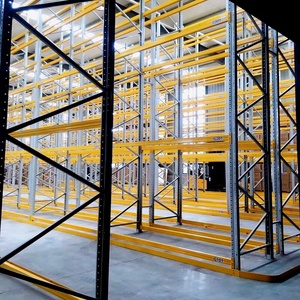
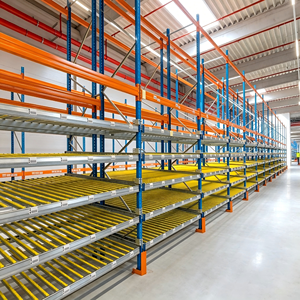
In the modern logistics landscape, warehouse floor space represents one of the highest capital expenditure variables for enterprise supply chains. A CE Certified Pallet Flow Racking System (also referred to as gravity flow racking) operates on dynamic gravity-assisted principles, allowing high-density pallet storage while guaranteeing strict First-In, First-Out (FIFO) inventory rotation. Unlike static selective pallet racking, pallet flow racks utilize inclined roller tracks integrated into structural steel frames. Pallets are loaded from the higher charging end and naturally glide down toward the discharging picking face under controlled gravitational acceleration.
To achieve official CE Certification within the European Economic Area (EEA) and global markets adhering to rigorous structural standards, flow racking systems must undergo stringent structural calculations under standards such as EN 15512 (Steel static storage systems - Adjustable pallet racking systems - Principles for structural design) and FEM 10.2.02. The integration of certified speed controllers (brake rollers), pallet safety separators, and impact-resistant entry guides ensures zero structural failure, minimal maintenance downtime, and complete operator safety during continuous pallet movement.
Gravitational Kinematics
Lanes are engineered at a precise pitch gradient (typically 3.5% to 4.5% tilt angle). This precise slope overcomes static friction for loads ranging from 300 kg up to 1,500 kg per pallet position without causing uncontrolled runaway velocity.
Centrifugal Speed Control
Indirectly or directly driven centrifugal brake rollers are installed along the dynamic lane pitch. They dynamically regulate terminal kinetic velocity to under 0.3 meters per second, eliminating kinetic impacts at the picking face.
Safety Separator Logic
A mechanical pallet release separator isolates the first pallet at the unload face from the back-pressure of accumulated trailing pallets (which can exert up to 300% accumulated weight), allowing unhindered forklift extraction.
2. Manufacturer Enterprise Superiority: Rackzzszn Storage Equipment
Selecting a verified CE Certified Pallet Flow Racking Supplier requires auditing raw steel quality, robotic manufacturing precision, surface treatment capabilities, and structural testing compliance.
Over 23 Years of Engineering Excellence
Founded in 2001, Rackzzszn Storage Equipment Co., Ltd. has grown into South China's leading structural racking manufacturer. Operating out of a state-of-the-art 20,000 m² production hub in Guangzhou, we process over 50,000 tons of high-tensile Q235B and Q355B steel annually. Certified by SGS and compliant with international ISO 9001 quality management protocols, Rackzzszn exports over 1,000 heavy-duty shipping containers every year to logistics operators, cold stores, and enterprise distribution networks across 60+ countries.
Our facility houses over 80 advanced automated production machines, including continuous CNC cold roll-forming lines, automated robotic welding cells, multi-station punching presses, and the longest automated electrostatic powder coating spray line in South China. This infrastructure allows us to execute 3-color powder coatings in a single continuous process pass, guaranteeing exceptional corrosion resistance, uniform paint adhesion, and rapid turnaround cycles for mega-scale warehouse projects.
Q235B/Q355B Certified Steel Coils
We source prime structural steel exclusively from top-tier state steel mills. Every raw material batch is verified for yield strength, tensile limits, and chemical composition before forming.
In-House EN 15512 Testing Laboratory
Our dedicated engineering department conducts full-scale beam loading tests, frame buckling evaluations, and brake roller life-cycle simulations (up to 100,000 continuous cycles).
3. Technical Comparison of High-Density Storage Racking Systems
Different supply chain workflows demand specific storage density profiles, selectivity levels, and throughput speeds. The matrix below outlines how CE Certified Pallet Flow Systems compare against alternative structural racking configurations engineered by Rackzzszn.
| Racking Architecture | Inventory Logic | Space Utilization | Selectivity | Ideal Application Profile | CE Safety Features |
|---|---|---|---|---|---|
| Pallet Flow Racking | FIFO (First-In, First-Out) | Up to 85% Volumetric Yield | High (Per Lane) | Perishable Goods, FMCG, Cold Storage (-30°C), High Turnover | Brake Rollers, Safety Separators, End Stops |
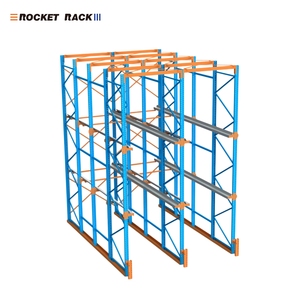
| Drive-In Racking | LIFO (Last-In, First-Out) | Up to 75% Volumetric Yield | Low (Per Block) | Bulk Goods, Homogeneous SKUs, Seasonal Buffer Storage | Column Protectors, Floor Guide Rails |
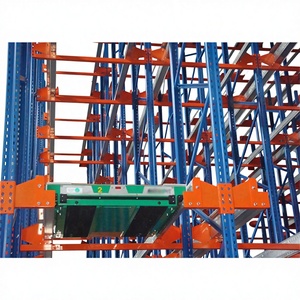
| Radio Shuttle Racking | FIFO / LIFO Hybrid | Up to 90% Volumetric Yield | Medium-High | Automated Logistics, Cold Storage, High-Volume Distribution | Laser Obstacle Sensors, Anti-Collision AGV Interface |
| Selective Pallet Rack | FIFO / LIFO Independent | 40% - 50% Volumetric Yield | 100% Direct Access | High SKU Count, Variable Dimensions, Distribution Centers | Beam Safety Locks, Frame Footplate Anchors |
| Carton Flow Racking | FIFO (Piece/Carton) | Up to 70% Floor Saving | High (Carton Level) | E-commerce Fulfillment, Kitting Lines, Order Picking | Adjustable Roller Track Guides, Ergonomic Tilt Shelves |
4. Future Procurement Trends in Industrial Storage Racking (2025–2030)
As global supply chains transition toward automation, sustainability, and strict operational safety, procurement directors must evaluate racking suppliers through a modern strategic lens. Sourcing is no longer focused solely on initial steel price per kilogram; it encompasses Total Cost of Ownership (TCO), carbon footprint transparency, and automated equipment integration readiness.
1. ESG Compliance & Low-Carbon Steel
Global logistics operators require suppliers to provide Environmental Product Declarations (EPDs). Procurement trends prioritize suppliers using recycled steel, energy-efficient powder coating lines, and low-VOC surface treatments that minimize corporate Scope 3 greenhouse gas emissions.
2. AMR / AGV Fleet Compatibility
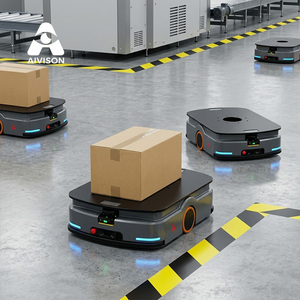
Future-proof flow racking designs must integrate seamlessly with Autonomous Mobile Robots (AMRs) and Automated Guided Vehicles (AGVs). Procurement specifications now mandate tighter manufacturing tolerances (+/- 1.5mm) on beam spans and floor guide interfaces.
3. Modular Cross-Border Standardization
Enterprise buyers are standardizing racking geometry across global regions. Certified compliance with both European EN norms and American RMI (Rack Manufacturers Institute) standards allows multinational brands to streamline equipment procurement across continents.
5. Product Development & Engineering Innovations in Flow Racking
Research and development in dynamic gravity racking focus on improving mechanical reliability, expanding operating temperature ranges, and embedding smart monitoring technologies directly into mechanical components.
Self-Regulating Magnetic Speed Controllers
Traditional centrifugal brake rollers rely on internal mechanical friction linings that experience wear over time. Next-generation product development integrates eddy-current magnetic braking mechanisms. These contact-free magnetic controllers adjust resistance dynamically based on pallet speed without physical friction wear, yielding a virtually maintenance-free operational life even under continuous 24/7 high-throughput warehouse cycles.
Extreme Cold-Chain Polyurethane Formulations
Operating pallet flow lanes in sub-zero cold storage environments (-28°C to -30°C) presents severe material degradation challenges. Standard plastic rollers can become brittle and fracture under heavy dynamic loads. Advanced R&D focuses on high-impact polybutadiene-modified polyurethane compounds and synthetic low-temperature lubricants that retain elasticity, prevent flat-spotting, and maintain smooth coefficient of friction metrics in cryogenic environments.
IoT-Enabled Smart Flow Lane Monitoring
Future-ready flow racking lanes are being integrated with micro-sensor arrays embedded within end-stop brackets and safety separators. These IoT sensors track real-time lane occupancy, detect pallet hang-ups caused by damaged wooden runners, and send predictive maintenance alerts to the facility’s Warehouse Management System (WMS) before structural jams impact dock throughput.
6. Procurement FAQ: Answers from Structural Racking Engineers
Get clear, definitive answers to technical, regulatory, and procurement questions commonly raised by industrial buyers and project managers.
Optimize Your Warehouse Density with CE Certified Flow Systems
Consult with Rackzzszn senior structural engineers today. Receive custom 2D/3D layout CAD designs, structural load calculations, and competitive direct-from-factory pricing for your upcoming warehouse project.