Industry Whitepaper & Technical Sourcing Guide
In global pharmaceutical manufacturing and Good Distribution Practice (GDP) warehousing, material handling infrastructure is subject to stringent regulatory oversight. Selecting CE Certified Pharmaceutical Pallet Racking Factories is a critical operational decision that impacts regulatory compliance, batch traceability, structural safety, and cold chain integrity. Industrial pharmaceutical storage systems must do far more than support static loads; they must withstand aggressive sanitization protocols, maintain dimensional stability in extreme cryogenic environments (-30°C to -80°C), and prevent microbiological contamination in cleanroom conditions (ISO Class 5 to Class 8).
This comprehensive technical report serves as an authoritative procurement guide for warehouse directors, facility engineers, and global supply chain managers. It covers certified structural manufacturing protocols, hygienic rack design innovations, cold chain optimization strategies, and essential procurement criteria needed to satisfy FDA, EU GMP Annex 1, and ISO 9001/14001 audits.
Certified Pharmaceutical Storage Racking Solutions
Explore our core engineering range of CE-marked, heavy-duty pharmaceutical pallet racks, drive-in systems, VNA setups, and cleanroom-grade stainless steel shelving designed for medical logistics centers and chemical manufacturing plants.
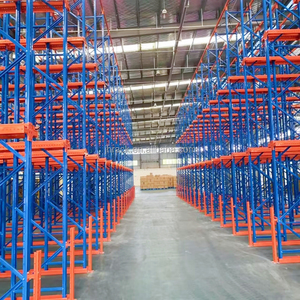
Wholesale Price Industrial Storage Shelf Drive-In Rack Steel Stacking Pallet Racking Vendors For Chemical Industry Warehousing
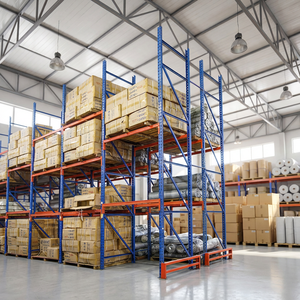
Galvanized Steel Pharma Industrial Warehouse Heavy Duty Pallet Rack
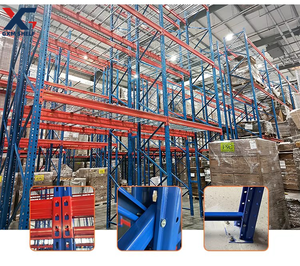
Multi-Level Vna Pallet Shelving Warehouse Chemical Material Storage Metal Bulk Racks Heavy Duty System Industrial Selective Rack
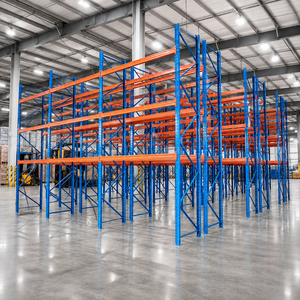
CE Certified Pharmaceutical Warehouse Beam Racking Heavy-Duty Warehouse Pallet Storage Equipment 3-9 Levels 2500kg
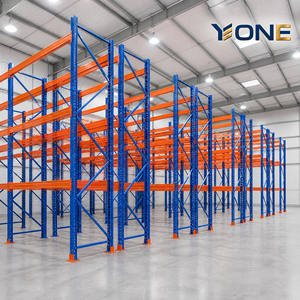
Heavy Duty Pallet Rack System Steel Warehouse Storage Rack Bolt-Free Adjustable For Pharmaceutical Warehouse
Stainless Steel Selective Pallet Rack System for Food and Pharmaceutical Clean Room Industrial Warehouse Storage Racking
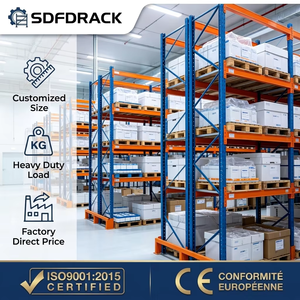
Heavy Duty Pharmaceutical Racks Steel Adjustable Selective Pallet Racking For Medical Warehouse Drug Storage Distribution Center
23+
Years Racking Engineering
50,000t
Annual Steel Processing
60+
Global Export Countries
100%
CE & EN 15512 Compliance
CE Certification Standards and Engineering Compliance (EN 15512 / FEM 10.2.02)
In European and international markets, the CE mark on structural pallet racking is far more than a marketing label—it is a legal declaration of conformity under European Construction Products Regulation (CPR 305/2011) and EN 1090-1 execution standards for steel structures. Pharmaceutical facilities operate under strict risk management frameworks (ICH Q9). Structural failure in a medical logistics center can lead to catastrophic inventory loss, cross-contamination, or severe supply chain downtime for life-saving therapies.
A qualified CE Certified Pharmaceutical Pallet Racking Factory builds systems in strict compliance with EN 15512 (Steel static storage systems - Adjustable pallet racking systems - Principles for structural design) and FEM 10.2.02 guidelines. Structural calculation models evaluate ultimate limit state (ULS) and serviceability limit state (SLS) under static load conditions, seismic activity, thermal contraction in cold rooms, and dynamic impacts from material handling equipment (MHE).
| Engineering Parameter | Standard Commercial Racking | CE Certified Pharmaceutical Racking | Compliance / Audit Target |
|---|---|---|---|
| Structural Standard | General Industry Standard / ISO 9001 | EN 15512, FEM 10.2.02, EN 1090-1 (CE Mark) | EU CPR 305/2011, US RMI Standard |
| Material Grade | Q235 Structural Steel | High-Tensile Q355B / Q460 or 304/316L Stainless Steel | Yield strength ≥ 355 MPa; Mill test certified |
| Surface Finish & Hygiene | Standard Electrostatic Powder Coating | Antimicrobial Silver-Ion Powder / Hot-Dip Galvanized / 240-grit Passivated SS | ISO 846 Microbe Resistant, FDA 21 CFR Compliant |
| Cold Storage Range | -10°C to +40°C | -30°C to -80°C Cryogenic Tested Steel (Low-Temp Toughness) | Impact toughness test (Charpy V-notch at -40°C) |
| Cleanroom Compatibility | Unrated (Particle shedding risk) | ISO Class 5 to Class 8 (Smooth welds, crevice-free profiles) | CGMP Annex 1 Cleanroom Air Particulate Rules |
| Traceability & Marking | Basic batch stickers | Laser-etched batch codes, dynamic load plates on every aisle | Full material test report (MTR) EN 10204 3.1 |
Critical Insight: Structural Ductility in Low-Temperature Cold Chain Storage
Standard carbon steel undergoes a ductile-to-brittle transition when exposed to sub-zero cold room environments (-20°C to -30°C). Under continuous cold stress and cyclic forklift loading, unrated structural steel can suffer micro-fractures. CE-certified pharmaceutical cold storage racking uses specialized micro-alloyed structural steel (e.g., Q355D/E) with verified impact energy absorption down to -40°C, ensuring structural integrity in vaccine and biologics storage facilities.
Strategic Procurement Insights
Future Sourcing Trends in Pharmaceutical Storage Infrastructure
As the global pharmaceutical supply chain shifts toward personalized medicine, cold-chain biologics, and automated distribution, procurement teams must align rack sourcing with emerging industry megatrends.
1. Pharma 4.0 & Automated AS/RS Integration
Modern pharmaceutical distribution centers are transitioning from manual forklift-operated racking to Automated Storage and Retrieval Systems (AS/RS). High-bay AS/RS rack-clad structures reach heights of 30 to 45 meters, requiring ultra-precise manufacturing tolerances (±1.5mm deflection over 10m height) to allow seamless operation of stacker cranes and radio shuttles.
2. Strict CGMP Cleanroom Surface Sanitation
Regulators increasingly demand that racking inside Class 10,000 (ISO 7) and Class 100 (ISO 5) cleanrooms eliminate all horizontal ledges, open tube ends, and exposed screw threads where dust or microbial spores can harbor. Sourcing trends favor enclosed tubular uprights, flush beam connections, and electro-passivated 316L stainless steel finishes.
3. Ultra-Dense Cold Chain Energy Conservation
Rising energy costs for deep-freeze storage (-25°C to -30°C) drive demand for high-density racking configurations. Electric Mobile Pallet Racking (MOVO) and Multi-Deep Pallet Shuttle systems double cold room capacity within the same refrigerated volume, reducing refrigeration power consumption per pallet position by up to 40%.
R&D & Engineering Innovations in Pharmaceutical Racks
Leading manufacturers are driving R&D initiatives to resolve historical pain points in pharmaceutical warehousing, such as coating flaking, hidden corrosion beneath beams, and structural deflection under high dynamic stress.
Silver-Ion Antimicrobial Powder Coatings
Formulated with bioactive silver ions, specialized thermosetting epoxy-polyester coatings actively inhibit 99.9% of bacterial growth (including E. coli and S. aureus) on racking surfaces. This technology ensures compliance with ISO 22196 sanitation standards without deteriorating under daily chemical wipe-downs using isopropyl alcohol (IPA) or quaternary ammonium compounds.
Boltless Hygienic Profile Geometry
Traditional teardrop racking profiles feature recessed punched holes along the front face, creating micro-pockets for dust accumulation. Modern pharmaceutical R&D has introduced internal concealed connection slots and smooth continuous upright faces, eliminating dirt traps and accelerating facility cleaning routines.
Real-Time Structural Health Monitoring (IoT Sensors)
Next-generation CE-certified heavy-duty racks integrate embedded strain gauges and optical impact sensors along upright guards. These IoT modules send automated alerts to warehouse management software (WMS) whenever a forklift impact exceeds structural safety thresholds, preventing hidden structural fatigue.
Factory Qualifications & Manufacturing Power
Why Partner with Our CE Certified Production Facility?
Combining over 23 years of specialized steel racking engineering with advanced automated manufacturing infrastructure, our facility delivers audited quality for global pharmaceutical buyers.
20,000 m² Modern Production Base
Equipped with 80+ automated CNC punch presses, high-precision continuous cold roll-forming lines, robotic welding stations, and automatic steel coil shearing systems to handle large-scale international projects.
Longest Spray Line in South China
Our state-of-the-art automatic electrostatic powder coating line features a multi-stage pre-treatment wash (degreasing, phosphating, pure water rinse) capable of applying three colors in a single automated pass, guaranteeing uniform film thickness and superior salt-spray corrosion resistance.
Strict SGS-Audited Quality Control
Every batch of raw steel undergoes tensile strength testing, weld seam ultrasonic flaw detection, coating adhesion cross-hatch testing, and dimensional tolerance inspection before seaworthy export packaging.
End-to-End Turnkey Engineering Services
From initial site survey and 3D BIM layout design to structural load calculations, installation guidance, and post-installation safety inspection compliance, our engineering team supports your facility through every phase.
Frequently Asked Questions
Pharmaceutical Storage Racking Sourcing FAQ
Detailed technical answers addressing compliance, installation, maintenance, and structural specifications for global pharmaceutical buyers.
What specific certifications are required for pharmaceutical pallet racking in Europe and North America?
In Europe, structural pallet racking must meet the CE Mark requirements under EN 1090-1 and design criteria specified in EN 15512. For pharmaceutical applications, the manufacturing facility should also operate under ISO 9001 quality management and ISO 14001 environmental management. In North America, racking must comply with the Rack Manufacturers Institute (RMI) MH16.1 standard and local building codes (IBC/ANSI). Furthermore, material finishes used inside drug production zones must comply with FDA 21 CFR regulations for indirect contact.
How do you ensure pallet racking complies with Good Manufacturing Practice (GMP) audit standards?
GMP compliance focuses heavily on preventing product contamination, maintaining cleanability, and ensuring lot traceability. Our CE-certified pharmaceutical racks fulfill GMP audits by incorporating non-porous powder coatings, smooth crevice-free structural joints, enclosed tube profiles, and clear dynamic load labels on every rack frame. We provide complete material test reports (MTR EN 10204 3.1) and coating technical data sheets to support your facility’s IQ/OQ (Installation Qualification / Operational Qualification) documentation.
Which racking type is best suited for temperature-controlled cold rooms (-20°C to -30°C)?
For cold storage, high-density storage systems such as Drive-In Racking, Radio Shuttle Pallet Systems, or Mobile Pallet Racking (MOVO) are ideal. These systems minimize aisle space, maximizing the volumetric efficiency of the refrigerated envelope. Mechanically, the racking steel must be selected for low-temperature impact toughness (e.g., fine-grained structural steel tested for Charpy V-notch energy at sub-zero temperatures) to prevent cold brittleness failure under dynamic forklift loading.
What is the difference between 304 and 316L stainless steel cleanroom storage racks?
Grade 304 stainless steel provides excellent corrosion resistance and cleanability for standard cleanrooms, primary packaging areas, and ambient storage. Grade 316L contains 2-3% molybdenum, offering superior resistance to pitting and crevice corrosion caused by harsh sterilizing agents (such as chlorine, hydrogen peroxide vapor, or bleach solutions) used in sterile API (Active Pharmaceutical Ingredient) manufacturing zones and ISO Class 5 cleanrooms.
Can your factory customize pallet racking layouts for seismic zones?
Yes. Our engineering R&D team performs Finite Element Analysis (FEA) and dynamic seismic stress simulations tailored to your specific facility location and local ground acceleration parameters ($a_g \cdot S$). Seismic-resistant racking features oversized heavy-duty baseplates, high-tensile floor anchors, reinforced frame diagonal bracing, and double-connector beam ends to absorb seismic energy without structural collapse.
Why is site investigation and professional engineering layout critical before placing an order?
In high-density pharmaceutical warehouses, minor architectural discrepancies (such as floor slab unlevelness, column positioning deviations, or overhead sprinkler pipe clearances) can cause alignment failures or block emergency egress routes. A deviation of just 2 cm can prevent upright frames from anchoring correctly. We perform rigorous 2D/3D BIM layout design and structural verification prior to steel fabrication to guarantee zero on-site assembly issues.
How are export racking shipments packaged to prevent transit damage and corrosion?
All steel structural components are packed using export-grade protective protocols. Upright frames and beams are bundled with plastic edge protectors, wrapped in moisture-barrier stretch film, and strapped onto steel skids. Small hardware and connectors are sealed in reinforced wooden boxes with desiccant packs to prevent surface oxidation during long-distance ocean shipping.
What is the typical production lead time for a custom CE-certified pallet rack project?
Standard manufacturing lead time is typically 20 to 30 days after final approval of 2D/3D structural drawings. For high-volume projects requiring specialized raw material grades or custom stainless steel fabrication, lead times range from 35 to 45 days. Rapid prototyping and expedited production schedules can be arranged upon request.
Request a Certified Engineering Layout & Quote Today
Consult with our senior structural engineers to optimize your pharmaceutical warehouse footprint, ensure full GMP/CE compliance, and receive a complete 2D/3D layout design with detailed load calculations.
Get a Quote