Executive Whitepaper: Cold Chain Logistics & Structural Storage Engineering
Operating a refrigerated or frozen warehouse involves high energy costs, demanding optimal space utilization and strict safety compliance. In sub-zero environments ranging from -18°C to -30°C (and blast freezers reaching -40°C), conventional steel racking faces structural challenges. Steel microstructures undergo a ductile-to-brittle transition, standard epoxy coatings can crack due to thermal contraction, and moisture condensation accelerates oxidation on sub-standard steel profiles.
This technical whitepaper provides operational insights for supply chain directors, cold storage warehouse managers, and industrial procurement officers evaluating Chinese cold storage racking manufacturers. By analyzing material science, low-temperature structural dynamics, structural health monitoring, and automated high-density storage frameworks, this guide highlights key factors in selecting low-temperature racking systems built for long-term safety and performance.
Featured Cold Storage Pallet Racking Systems
Engineered for low-temperature environments, high load capacities, and dense warehouse configurations
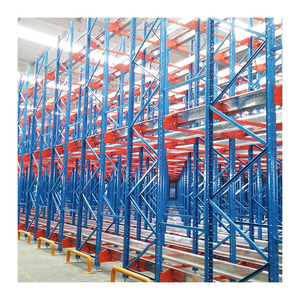 Sub-Zero Automated
Radio Shuttle Racking System
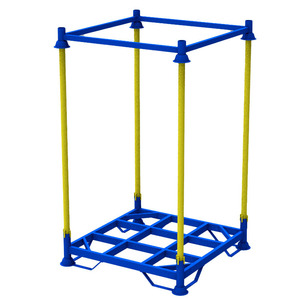 Modular & Stackable
Movable Post Stacking Pallet Rack
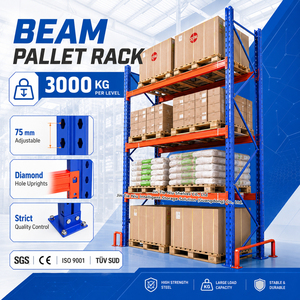 3000KG / Tier
Heavy Duty 3-Tier Pallet Racking
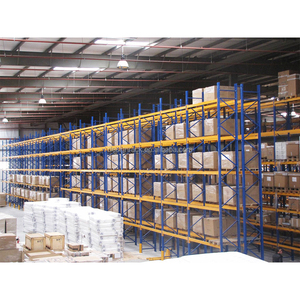 Hot-Dip Galvanized
Anti-Corrosion Galvanized Rack
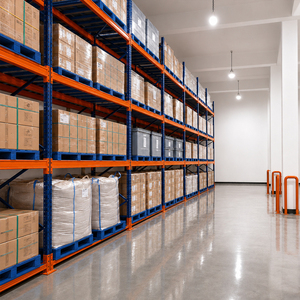 Q235B Cold Room Steel
2500kg High Density Cold Room Rack
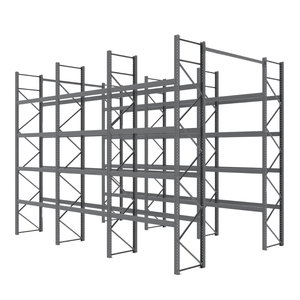 Customized Colors
Custom Heavy Duty Cold Store System
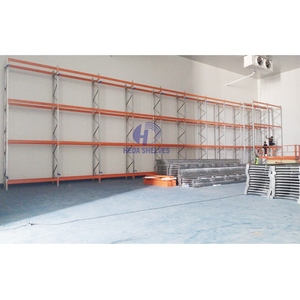 Double Deep Density
Double Deep Pallet Storage Racking
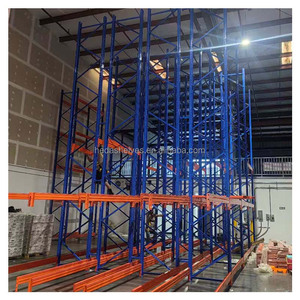 CE Certified Selective
CE Industrial Selective Pallet Rack
1. Structural Metallurgy & Materials Science for Sub-Zero Racking
Selecting the correct steel grade is critical when engineering structural storage components for cold storage facilities. Standard structural carbon steels (such as low-grade Q195 or non-tested commercial grade Q235) undergo a marked decrease in impact toughness as operating temperatures drop below freezing.
At room temperature, structural steel deforms elastically and plastically under heavy loads. However, below 0°C, carbon steel exhibits a shift in energy absorption capacity known as the Ductile-to-Brittle Transition Temperature (DBTT). Under low-temperature impact loading (e.g., a forklift bumping an upright column at -25°C), non-certified steel can experience sudden brittle fracture without prior plastic deformation.
Impact-Tested Q355D / Q355E Steel
For temperatures from -20°C to -40°C, we utilize high-strength low-alloy structural steel (Q355D/E) that undergoes Charpy V-Notch Impact Testing at sub-zero temperatures, delivering minimum impact energy values of 27 Joules at -20°C or -40°C.
Hot-Dip Galvanizing (ISO 1461)
Hot-dip galvanizing applies a molten zinc layer (min. 65µm - 85µm coating thickness) that creates a metallurgical bond with the steel substrate. This protective coating prevents rust formation caused by moisture condensation in humidity-prone cold stores.
Low-Temp Powder Coating Formula
For dry frozen zones (-25°C), we apply thermosetting epoxy-polyester powder formulations engineered with cross-linking agents. These additives preserve coating flexibility, preventing surface micro-cracking and chipping under thermal expansion and contraction.
2. Cold Storage System Architecture Matrix
Every refrigerated cubic meter carries high operational and energy costs. The table below compares structural cold storage racking configurations to help balance space optimization, pallet accessibility, and operational workflows.
| Racking System Type | Volume Utilization | Selectivity (Access) | Operating Temp Range | Forklift & Automation Requirement | Capital Investment Index |
|---|---|---|---|---|---|
| Radio Shuttle Racking | 80% - 85% | LIFO / FIFO (Batch) | -30°C to +40°C | Standard Forklift + Automated Shuttle Carts | High (Fast ROI in Cold Stores) |
| Drive-In Pallet Racking | 65% - 75% | Strict LIFO | -25°C to +40°C | Reach / Counterbalance Truck (Drives into rack) | Moderate |
| Double-Deep Selective | 60% - 65% | 50% Immediate Access | -30°C to +40°C | Double-Deep Reach Truck / Pantograph Extender | Low - Moderate |
| Standard Selective Rack | 40% - 50% | 100% Immediate Access | -35°C to +50°C | Standard Reach Truck / VNA Truck | Low (Base Entry Level) |
| Mobile Pallet Racking (MOVO) | 85% - 90% | 100% (On-Demand Aisle) | -25°C to +40°C | Guided Reach Truck + Motorized Rail Bases | Very High |
3. Future Procurement Trends in Cold Storage Racking (2025–2035)
The global cold chain packaging and refrigerated warehousing market is expanding, driven by pharmaceutical requirements, online grocery delivery, and international food logistics. Procurement strategies for low-temperature racking systems are evolving around three primary engineering shifts:
Integration of ASRS & Semi-Automation
Rising energy costs make high-bay storage designs up to 30–40 meters tall more cost-effective. Warehouses are increasingly adopting Automated Storage and Retrieval Systems (ASRS) and cold-rated Radio Shuttles to reduce human labor in harsh -25°C conditions.
IoT Sensor Integration & Structural Health Monitoring
Modern racking installations incorporate micro-strain gauges and IoT impact sensors. These systems alert warehouse operators to structural displacement or forklift impact damage in real-time, helping prevent rack collapse risks caused by unseen fatigue in low-temperature environments.
Thermal-Break Baseplate Engineering
To reduce thermal bridging between ambient concrete sub-slabs and freezing racking columns, procurement standards now specify high-density thermal insulation shims (such as UHMWPE structural pads) placed directly under upright footplates.
4. Key Development Trends in Cold Storage Racking Fabrication
Advancements in Chinese steel processing and roll-forming technologies are creating new opportunities for international buyers. Chinese racking manufacturers are moving beyond simple low-cost production toward advanced structural engineering, international design standards, and automated quality control.
Strict Adherence to International Standards (FEM & RMI): Leading Chinese exporters engineer cold storage systems in compliance with European FEM 10.2.02 (Storage Racks Design) and American RMI (Rack Manufacturers Institute) MH16.1 specifications. Seismic load calculations (using finite element analysis software like ANSYS and SAP2000) evaluate dynamic forces during earthquake events when racks carry full loads at low temperatures.
Low-Temperature Battery Breakthroughs in Shuttle Automation: Earlier automated shuttle carts faced reduced battery runtimes in cold storage environments (-25°C). Next-generation shuttle systems feature internal thermal management and Lithium Iron Phosphate (LiFePO4) or supercapacitor power systems, supporting continuous operation for up to 8–10 hours per charge cycle.
5. Enterprise Advantage: Manufacturing Strength & Export Infrastructure
As a established warehouse storage equipment manufacturer based in South China, our production facility combines advanced manufacturing capabilities, certified quality management, and international export logistics expertise:
20,000m² Manufacturing Facility
Equipped with 80+ automated continuous punching and roll-forming lines, robotic welding stations, and high-precision laser cutting equipment capable of processing over 50,000 tons of structural steel annually.
SGS Verified & CE Certified Quality
Our raw steel supplies undergo full chemical composition verification and tensile strength analysis. Manufactured products maintain CE compliance, ISO9001 quality management, and rigorous batch inspection before export packaging.
Longest Continuous Spray Line in South China
Our fully automated powder coating system applies pre-treatment washing, rust removal, and multi-stage powder curing in a single continuous pass, ensuring uniform coating adhesion across all beam and upright profiles.
Cold Storage Pallet Racking Sourcing FAQ
Answers to technical questions from logistics buyers and engineering teams
Why is structural steel grade selection so critical in sub-zero freezers (-25°C)?
Which finish is better for cold rooms: Hot-Dip Galvanizing (HDG) or Powder Coating?
How does a Radio Shuttle Racking System reduce operating costs in cold storage facilities?
How do you manage thermal expansion, contraction, and floor slab insulation during installation?
What technical parameters do your engineers need to create a custom CAD layout and price quote?
1. Building architectural floor plan (clear ceiling height, column locations, door positions, and fire exit paths).
2. Pallet specifications (dimensions W x D x H including product overhang, gross weight per pallet).
3. Operating ambient temperature range (e.g., +4°C chill, -25°C deep freeze).
4. Forklift specifications (minimum aisle turning radius, maximum mast lifting height, and forklift model details).