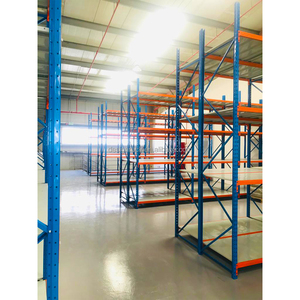
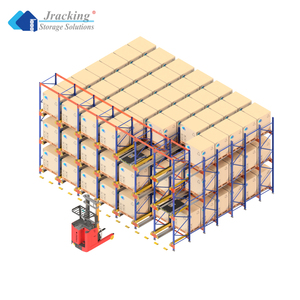
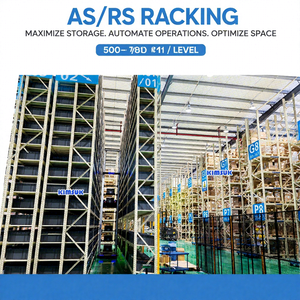
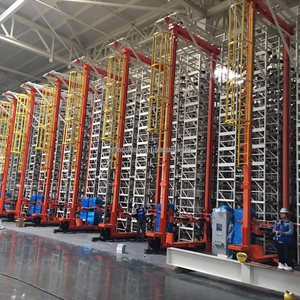
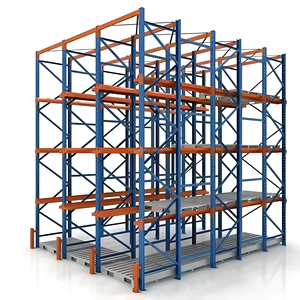
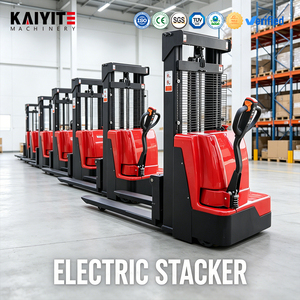
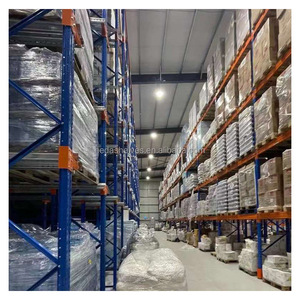
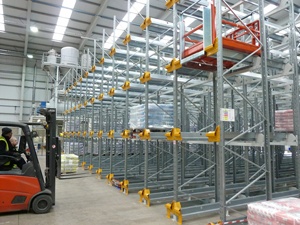
In modern supply chain management, warehouse real estate optimization, order fulfillment speed, and labor overhead mitigation dictate global competitiveness. Automated Pallet Handling Systems (APHS)—encompassing Automated Storage and Retrieval Systems (ASRS), 4-Way Radio Shuttle Racking, and automated electric stacker integration—represent the definitive transition from passive static storage to dynamic intralogistics ecosystems.
As China’s manufacturing hub advances steel roll-forming precision and robotics integration, top OEM/ODM exporters provide heavy-duty automated racking infrastructure tailored to extreme structural tolerance limits (FEM 10.2.02 and ANSI MH16.1 standards). By substituting traditional forklift aisles with high-density automated shuttle corridors, modern facilities achieve up to 85% footprint utilization efficiency while drastically accelerating pallet turnover rates.
Information Gain Insight: The intralogistics sector is experiencing a structural convergence of ultra-precise steel fabrication and autonomous swarm robotics. Warehouses are no longer designed around fixed mechanical pathways, but dynamic software-orchestrated grid matrixes.
The manufacturing landscape for automated pallet handling systems in China is undergoing three pivotal structural shifts driven by technological advances and international demand:
1. Swarm Intelligence & 4-Way Shuttle Ubiquity
Traditional 2-way shuttle systems (which travel only forward and backward along a dedicated channel) are increasingly superseded by 4-way radio shuttles. Integrated with IoT sensor arrays and controlled via Warehouse Control Systems (WCS), 4-way shuttles change channels dynamically via automated vertical lifters. This shift eliminates bottlenecking by allowing multiple shuttles to operate within the same rack level under swarm intelligent dispatching algorithms.
2. Extreme Environment Specialization (Sub-Zero Automation)
Cold-chain logistics demands higher structural integrity. Operating in environments reaching -25°C to -30°C causes conventional mild steel to become brittle. Modern Chinese manufacturers utilize low-temperature structural steel alloys (such as specialized cold-rolled steel grades with customized chemical compositions) combined with frost-resistant polyurethane components and IP65+ rated electronics to guarantee uninterrupted 24/7 automation in frozen storage facilities.
3. Modular "Plug-and-Play" Retrofitting Architecture
Full greenfield ASRS projects require substantial capital expenditure and lengthy deployment timelines. A growing industry trend is the modular automation retrofit—converting existing selective or drive-in pallet racking installations into shuttle-ready automated structures without demolishing primary warehouse infrastructure. OEM manufacturers now provide universal track profiles compatible with legacy racking uprights.
International buyers from North America, Europe, the Middle East, and Southeast Asia are reshaping their procurement criteria when sourcing automated storage equipment from Chinese manufacturers:
-
Shift from CapEx Focus to Total Cost of Ownership (TCO): Procurement directors prioritize energy-efficient brushless motors, regenerative shuttle braking systems, and surface treatments like electro-static thermosetting powder coatings that prevent corrosion-induced downtime across a 15-year lifecycle.
-
Demands for Certified Structural FEA Verification: International engineering standards (such as EN 15512, FEM 10.2.02, and RMI standards) require suppliers to submit Finite Element Analysis (FEA) computer simulations proving seismic resistance, deflection limits under maximum point loading, and sway rigidity before order finalization.
-
Direct OEM Customization & In-House Fabrication Transparency: Third-party trading agents are being bypassed in favor of verified factories possessing integrated steel coil slitting, automated punching, continuous roll-forming lines, and robotic welding units to ensure direct quality control and delivery schedule compliance.