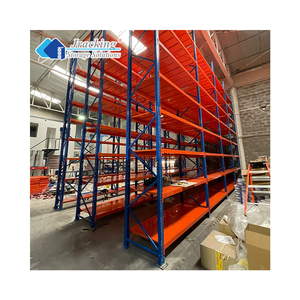
Seismic-Reinforced Pallet Racking Catalog
Factory-direct heavy-duty storage configurations designed for high-acceleration earthquake zones, automated retrieval systems, and bulk logistics.
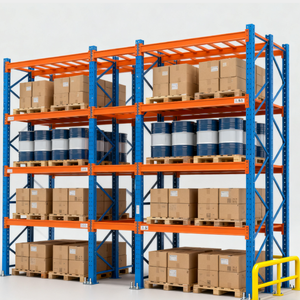
Factory-Direct Wholesale Rates Seismic-Resistant Pallet Rack Shelving Rack
Contact Us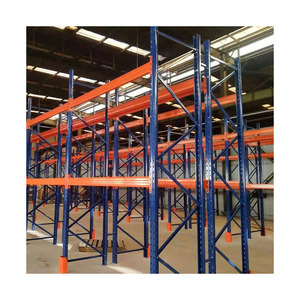
High Density Layout Steel Pallet Rack High Capacity Automated Retrieval System for Building Materials Storage Seismic Reinforced
Contact Us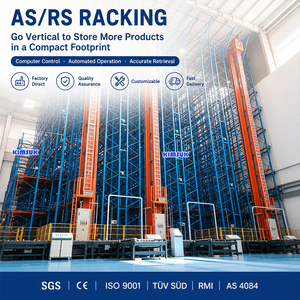
AS/RS Racking Seismic Stable Steel Frame Automated Pallet Rack Safe Tall Warehouse Storage, Estanterias Antisismicas
Contact Us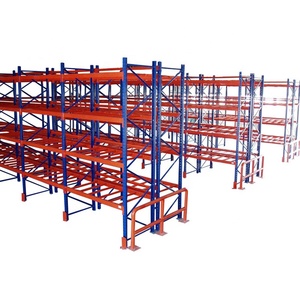
2024 Competitive Advantage Pallet Racking Storage Heavy Duty Industrial Pallet Shelf Warehouse Racking System
Contact Us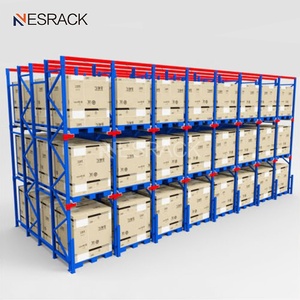
Drive-In Heavy Duty Steel Pallet Rack with 2000kg Load Capacity Seismic Reinforcement for Warehouse Storage
Contact Us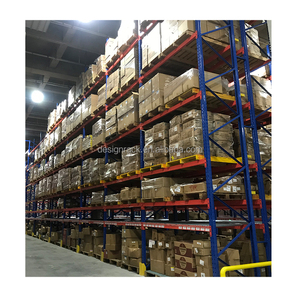
High Quality Warehouse Storage Heavy Duty Selective Pallet Rack Beam Shelf Custom Heavy Duty Warehouse Storage Beam Rack
Contact Us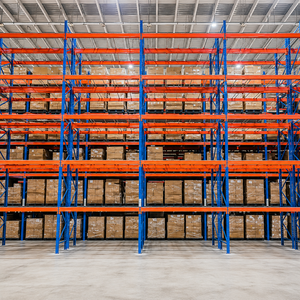
Seismic Resistant Industrial Warehouse Bulk Stock Beam Racking Heavy Duty Selective Pallet Racking 5-12 Levels
Contact UsTechnical Engineering Whitepaper
Seismic Structural Physics & Pallet Racking Dynamics
An in-depth analysis of structural integrity, ground acceleration damping, base isolation mechanisms, and international safety compliance (RMI MH16.1, EN 16681, FEM 10.2.02) for global logistics hubs.
23+
Years Manufacturing Excellence
50,000t
Annual Steel Processing
60+
Global Export Destinations
0.45g
Peak Ground Acceleration Damping
Understanding Seismic Risk in High-Bay Pallet Storage
In modern supply chain architecture, industrial racking is no longer classified as static furniture; it is an engineered semi-rigid steel structure subjected to severe dynamic loads. When an earthquake strikes, horizontal ground forces induce high lateral shear stress, sway harmonics, and torsional overturning moments across racking frames. Standard selective racking systems designed solely for static vertical gravity loads often experience catastrophic joint failure, beam dislodgement, and column buckling under severe seismic acceleration.
At Rackzzszn Storage Equipment Co., Ltd. (formerly rooted in Guangzhou Maobang engineering traditions), our engineering team utilizes advanced Finite Element Analysis (FEA) to simulate modal frequency response under dynamic spectral accelerations. By incorporating heavy-gauge Q355B cold-rolled structural steel, enlarged floor baseplates, dynamic diagonal bracing frames, and heavy-duty safety locking pins, our seismic pallet racks absorb dynamic kinetic energy through controlled ductile flexure without yielding structural connections.
Heavy-Duty Baseplate Anchorage
Seismic uprights utilize oversized seismic footplates anchored into reinforced concrete slabs via chemical epoxy or mechanical expansion anchors engineered for extreme tension uplift and shear forces.
Moment-Resisting Beam Connectors
Our multi-hook forged connector teeth engage firmly with teardrop or omega upright profiles, maintaining high rotational stiffness ($K_i$) and energy dissipation ductility during sway vibration.
Cross-Aisle Seismic Bracing
Integrated horizontal top-ties and vertical X-bracing panels distribute dynamic roof drift loads evenly throughout the racking block, preventing progressive collapse in high-turnover hubs.
Procurement Decision Matrix
Seismic Racking System Selection & Recommendations
Select the appropriate structural rack geometry based on warehouse height, SKU density, pallet weight, and localized ground acceleration factors ($S_{D1}$).
| Racking Architecture | Seismic Resistance Rating | SKU Selectivity & Access | Max Load / Level | Optimal Industry Application |
|---|---|---|---|---|
| Selective Seismic Pallet Rack | Zone 1 – Zone 4 (High Damping) | 100% Direct Access | 1,000 kg – 4,500 kg | General Logistics, E-Commerce, Spare Parts Hubs |
| Drive-In Seismic Steel Racking | Zone 1 – Zone 3 (Tied Top Rails) | LIFO (Batch Storage) | 1,500 kg – 2,000 kg | Cold Storage, Frozen Food, FMCG Bulk Inventory |
| Automated AS/RS High-Bay Racking | Zone 4 / High Risk Peak Acceleration | 100% Automated Crane / Shuttle | 500 kg – 3,000 kg | Automotive, Pharmaceutical, Building Materials |
| Gravity Flow FIFO Pallet Rack | Zone 1 – Zone 4 (Guide Rails) | FIFO (Auto Rotation) | 1,000 kg – 2,500 kg | Perishable Food, Chemical Products, Distribution |
| Heavy-Duty Cantilever Rack | Custom Base Anchored | Side Access (Long Goods) | 500 kg – 2,000 kg / Arm | Pipes, Steel Bars, Timber, Sheet Aluminum |
Engineering Guidance for Buyers & Facility Operators
When procuring pallet racking systems for facilities located in seismic regions (such as the Pacific Rim of Fire, western North America, or Mediterranean Europe), buyers must move beyond price-per-position metrics. Structural weight alone does not ensure stability. In fact, excessive top-heavy mass increases inertial shear forces during ground oscillation.
Our structural engineers analyze your specific ground conditions using local building codes (e.g., ASCE 7, IBC 2024, EN 16681). We adjust beam profile gauge, frame depth, upright punch patterns, and anchor bolt embedded depths to guarantee system stability up to 8+ Richter magnitude shocks without catastrophic collapse.
Need Custom Structural Calculations?
Submit your warehouse floor layout, ceiling clear height, forklift turning radius, and localized seismic zone requirements. Our engineering team provides detailed 2D/3D CAD layout proposals and preliminary FEA reports within 24 hours.
Contact Our EngineersFactory Inspection & Competence
Why Partner with Rackzzszn Storage Equipment
Over two decades of OEM/ODM manufacturing expertise, backed by advanced automated machinery and rigorous quality control protocols in South China.
20,000 m² Modern Production Base
Located in Guangzhou, Guangdong, our streamlined plant processes over 50,000 tons of high-strength structural steel annually, supported by more than 200 skilled fabrication specialists.
South China's Longest Powder Line
Our modern fully automated electrostatic powder coating tunnel allows up to three custom RAL colors in a single pass, delivering smooth, anti-corrosive, scratch-resistant surface finishes.
SGS Audited & ISO 9001 Certified
Strict raw material sampling checks verified for yield strength, thickness tolerance, and tensile boundaries prior to cold-roll punching, preventing sub-standard steel usage.
Complete One-Stop Export Service
From site survey reviews, drawing design, structural calculations, container loading optimization, to overseas installation guidance, we provide turn-key export support.
Global Market Reach (60+ Countries)
Exporting over 1,000 containers yearly to North America, South America, Europe, Southeast Asia, and the Middle East with comprehensive customs and shipping expertise.
Structural Health & Life Cycle Safety
In addition to supply, we provide maintenance inspection guidelines and modular replacement components to maintain compliance across long-term operations.
Market Intelligence & Trends
Future Procurement & Racking Industry Development
Key technological transformations driving warehouse rack sourcing choices over the next decade.
Trend 01
AS/RS Integration & Seismic Stacking Heights
As urban industrial real estate costs rise, modern logistics developments are transitioning from conventional 8-meter selective racking to 24+ meter automated High-Bay AS/RS structures. In high seismic zones, tall AS/RS systems act as self-supporting building frames (clad-rack structures). Sourcing managers are increasingly prioritizing manufacturers capable of providing mill-tight dimensional tolerances (+/- 1.5mm frame plumbness) and dynamic structural stiffness analysis to ensure crane alignment following ground tremors.
Trend 02
High-Tensile Cold-Rolled Steels (Q355B & Beyond)
Traditional low-carbon Q235 steel is gradually being superseded by high-yield-strength Q355B cold-rolled steel coils. Higher yield strength allows rack engineers to optimize section profiles—reducing total structural deadweight while increasing vertical bucket capacities. This shift cuts raw material shipping container mass, lowering international ocean freight expenses while strengthening dynamic seismic displacement resilience.
Trend 03
IoT-Enabled Structural Health & Seismic Sensors
Next-generation warehousing hubs are incorporating smart piezoelectric strain gauges and MEMS tilt sensors directly into racking upright baseplates. Following seismic events, these IoT node networks transmit instantaneous strain maps and deflection logs to warehouse management software, allowing instant assessment of structural health and pinpointing micro-fractures prior to resuming forklift operations.
Procurement & Engineering FAQ
Frequently Asked Questions on Seismic Racking Procurement
Expert technical answers to common questions asked by industrial procurement directors, facility engineers, and logistics managers.
What is the fundamental difference between standard selective racking and seismic-resistant racking? ▼
Standard selective racking is engineered primarily to sustain static vertical dead load (weight of steel) and live load (stored pallets). Seismic-resistant pallet racking, conversely, is calculated to withstand intense horizontal dynamic lateral forces and dynamic acceleration spikes caused by earthquakes. Seismic racking features larger, thicker steel baseplates, expanded anchor bolt patterns, reinforced diagonal brace geometry, higher-yield Q355B steel sections, and dynamic moment-resisting beam connector teeth that prevent beam dislodgement under sway vibration.
Which international safety standards govern seismic pallet rack design? ▼
Global rack engineering adheres to three main codes: RMI MH16.1 (Specification for the Design, Testing and Utilization of Industrial Steel Storage Racks) in North America; EN 16681 (Steel static storage systems - Adjustable pallet racking systems - Principles for seismic design) in Europe; and FEM 10.2.02 globally. Rackzzszn structures undergo FEA modeling in accordance with these standards to ensure compliance with localized Peak Ground Acceleration (PGA) specifications.
How does ground slab thickness and concrete compressive strength impact seismic racking anchors? ▼
The racking upright frame transfers seismic tension uplift and shear stresses directly into the concrete floor. Standard slab specifications require a minimum concrete thickness of 150mm–200mm with a compressive strength of at least C20/25 or C25/30 (25 MPa). High-velocity seismic zones require chemically anchored epoxy rods or heavy-duty wedge anchors with certified embedment depths to prevent slab shear cone failure under dynamic oscillation.
Do you provide third-party engineering calculations and 3D layout drawings prior to manufacturing? ▼
Yes. Our in-house structural engineering department provides comprehensive CAD drawings, structural elevation plans, container packing plans, and Finite Element Analysis (FEA) dynamic calculation reports for project approval prior to raw steel cutting and production.
Can seismic racking be integrated into low-temperature cold storage and freezer environments? ▼
Absoutely. Sub-zero cold stores (-25°C to -30°C) require specialized low-temperature structural steels that resist cold-temperature embrittlement. We utilize structural grade steel with certified impact toughness, paired with hot-dip galvanized or specialized cold-chain powder coatings to prevent corrosion while maintaining high energy absorption under seismic excitation.
What is the typical lead time for a bulk export order of seismic racking from China? ▼
Standard production lead time for full container loads (FCL) ranges from 15 to 25 business days, depending on project tonnage and powder coating color customization. Ocean transit times vary by destination port (e.g., 12-18 days to US West Coast, 25-35 days to European main ports).
How do you pack heavy racking components to prevent damage during containerized shipping? ▼
Uprights, beams, and shelf panels are steel-strapped into rigid wooden or steel pallet cradles, wrapped in moisture-proof plastic film, and fitted with protective corner guards. Small components such as baseplates, safety pins, shim plates, and anchor bolts are packed into heavy-duty corrugated export cartons and palletized for easy forklift unloading at the job site.
Transform Your Warehouse Storage Efficiency & Safety Today
Partner with China's leading seismic racking manufacturer. Share your floor plan layout, payload requirements, or warehouse specs—our engineering experts will deliver an optimized quote and CAD drawing proposal.
Contact Us