Engineered Static Pallet Racking Portfolio
High-density selective, drive-in, double-deep, and gravity flow pallet racks manufactured with high-yield Q355B cold-rolled structural steel. Certified for extreme weight capacities and seismic safety.
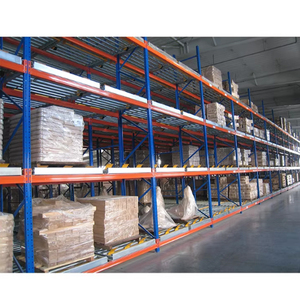
Warehouse FIFO Storage Racking System Flow Through Pallet Roller Racking
Get Catalog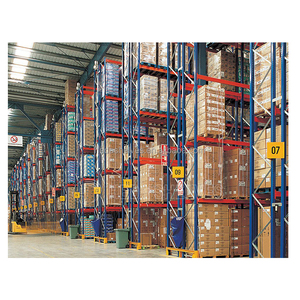
Warehouse Economical Heavy Duty Industrial Pallet Shelf Customized Selective Pallet Rack
Get Catalog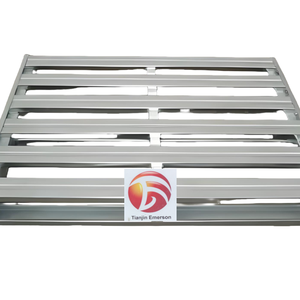
Heavy Duty Steel Pallet Racking System Warehouse Storage Rack With Wire Mesh Decking
Get Catalog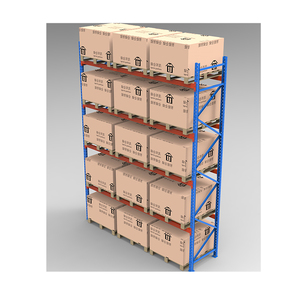
Warehouse Racking Heavy Duty Rack System Stack Warehouse Storage Steel Pallet Racks
Get Catalog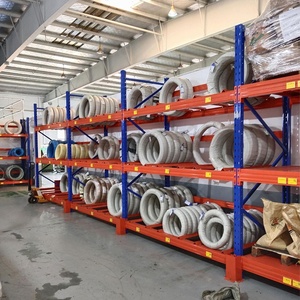
Shibang Industrial Pallet Rack Double Deep Selective Pallet Rack for Coil Material Storage
Get Catalog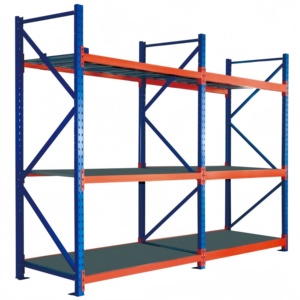
Medium Duty Long Span Metal Pallet Rack for Warehouses for Cargo & Storage
Get Catalog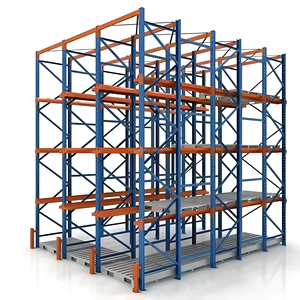
Wholesale Price High Density Drive-In Pallet Rack Warehouse Storage System Pallet Racking
Get Catalog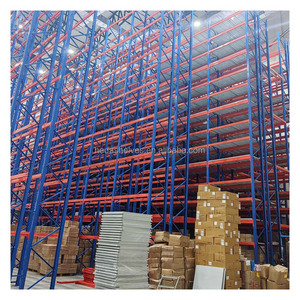
China Factory Price Steel Selective Heavy Duty Storage Racking Industrial Rack Shelving
Get CatalogExecutive Technical Report: Defining World-Class Static Pallet Racking Sourcing
In modern supply chain architecture, static pallet racking serves as the fundamental physical structural framework supporting global commerce. As supply chain managers, logistics directors, and structural procurement specialists seek to optimize footprint density, structural safety, and long-term asset ROI, choosing a tier-one manufacturing partner from China has evolved from a simple cost-reduction strategy into a strategic engineering collaboration.
Static pallet racks—encompassing Selective Pallet Racking, Drive-In Systems, Double Deep Configurations, and FIFO Gravity Flow Racks—do not feature continuous automated moving mechanical belts, but their structural load dynamics are intensely complex. A single upright frame failure in a high-bay layout carrying 40,000 kg of combined load can lead to catastrophic domino collapses. Therefore, global procurement must look beyond basic FOB pricing per ton and evaluate advanced metallurgical properties, automated roll-forming tolerances, electrostatic powder-coating integrity, and rigorous structural analysis against EN 15512, FEM 10.2.02, and RMI (Rack Manufacturers Institute) standards.
This comprehensive industry white paper details technical evaluation parameters, structural steel selections, future procurement megatrends, and the complete manufacturing methodology employed by leading South China racking exporters.
Enterprise Manufacturing Capabilities & Proven Supply Chain Resilience
Operating from an expansive 20,000 m² state-of-the-art production complex in South China, our manufacturing facilities feature unmatched capacity built specifically for bulk global export projects. Backed by over 23 years of specialized structural racking innovation, we process over 50,000 metric tons of certified structural steel annually, exporting 1,000+ full container loads across North America, South America, Europe, Asia, and Africa.
Advanced Manufacturing Assets
- 80+ Precision Machine Units: Fully automated continuous roll-forming lines, hydraulic CNC punching grids, robot-arm laser cutting, and automatic edge-bonding machines.
- South China's Longest Coating Line: Operating an industry-leading continuous automated powder-coating line capable of applying thermosetting epoxy-polyester coatings in 3 custom colors within a single seamless pass.
- SGS Audited & Certified: Verified quality control management system enforcing ISO 9001 protocols at every stage from steel coil receiving to final container packing.
Full Lifecycle Project Services
- Site Survey & 3D CAD Modeling: On-site spatial verification avoiding 2cm column clearance miscalculations that block installation or fire escape passages.
- Finite Element Structural Analysis: Customized stress, strain, and deflection calculations tailored to local seismic zones and floor slab load capacity limits.
- Worldwide Assembly Supervision: Comprehensive 3D installation blueprints, video guides, and dedicated field engineers dispatched for site commissioning.
Technical Selection Matrix: Engineering Static Pallet Racking Systems
Select the optimal static layout by balancing SKU diversity, inventory turnover rate, and floor utilization ratios:
| Racking Architecture | Selectivity Ratio | Floor Space Utilization | Stock Turnover Method | Typical Beam Load Capacity | Optimal Industry Application |
|---|---|---|---|---|---|
| Selective Pallet Rack | 100% Direct Access | 40% - 50% | FIFO / LIFO Flexible | 1,000 kg - 4,500 kg / level | FMCG, 3PL Logistics, Retail Distribution |
| Double Deep Pallet Rack | 50% Immediate Access | 60% - 65% | FILO (Requires Reach Truck) | 1,000 kg - 3,500 kg / level | Cold Storage, Batch Manufacturing |
| Drive-In / Drive-Through | 20% - 30% Low Access | 75% - 85% | LIFO (Drive-In) / FIFO (Drive-Thru) | 500 kg - 1,800 kg / pallet position | Seasonal Produce, Cold Rooms, Uniform SKUs |
| FIFO Gravity Flow Rack | 100% Dedicated Lane Access | 70% - 80% | Strict Automatic FIFO | 500 kg - 2,000 kg / gravity lane | Pharmaceuticals, Perishable Foods, Automotive Lines |
| Wire Mesh Decked Heavy Duty Rack | 100% Direct Access | 45% - 55% | FIFO / LIFO Flexible | 1,000 kg - 4,000 kg / level | Hazardous Goods, Overhead Fire Sprinkler Facilities |
Future Sourcing Megatrends: The Next Era of Static Racking Procurement
The global warehouse infrastructure market is undergoing rapid evolution driven by shifting global trade patterns, carbon neutrality regulations, and automated material handling integration. Overseas enterprise procurement officers must prepare for three macro trends shaping the future of static pallet racking:
1. Structural Steel Decarbonization & Green Coatings
European Union CBAM (Carbon Border Adjustment Mechanism) and global ESG frameworks are compelling buyers to audit the embodied carbon footprint of heavy steel racking. Top Chinese manufacturers are transitioning to green hydrogen-reduced steel billets and zero-VOC water-soluble or recyclable thermosetting epoxy powder coatings. Suppliers maintaining verified LCA (Life Cycle Assessment) data will hold clear competitive leads.
2. Hybrid AMR/AGV-Compatible Static Infrastructure
While fully automated AS/RS systems require enormous capital expenditures, Autonomous Mobile Robots (AMRs) combined with static pallet racks offer a modular, affordable middle ground. Future static pallet racks are increasingly engineered with wider base plate tolerances, laser-aligned bottom guide rails, and specialized floor-level clearance to enable seamless robotic underslung navigation and pallet drop-offs.
3. Dynamic Digital Twin & Structural Health Monitoring: Procurement is shifting from "buy-and-forget" physical steel towards smart rack management. Modern static racks in seismic regions are now retrofitted with IoT strain gauges and acceleration sensors attached to critical upright columns. Real-time telemetry alerts operations managers immediately if a forklift impact causes micro-fractures or exceeding deflection thresholds beyond FEM 10.2.02 standards.
Technological Innovations in Static Racking Manufacturing
The engineering behind static steel racking relies on cold-formed thin-walled steel mechanics. Recent technological breakthroughs introduced by leading Chinese exporters focus heavily on structural optimization, safety lock mechanism evolution, and enhanced chemical passivation:
- High-Yield Steel Profile Cold-Forming (Q355B vs Q235B): By shifting from standard Q235B steel to high-yield Q355B micro-alloyed steel, engineers achieve a 25% increase in load-bearing tensile strength while reducing total steel material weight. This allows longer beam spans (up to 3.9 meters) without violating the L/200 deflection ceiling under maximum load ratings.
- Automatic Safety Lock Pin Innovations: Traditional drop-in safety pins are frequently removed or lost during chaotic warehouse reconfigurations, leading to beam dislodgement caused by upward forklift mast collisions. Modern designs integrate spring-loaded auto-locking safety catches pre-installed inside the beam end connector tabs, guaranteeing 100% lock engagement during assembly.
- Duplex Surface Protection for Cold Storage & Humid Climates: Standard powder coatings risk micro-cracking in sub-zero frozen storage environments (-30°C), allowing condensation to rust inner tubular columns. Modern processing combines hot-dip galvanization (HDG) or pre-galvanized coils with an outer electrostatic powder barrier, extending lifespan to over 25 years without structural degradation.
Global Buyer Procurement FAQ: Engineering & Export Guidance
Get authoritative answers directly from our senior structural engineering team regarding seismic safety, custom sizing, ocean freight optimization, and compliance protocols.
Optimize Your Warehouse Storage Density & Safety Today
Connect directly with our senior structural engineering department. Get a free 2D/3D racking CAD layout design, structural calculation report, and competitive factory-direct pricing within 24 hours.