Factory Direct Catalog
High-Performance Carton & Pallet Flow Systems
Engineered for high-volume order fulfillment, e-commerce picking lines, and space-saving warehouse automation.
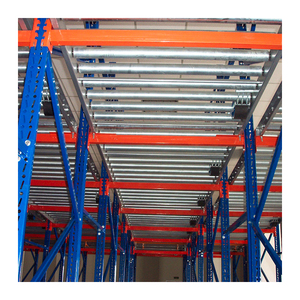
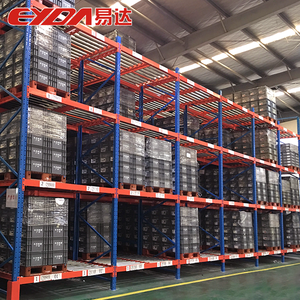
Pallet Flow Rack High Quality Fifo Warehouse Storage Racks Gravity Pallet Flow Racking First In First Out Rack System
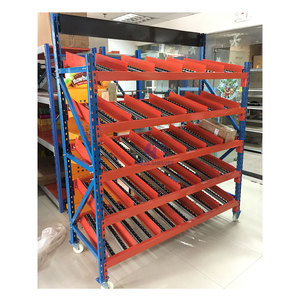
Customized Warehouse Storage Rack Pallet Flow Rack Shelving Lineside Roller Flow Rack Gravity Carton Flow Racking
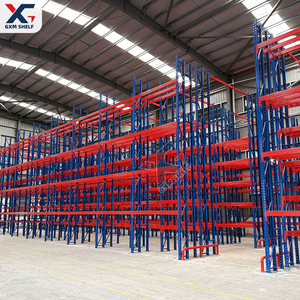
GXM Heavy-Duty Industrial Storage Rack For Pallets Durable 5-Layer Pallet Flow Rack With VNA Design Steel Warehouse Racking
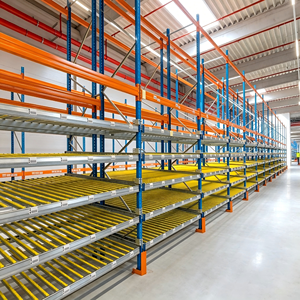
Gravity Carton Flow Racking Adjustable Roller Carton Flow Shelving FIFO for E-commerce Warehouse Order Fulfillment
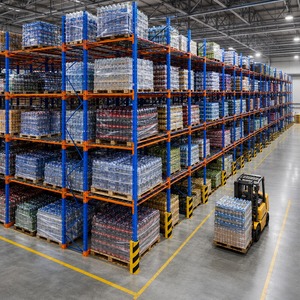
Palettenregal Racks Industriales Pallet Flow Racking Steel Storage Rack Q235B Steel For Bulk Chemical Plants
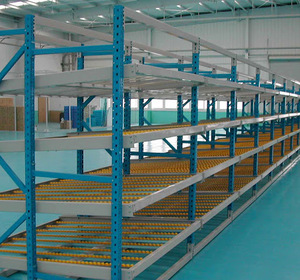
Warehouse Display High Quality Steel Industrial Storage Rack Carton Flow Metal Shelf Display Racks
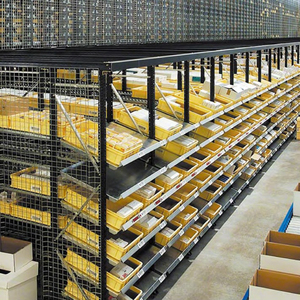
Gravity Flow Carton Flow Rack for Warehouse FIFO Storage System
B2B Sourcing Analysis
Engineering Mechanics & Operational Dynamics of Carton Flow Systems
An in-depth evaluation of First-In, First-Out (FIFO) gravity-driven storage architectures for global logistics directors and supply chain engineers.
In modern high-throughput fulfillment centers, floor footprint optimization and item picking velocity represent the primary levers for operational efficiency. Carton Flow Racking Systems—also known as gravity flow shelving or dynamic roller tracks—utilize inclined roller beds and natural gravity to move boxed products, plastic totes, and lightweight cartons from the loading aisle to the picking aisle seamlessly.
Unlike static shelf units where pickers must manually reach deep into bays or share aisles with restocking personnel, dynamic carton flow tracks separate stocking operations from order picking. This structural isolation eliminates cross-aisle friction, boosts picking speeds by up to 45%, and guarantees strict adherence to First-In, First-Out (FIFO) inventory rotation rules—vital for pharmaceuticals, food distribution, e-commerce, and fast-moving consumer goods (FMCG).
Slope Physics & Inclines
Engineered at precision pitch gradients between 2.5% to 5% (1.5°–3° angle), ensuring smooth gravity glide without excessive terminal impact speeds that could damage fragile goods.
Roller Track Engineering
High-impact polypropylene (PP) or steel skate wheels mounted on cold-rolled galvanized steel tracks. Track pitch is customizable from 30mm to 100mm depending on carton geometry.
Structural Integrity
Fabricated using premium Q235B / Q355B cold-rolled structural steel. Beams and uprights conform strictly to ISO 9001, CE, and FEM 10.2.02 international load rating standards.
Comparative Performance Analysis: Static Shelving vs. Carton Flow Racking
To understand the return on investment (ROI) offered by leading China wholesale manufacturers, consider the key operational metrics comparing traditional static racking against dynamic gravity flow systems:
| Operational Dimension | Traditional Static Shelving | Gravity Carton Flow Racking | Efficiency Gain / Impact |
|---|---|---|---|
| Inventory Rotation | LIFO (Last-In, First-Out) Risk | Strict FIFO Guarantee | Eliminates stock obsolescence & expired SKU waste |
| Floor Space Utilization | 40% – 50% (Aisle Intensive) | Up to 85% Density | Reduces required floor space by up to 35% |
| Picker Travel Distance | High (Walking between deep bays) | Low (Consolidated Pick Face) | Saves 70% in total picker walking motion |
| Restocking Interference | High (Pickers & Restockers share aisles) | Zero (Rear Loading / Front Picking) | Increases overall labor throughput by 40%+ |
| Pick-to-Light Integration | Complex & Expensive Retrofit | Native Profile Compatibility | Plug-and-play installation of digital pick indicators |
Factory Expertise & Authority
Why Partner with Rackzzszn Storage Equipment Co., Ltd.
Combining 23+ years of precision structural steel engineering with bulk manufacturing scale in Guangzhou, China.
SGS-Verified Manufacturing
Our 20,000m² state-of-the-art facility features over 80 automated punching, cold roll-forming, laser cutting, and robotic welding lines. Fully audited by SGS for structural quality control.
South China's Longest Spray Line
Equipped with an advanced automated electrostatic powder coating system capable of applying three colors in a single pass. Delivers superior anti-corrosion, impact resistance, and aesthetic durability.
End-to-End Engineering Support
From initial on-site CAD layout measurement to load balance simulations and export container packing, our 300+ dedicated engineers and technical staff ensure flawless project delivery.
Strategic Industry Outlook
Future Procurement & Technology Development Trends (2025–2030)
Insights into how smart logistics, automation integration, and sustainable materials are reshaping carton flow racking procurement.
1. Global Procurement Shifts: OEM Direct & Factory Sourcing
International warehousing enterprises are increasingly bypassing third-party intermediaries to source custom carton flow systems directly from verified China manufacturers. Direct B2B factory procurement yields a 25% to 40% reduction in capital expenditure (CAPEX) while enabling bespoke customization of roller track pitch, beam widths, and heavy-duty load capacities tailored to specific carton dimensions.
Furthermore, leading Chinese suppliers now offer full engineering compliance guarantees—providing complete stress analysis documentation, finite element modeling (FEM), and seismic load ratings tailored to North American (RMI), European (FEM), and Australian (AS4084) structural standards.
2. Integration with AMR, AGV, & Automated Pick-to-Light Systems
Carton flow systems are no longer isolated manual racks; they serve as critical interfaces for warehouse automation. Next-generation installations incorporate digital Pick-to-Light (PTL) sensor bars embedded directly into the aluminum guide rails, directing pickers with LED light indicators and digital count displays.
Simultaneously, autonomous mobile robots (AMRs) and automated guided vehicles (AGVs) are being deployed at the rear loading aisles to perform automatic replenishment, transforming carton flow structures into semi-automated, high-velocity distribution engines.
3. Sustainable Materials & Low-Friction Polymer Engineering
Environmental sustainability and energy efficiency are driving rapid innovation in roller wheel composition. Modern flow tracks utilize recyclable, self-lubricating high-density polyethylene (HDPE) and ultra-high-molecular-weight (UHMW) polymers.
These advanced polymers reduce rotational friction by up to 30%, enabling smooth gravity movement at lower incline slopes. This allows facility managers to stack more vertical picking levels within the same ceiling clearance height, maximizing cubic volume utilization.
4. Modular, Toolless Reconfiguration Architectures
As e-commerce product SKUs change rapidly, rigid rack layouts are becoming obsolete. Modern wholesale buyers demand modular clip-in roller tracks and drop-in lane dividers that can be adjusted manually without special tools or structural disassembly.
This operational flexibility empowers warehouse operators to adjust lane widths from 150mm to over 600mm in minutes, accommodating changing package footprints across peak seasonal demands.
Procurement Guidance
Carton Flow Racking Frequently Asked Questions
Expert answers from our senior racking structural engineers to help you specify, order, and deploy gravity flow systems.
How do I determine the correct slope pitch and roller track configuration for my cartons?
The ideal track slope typically ranges between 2.5% and 5% (approximately 1.5° to 3° inclination). Soft cardboard cartons require slightly steeper gradients and closer wheel spacing (30mm-50mm pitch) to prevent floor sagging between rollers. Rigid plastic totes glide smoothly on standard 50mm-80mm roller pitch at lower incline angles. We recommend sending sample cartons or exact weight parameters to our engineering team for empirical test runs before full production.
Can carton flow racking be retrofitted into our existing selective pallet racking frames?
Yes, absolutely. Our carton flow track assemblies are manufactured with universal drop-in mounting brackets designed to integrate seamlessly into standard teardrop, structural steel, or European-style racking upright frames. This allows you to convert the lower levels of your existing pallet racks into high-speed carton pick lanes while maintaining overhead pallet storage above.
What weight capacities can your dynamic carton flow tracks support per level?
Standard light-to-medium duty carton flow shelves support loads between 100 kg/m² to 500 kg/m². For heavy-duty manufacturing lines or machinery parts storage, we engineer reinforced steel roller tracks backed by heavy-gauge cross beams capable of supporting up to 1,200 kg per shelf level.
Are your carton flow racking systems suitable for cold storage and freezer applications?
Yes. For sub-zero cold storage and blast freezing environments (down to -30°C), we utilize specialized low-temperature resistant polymer rollers, stainless steel bearings, and hot-dip galvanized or cold-resistant powder-coated steel components to prevent embrittlement, rust formation, and lubricant freezing.
What is the typical lead time for custom wholesale orders and overseas shipping from China?
Standard production lead time is typically 15 to 25 days following technical drawing approval. As a direct manufacturer operating 80+ automated processing machines in Guangzhou, we optimize ocean freight container loading to ensure maximum structural yield per 40ft HQ container, lowering overall import freight costs.
Do you provide professional CAD layout design and installation guidance for overseas projects?
Yes. Every wholesale inquiry includes complimentary 2D warehouse layout planning and 3D structural modeling. Upon order dispatch, we provide detailed step-by-step assembly manuals, exploded component diagrams, video guidance, and remote engineering assistance. On-site installation supervision can also be arranged for major logistics hub projects.
Ready to Optimize Your Warehouse Picking Efficiency?
Contact our senior storage engineers today for a custom CAD layout design, engineering stress calculation, and competitive factory-direct quotation within 24 hours.