Engineered Storage Solutions
High-Performance Wire Decking & Pallet Racking Systems
Explore our export-grade OEM/ODM warehouse racking assemblies, engineered for maximum load capacity, fire compliance, and extended service life.
23+
Years Manufacturing Mastery
50,000T
Annual Steel Output
60+
Export Destinations
SGS
Audited Quality System
Industry Whitepaper
Engineering Standards for Industrial Pallet Racking with Wire Decking
A technical guide for supply chain directors, logistics engineers, and procurement managers evaluating OEM/ODM storage manufacturing partners.
The Structural Economics of Wire Mesh Decking Integration
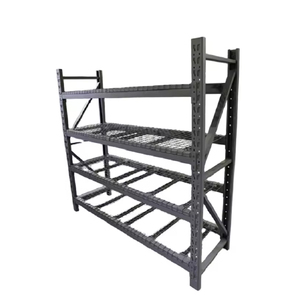
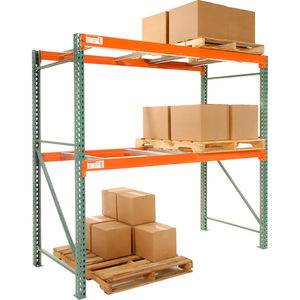
Modern high-bay logistics facilities require strict load integrity, fire protection compliance, and ergonomic material handling. Integrating cold-rolled steel pallet racking with electro-galvanized or powder-coated wire mesh decking transforms traditional beam storage into a versatile, high-safety storage platform.
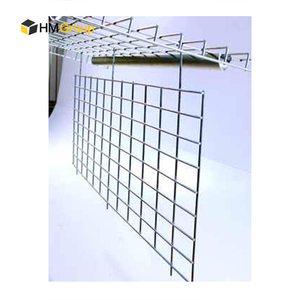
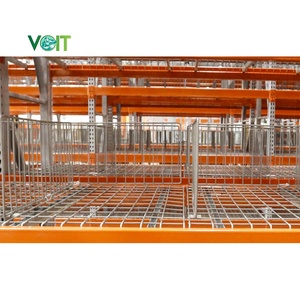
Unlike traditional solid wood or sheet metal decking, wire decking provides an open grid design (typically 2"x4" or 2.5"x4.5") that allows overhead sprinkler water to penetrate through lower rack levels without pooling—directly adhering to strict NFPA 13 fire sprinkler safety standards. Furthermore, wire decking prevents dust accumulation and allows illumination to penetrate deeper into lower shelf tiers, lowering operational risk and facility lighting costs.
OEM vs. ODM Technical Customization Pathways
Custom industrial storage relies on strict structural engineering rather than off-the-shelf catalog products. OEM (Original Equipment Manufacturer) production manufactures racking to client-provided CAD drawings, structural stamp calculations, and specialized steel grade specifications (e.g., Q235B, Q355B cold-rolled steel).
Conversely, ODM (Original Design Manufacturer) projects involve complete engineering ownership—translating floor plans, clear ceiling heights, slab load capacities, and forklift turning radii into optimized 2D/3D layouts. Our engineering team conducts Finite Element Analysis (FEA) to simulate point loads, uniformly distributed loads (UDL), and seismic forces under full capacity.
Critical Risk Factor in High-Density Warehousing
Dimensional errors of even 15mm to 20mm in column spacing or beam depth can compromise fire flue spaces, prevent automated guided vehicles (AGVs) from docking properly, or cause structural racking interference with overhead building trusses. Partnering with a verified manufacturer that provides pre-production structural verification prevents costly job site modifications during global project rollouts.
Engineering Metrics
Structural Configurations & Load Dynamics
Selecting the optimal wire deck profile and pallet rack upright frame depends on unit-load characteristics and operational workflows.
| Deck Type / Style | Channel Configuration | Standard Load Range (UDL) | Primary Application | Safety & Fire Standard |
|---|---|---|---|---|
| Step Wire Decking | Standard U-Channel resting on 1-5/8" step beam | 500 kg to 1,500 kg (1,100 - 3,300 lbs) | Standard Selective Pallet Racking, General Warehousing | ANSI MH26.2 / NFPA 13 Compliant |
| Flared Wire Decking | Universal Flared Channel fitting box or structural beams | 400 kg to 1,200 kg (880 - 2,640 lbs) | Structural Steel Beams, Box Beams, Multi-pitch systems | ANSI MH26.2 Compliant |
| Inverted Step Deck | Inverted Channel to eliminate dust/debris traps | 600 kg to 1,500 kg (1,320 - 3,300 lbs) | Food & Beverage, Pharmaceutical Cleanrooms | FDA Cleanroom / Hygiene Compliant |
| Inside Drop Deck | Flush-fit grid sitting inside the beam step | 300 kg to 800 kg (660 - 1,760 lbs) | Manual Carton Picking, Hand-loaded Order Fulfillment | Ergonomic Edge Smoothness Standard |
Standard Teardrop vs. Structural Frames
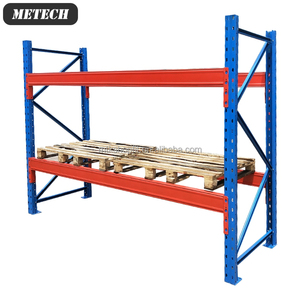
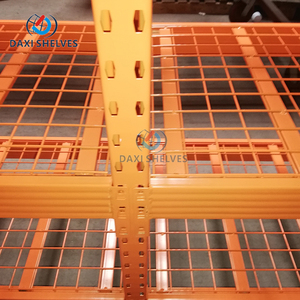
Teardrop upright frames offer tool-free 2-inch vertical adjustability, facilitating rapid reconfiguration for fast-moving consumer goods (FMCG). For heavy industrial applications or freeze-storage facilities subject to frequent forklift impact, structural C-channel steel racking provides superior damage resistance and higher lateral rigidity under extreme load conditions.
Wire Mesh Gauge & Support Channels
Wire decking structural integrity is governed by wire diameter (typically 4-gauge to 6-gauge steel wire) and the quantity of cold-formed support channels welded under the wire grid. A standard 46" x 42" deck utilizing 3 to 4 U-channels distributes dynamic load stresses across the supporting rack beams without excessive deflection.
Anti-Corrosion Surface Finishing
Our South China facility operates South China's longest continuous powder-coating spray line, applying dynamic electrostatic powder coatings, hot-dip galvanizing (HDG), or electro-galvanized finishes. This ensures optimal surface protection against humidity, chemical exposure, and sub-zero cold-storage temperatures down to -30°C.
Strategic Sourcing
Future Procurement Trends in Industrial Storage Infrastructure
How global supply chain managers are adapting their procurement criteria to meet automation, sustainability, and nearshoring demands.
1. Nearshoring & Modular Standardization
Global supply chain disruptions have driven multinational corporations toward standardized, modular racking architectures. Sourcing pallet racking with standardized teardrop patterns or 50mm/75mm metric pitch spacing enables global facilities to interchange parts, transfer wire decks between regional warehouses, and reduce long-term capital expenditure.
2. Automation-Ready & AGV Interface Design
As logistics facilities adopt Autonomous Mobile Robots (AMRs), Automated Storage and Retrieval Systems (AS/RS), and automated forklift fleets, racking tolerances are tightening. Modern procurement specs mandate tight floor-anchoring tolerances, beam deflection ratios below L/240, and wire decks engineered with integrated guidance channels for barcode scanning and robot sensors.
3. Decarbonization & EPD Traceability
Enterprise ESG mandates require structural steel vendors to provide Environmental Product Declarations (EPDs), carbon footprint accounting, and non-toxic powder coatings. Direct-factory sourcing from advanced green manufacturing lines reduces scope 3 carbon emissions while ensuring compliance with global environmental regulations.
R&D Roadmap
Technological Innovation in Wire Decking & Racking Systems
Advanced metallurgy, automated welding, and smart surface engineering are redefining standard warehouse storage equipment.
Zinc-Aluminium-Magnesium (ZAM) Coatings
Replacing traditional post-weld galvanizing, next-generation ZAM steel offers self-healing edge corrosion protection. When scratched or cut, ZAM coatings form a protective zinc hydroxide layer that prevents rust migration—making it ideal for humid agricultural warehouses, chemical handling centers, and coastal logistics facilities.
High-Tensile Cold-Rolled Steel Profiles
By leveraging advanced micro-alloyed steel grades such as Q355B and high-yield cold-roll forming, modern upright posts achieve up to 25% higher buckling strength without increasing total steel weight. This weight optimization significantly reduces international freight charges while maintaining maximum frame load ratings.
Manufacturing Powerhouse
Why Partner with Rackzzszn Storage Equipment Co., Ltd.
Combining 23+ years of structural steel expertise with complete in-house manufacturing, quality inspection, and international logistics support.
20,000 m² Advanced Production Hub
Located in Guangzhou, China, our state-of-the-art facility processes over 50,000 tons of high-grade steel annually. Equipped with 80+ automated machines—including precision roll-forming lines, robotic wire mesh welding cells, CNC punching, and automated packaging systems.
SGS Audited & Strict Quality Control
From raw cold-rolled steel coil inspection to post-weld dimensional verification and salt-spray coating testing, every batch undergoes rigid quality checks. Our end-to-end QC process guarantees structural alignment and load compliance before container loading.
Global Export Footprint (60+ Countries)
Exporting 1,000+ shipping containers annually, our team understands international packaging standards, container space optimization, custom clearance documentation, and remote site assembly guidance for global deployments.
Our End-to-End OEM/ODM Execution Workflow
1
Site Investigation & Floor Plan Review
Analyzing building dimensions, column grids, slab floor capacity, and forklift profiles.
2
2D/3D Engineering Layout & FEA
Generating optimized rack layouts, seismic calculations, and UDL capacity ratings.
3
Precision Fabrication & Coating
Automated roll-forming, robotic welding, and South China's longest spray line finishing.
4
QC Inspection & Export Packaging
Rigid load testing, fit verification, protective corner wraps, and container loading.
5
Global Logistics & Site Guidance
On-site or remote installation manuals, safety signage, and life-cycle inspection support.
Direct Engineering Answers
Frequently Asked Questions for Warehouse Racking Procurement
Clear, practical technical insights from our structural design team to help you specify the right system.
Do you design custom racking layouts for my specific warehouse height and layout?
Yes. Our engineering team reviews your architectural building drawings, ceiling clear heights, column grids, sprinkler routing, fire exit corridors, and forklift specifications. We then deliver a tailored 2D/3D racking layout CAD rendering alongside structural load calculations prior to production.
Why is on-site measurement verification critical before placing a heavy racking order?
Original building drawings frequently differ from as-built site reality. A minor deviation of just 2 cm in column placement or floor levelness can block fire exit aisles, prevent upright frames from fitting around building columns, or interfere with overhead ductwork. Verified site measurements eliminate costly field modification delays during installation.
What are the main advantages of wire mesh decking over traditional wood or metal decks?
Wire mesh decking allows overhead fire sprinkler water to pass through all rack levels to adhere to NFPA 13 standards, improves ambient facility lighting, prevents dust accumulation, and provides enhanced safety by catching dropped cartons or broken pallets. Unlike wood, wire decks are non-combustible and resist rot, moisture, and pest infestation.
Can your pallet racking and wire decking systems be deployed in sub-zero cold storage facilities?
Yes. We engineer racking systems specifically for cold-room and deep-freeze environments operating down to -30°C. We select ductile, low-temperature steel grades (e.g., Q355B), specialized cold-resistant powder coatings, or hot-dip galvanizing to prevent hydrogen embrittlement and surface peeling.
How do I choose between U-channel (step) wire decking and universal flared wire decking?
Step wire decks feature channel ends that sit securely inside the 1-5/8" step of standard step beams, offering high stability and flush fit. Flared wire decks feature flattened channel ends that rest on top of box beams or structural C-channel beams, providing a universal fit across diverse racking beam styles.
What installation support do you provide for overseas logistics projects?
We provide comprehensive installation packages including 3D assembly drawings, step-by-step video guides, structural bolt torque specifications, and 24/7 remote technical support. For major industrial projects, we can dispatch senior installation supervisors to lead your local erection crew on site.
Ready to Optimize Your Warehouse Layout & Engineering Specs?
Connect directly with our engineering team for free site consultations, custom CAD rack layouts, structural load assessments, and direct factory quotation packages.