Engineered Multi-Deep Pallet Storage Racks
Explore our heavy-duty industrial pallet racking systems customized for high volumetric efficiency, cold storage resilience, and automated shuttle integration.
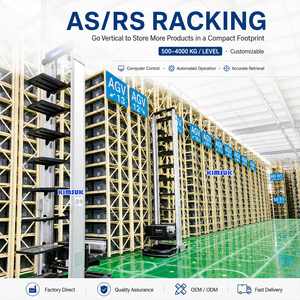 ASRS Multi-Deep
Stacker Crane Racking System Single Double Multi Deep Pallet Rack Flexible Configurations, Estanterias de Varias Profundidades
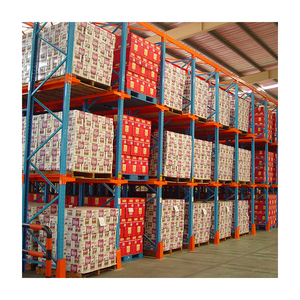 Drive-In Racking
Factory Price Drive-in Rack Multi-tier Through Racking System Customized Industrial Warehouse Rack Heavy Duty Pallet Rack System
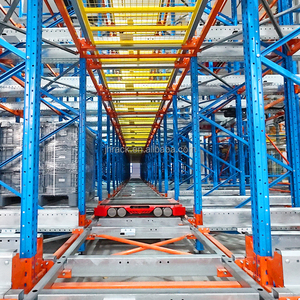 4-Way Shuttle
Customizable Multi-Deep 4-Way Shuttle Pallet Racking System | High-Density Automatic Pallet Rack Storage for Distribution Center
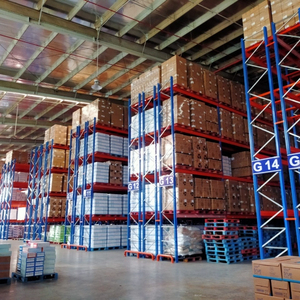 Double-Deep Rack
Heavy-Duty Steel Warehouse Rack Storage Double-Deep Pallet Multi-Level for Stacking and Storing in the Warehouse
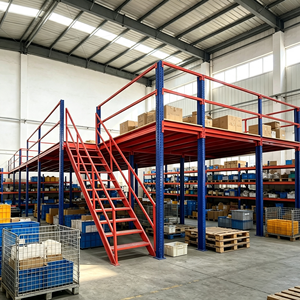 Mezzanine Platform
Heavy Duty Industrial Storage Warehouse Racks Pallet Racking Systems Attic Loft Mezzanine Floor Platforms
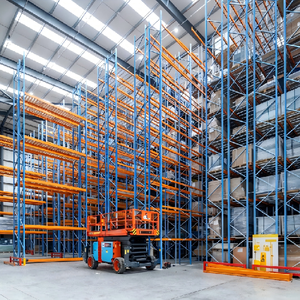 75mm Pitch System
75mm Pitch Upright Multi Tier Load Bearing Double Row Pallet Storage Rack Manufacturing Plant Double Deep Pallet Racking
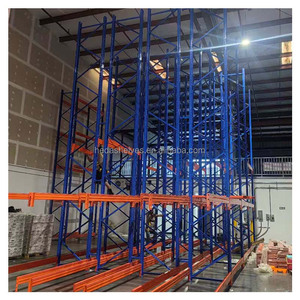 CE Certified Rack
CE Industrial Rack Steel Metal Shelving Heavy Duty Warehouse Storage Racking System Selective Pallet Rack
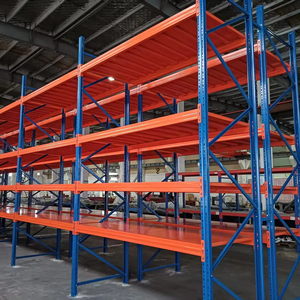 Laminated Stacking
Adjustable Easy Install Industrial Steel Laminated Stacking Racks & Shelves Heavy-duty Pallet Rack with Laminate Decks
Whitepaper: Evaluating Top Multi-Deep Pallet Racking Manufacturers
A comprehensive study on structural integrity, cold-formed steel metallurgy, space utilization metrics, and total cost of ownership (TCO) in automated deep-lane storage environments.
1. Executive Summary & Market Intelligence
Modern supply chain economics demand maximum cubic warehouse utilization alongside high-throughput fulfillment capabilities. As commercial real estate costs surge globally, logistics directors and industrial warehouse engineers are shifting away from traditional selective racking systems toward multi-deep pallet storage racking. Multi-deep storage architectures—encompassing double-deep selective, drive-in/through, push-back, radio shuttle, and 4-way automated guided shuttle systems—increase pallet density by 40% to 85% over standard single-deep layouts by reducing aisle requirements.
However, selecting the right multi-deep pallet racking manufacturer involves complex structural calculations, cold-formed steel profile optimization, seismic hazard compliance, and integration with Material Handling Equipment (MHE) and Automated Storage and Retrieval Systems (ASRS). This whitepaper evaluates the global manufacturing landscape, benchmark criteria for top-tier suppliers, structural engineering standards (FEM 10.2.02, RMI, ANSI MH16.1, EN 15512), and future-proof procurement strategies.
2. Global Manufacturer Benchmark Matrix
Below is a comparative evaluation of the top global manufacturing tiers specializing in heavy-duty multi-deep pallet storage systems. Evaluation parameters include structural steel grade selection, automated powder coating line capabilities, custom engineering flexibility, and global export infrastructure.
| Manufacturer Tier | Primary Steel Grades | Pitch & Profile Options | High-Density Efficiency | ASRS / Shuttle Compatibility | Engineering Support |
|---|---|---|---|---|---|
| Rackzzszn Storage (Tier 1 Global Export) | Q235B, Q355B Cold-Rolled Steel | 50mm, 75mm, 76.2mm (Custom) | Up to 85% Cubic Volumetric Density | Full 2-Way / 4-Way & Stacker Crane Synergies | In-House 2D/3D CAD, FEA & Site Survey Guidance |
| European Legacy Tier (e.g., SSI Schaefer, Jungheinrich) | S235JR, S355MC High Tensile Steel | 50mm System Pitch Standard | 70% - 80% Density | Proprietary Integrated Shuttle Systems | Turnkey System Integration (Higher Capex) |
| North American Heavy-Duty Tier (e.g., Ridg-U-Rak, Unarco) | Structural Hot-Rolled Channels / C-Shapes | 2" Pitch Slotted / Teardrop Pattern | 60% - 75% Density | Forklift-Driven Reach & Push-Back Focus | Regional Dealer Network Centric |
| Regional Fabrication Fabricators | Commercial Grade Mild Steel | Non-Standard Pitch Configurations | 45% - 60% Density | Basic Drive-In / Manual Reach Racking | Limited Load Testing & FEA Verification |
3. Structural Engineering Standards & Material Physics
The engineering of multi-deep pallet racking requires strict adherence to international structural steel codes. Because multi-deep systems store multiple rows of heavy unit loads (often 1,000 kg to 1,500 kg per pallet position) along a single depth plane, upright frames and guide rails experience compound bending moments, torsional forces, and dynamic impacts from forklifts or shuttle vehicles.
Cold-Formed Steel Metallurgy (Q235B vs. Q355B)
Leading manufacturers utilize certified high-tensile cold-rolled steel coils. Premium uprights formed from Q355B structural steel yield a minimum yield strength of 355 MPa, providing superior load-to-weight ratios compared to standard Q235B (235 MPa). This high tensile capacity allows for tall, multi-tier racking structures exceeding 15 to 25 meters in height while retaining slim profile cross-sections that maximize internal clear opening height.
75mm Pitch Upright Flexibility & Profile Geometry
A critical engineering feature in modern multi-deep racking is the upright hole pitch. Systems designed with a 75mm pitch pattern allow precise vertical adjustment of beam levels. This flexibility optimizes vertical storage window gaps based on exact pallet cargo heights, preventing wasted vertical space. Upright cross-sections engineered with 11 to 13 structural rib bends distribute eccentric loading evenly across the column axis, mitigating local buckling risks under high axial compression.
Beam Connector Safety
Heavy-duty multi-deep beams utilize 3 to 5-claw cast or cold-stamped connectors with auto-locking safety pins to prevent accidental dislodgement during high-reach pallet placement.
FEA Load Simulation
Advanced Finite Element Analysis (FEA) models dynamic loading, seismic response accelerations, and structural deflection under full design capacity prior to mill production.
Corrosion Prevention
Automatic electrostatic powder coating processes deliver a uniform 60–80 micron epoxy-polyester coating, resisting humidity, abrasion, and sub-zero cold storage condensation.
4. In-Depth Multi-Deep System Architecture Comparison
Choosing the correct multi-deep configuration depends on SKU inventory velocity, rotation methodology (LIFO vs. FIFO), and forklift fleet capabilities. Below is an engineering overview of the primary multi-deep storage methodologies:
A. Double-Deep Selective Pallet Racking
Double-deep racking stores pallets two rows deep, accessible via pantograph reach trucks or specialized double-deep handling attachments. By eliminating one out of every two aisles in a standard selective arrangement, double-deep racking increases warehouse floor utilization by approximately 30% to 35%. It operates primarily under a Last-In, First-Out (LIFO) inventory model per slot, making it ideal for high-volume SKUs with multiple pallets per SKU line.
B. Radio Shuttle Multi-Deep Pallet Storage
Radio shuttle systems represent the pinnacle of semi-automated deep-lane storage. Autonomous battery-powered shuttles travel on precision rails beneath pallet rows inside the racking channels. Controlled via wireless RF handheld remotes or warehouse management software (WMS), shuttles retrieve and deposit pallets within channels up to 40+ pallets deep. This structure supports both LIFO (drive-in style) and FIFO (drive-through style) picking protocols without requiring forklifts to enter the racking lanes, virtually eliminating rack structural impact damage.
C. Automated 4-Way Shuttle & ASRS Stacker Crane Racking
In fully automated logistics distribution centers, multi-deep racking serves as the core matrix for 4-Way Shuttles and Stacker Cranes (ASRS). 4-Way shuttles can travel laterally and longitudinally across structural rack channels, switching levels via vertical lifts. This creates fully autonomous storage density with zero direct human labor inside the aisle, drastically lowering operational energy costs in refrigerated cold stores down to -25°C or lower.
5. Technological & Procurement Trends Shaping Deep-Lane Storage (2025–2030)
As industrial supply chains adopt Industry 4.0 paradigms, procurement teams must look beyond short-term equipment price tags and evaluate long-term technology integration capabilities:
- Convergence of AMR/AGV with Multi-Deep Racking: Modern deep-lane racking systems are engineered with precision ground guide rails, enabling seamless docking of Autonomous Mobile Robots (AMRs) for automated pallet drop-off and pickup.
- Sub-Zero Cold Chain Optimization: Cold storage operating costs are driven by electrical cooling energy. Multi-deep shuttle racking condenses refrigerated storage footprints by up to 50%, dramatically reducing thermal dissipation losses and energy costs per stored pallet.
- Smart Structural Integrity Monitoring: IoT strain gauges and impact sensors embedded directly into upright column bases provide real-time structural health monitoring, alerting safety managers to forklift collisions or overload deflections before structural failure occurs.
- Sustainable Low-Carbon Manufacturing: Top manufacturers are transitioning to closed-loop powder coating wash systems and zero-VOC eco-coatings alongside green steel sourcing to reduce scope 3 embodied carbon footprint in logistics construction projects.
6. Manufacturer Selection Guide: Critical Procurement Criteria
When shortlisting manufacturers for international multi-deep pallet racking contracts, buyers should conduct rigorous due diligence against the following five evaluation pillars:
- Certified Production Capacities: Ensure the supplier operates full in-house cold roll-forming lines, automated punching machines, robotic welding cells, and continuous powder spray lines capable of handling large-volume project deadlines (e.g., 50,000+ tons annual capacity).
- Third-Party Quality Verification: Demand mill test certificates for steel raw materials (CE, SGS, ISO 9001 certification) and verified FEA calculation reports signed by chartered structural engineers.
- Accuracy of Structural Hole Punching: Multi-deep rails require sub-millimeter punching tolerances to prevent shuttle vehicle vibration and tracking drift.
- Export Packaging Standards: Long-distance ocean freight requires protective steel-strapped wooden bundling, anti-rust moisture barrier wraps, and corrugated edge guards to ensure zero transport damage.
- On-Site Assembly Support & Documentation: Top manufacturers provide comprehensive 3D installation blueprints, step-by-step video assembly guides, and optional on-site engineering supervision for overseas projects.
Rackzzszn Storage Equipment Co., Ltd. Manufacturing Strengths
Over two decades of engineering excellence in industrial storage racking manufacturing, export logistics, and custom warehouse design.
20,000 m² Production Facility
Located in South China's industrial manufacturing hub, housing 80+ advanced production machines including automated punching lines, roll-forming mills, and robotic welding stations.
Longest Spray Line in South China
Our continuous automated powder coating spray line enables multi-color coating in a single pass with exceptional surface adhesion, coating uniformity, and corrosion resistance.
1,000+ Export Containers Annually
Exporting engineered pallet racking systems, mezzanines, and industrial steel pallets to over 60 countries across North America, Europe, Asia, South America, and Africa.
Precision 3D CAD & FEA Design
Our in-house structural engineering team converts your warehouse architectural drawings into optimized 2D layout blueprints and 3D CAD stress models before production.
SGS Audited & CE Certified
Rigorous quality control processes from incoming raw steel coil verification to post-welding structural inspections ensure total compliance with international safety codes.
Turnkey Project Support
From initial site survey and load calculation to export documentation, customs clearance assistance, and remote or on-site installation guidance.
Frequently Asked Questions by Global Racking Buyers
Expert engineering answers to common technical queries regarding multi-deep storage systems, custom manufacturing, installation, and warehouse safety.
How do multi-deep pallet racking systems compare to selective racking in space utilization?
Selective pallet racking offers 100% immediate pallet access but requires dedicated aisles between every row, limiting floor space utilization to approximately 35%–40%. Multi-deep racking systems (such as double-deep, drive-in, or shuttle racking) eliminate multiple forklift aisles, consolidating storage density and increasing floor space utilization to 60%–85%. This makes multi-deep configurations significantly more cost-effective for facilities handling medium to high pallet volumes per SKU.
Can multi-deep racking be customized for cold storage and freezer applications?
Yes. Multi-deep racking is the industry standard for low-temperature cold storage and freezer warehouses (-25°C to -30°C). Our engineers utilize high-grade Q355B cold-rolled steel with specialized low-temperature powder coatings or hot-dip galvanizing finishes to prevent cold embrittlement and corrosion. High-density shuttle systems are especially popular in cold storage because condensing the footprint directly reduces refrigerated room volume and electrical power usage.
What forklift equipment is required for double-deep vs. deep-lane shuttle systems?
Double-deep pallet racking requires specialized reach trucks equipped with pantograph double-deep pantographs or telescopic forks capable of reaching two pallets deep into the rack frame. In contrast, radio shuttle multi-deep systems only require standard counterbalanced or reach forklifts to place the shuttle and load/unload pallets at the front aisle face, as the autonomous shuttle handles all internal channel transportation.
Why is a 75mm upright pitch pattern advantageous in industrial pallet racking?
A 75mm pitch upright pattern provides vertical beam level adjustment increments of 75mm (approximately 3 inches). This allows warehouse managers to fine-tune beam elevations to match specific pallet cargo height profiles, minimizing unused vertical clearance gaps. Optimizing vertical clearance across 5 to 10 storage tiers can allow an additional full beam level within the same building clear height.
Do you provide site survey and engineering layout support before placing an order?
Yes. Our engineering department conducts structural site analysis based on your architectural drawings, building column grids, clear ceiling height, floor slab load capacities, fire suppression sprinkler clearances, and forklift operating specs. We deliver complete 2D layout drawings, 3D structural renderings, and FEA load calculation reports for your review prior to manufacturing commitment.
How do you ensure safe ocean shipping and corrosion resistance for export orders?
All upright columns, structural beams, and rail components undergo heavy-duty steel strapping into rigid timber-skidded bundles with protective plastic corner guards and moisture-barrier film wrapping. Small hardware accessories and baseplates are packed in reinforced wooden crates. Surface finishes are baked in our continuous electrostatic powder line, passing 500+ hour salt spray testing for superior corrosion resistance during transit and operation.
What international structural standards do your racking designs comply with?
Our industrial racking systems are designed and engineered in compliance with international structural steel storage codes, including European FEM 10.2.02 and EN 15512 standards, American RMI (Rack Manufacturers Institute) / ANSI MH16.1 specifications, and Australian AS4084 guidelines, ensuring high structural safety factors and seismic stability.
Ready to Maximize Your Warehouse Storage Capacity?
Contact our senior structural engineers today for a complimentary warehouse site survey, custom 3D CAD layout, and direct factory price quote.