Featured Industrial Gravity & Heavy-Duty Racking Systems
Directly sourced from our SGS-verified manufacturing facility. Standardized export-grade finishes engineered for maximum pallet throughput and safety compliance.
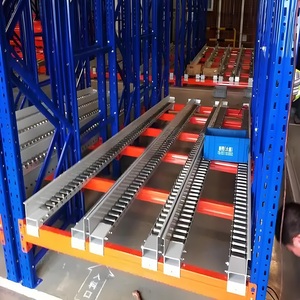
Heavy Duty Gravity Flow Racking System Customizable Industrial Storage Pallet Rack
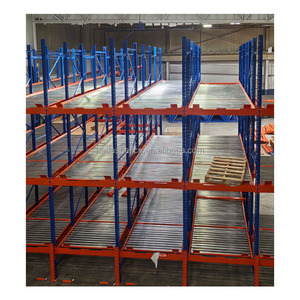
Gravity Flow Racking System Warehouse Shelves Heavy Goods Pallet Storage Rack Shelving Metal Shelf Rack
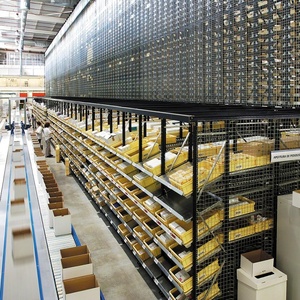
High Efficiency Durable Heavy Duty Adjustable 5-Layer Carton Gravity Flow Rack CE Certified Smooth
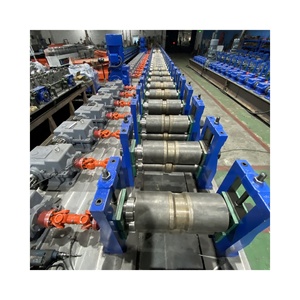
Warehouse Storage Mezzanine Floor Pallet Racking Sigma Beam Upright Roll Forming Machine System
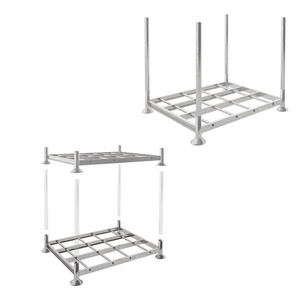
Industrial Detachable Commercial Adjustable Pallet Vertical High Quality Stillage Pallet Storage Rack
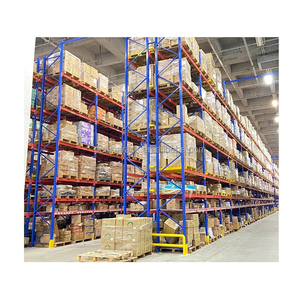
Export Standard Packing Pallet Rack Warehouse Rack Manufacturer Q235B Steel Heavy Duty Storage Rack
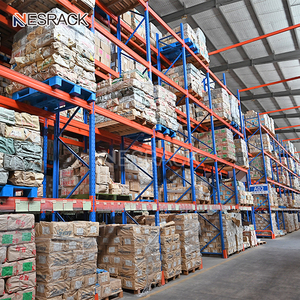
Pallet Multilevel Racking Heavy Duty Warehouse Storage Shelf System Warehouse Stacking Pallet Rack
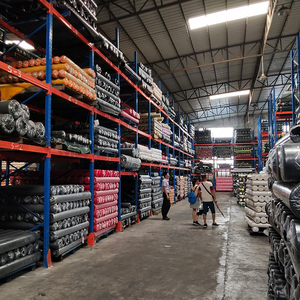
Highly Customizable Free Design Storage Rack for Heavy Duty Storing 1000KG - 3000KG Per Level
South China’s Premier Storage Equipment Factory
Rackzzszn Storage Equipment Co., Ltd. operates a 20,000 m² state-of-the-art facility in Guangzhou, delivering end-to-end engineering, roll-forming, automated powder coating, and export services worldwide.
Gravity Flow Pallet Racking Mechanics, Load Engineering & Global Sourcing Optimization
A comprehensive evaluation framework for warehousing managers, logistics directors, and structural engineers specifying high-density dynamic live storage systems.
1. Architectural Physics of Gravity Flow Systems (Live Storage)
Gravity flow pallet racking—frequently designated as dynamic live storage—represents the apex of high-density First-In, First-Out (FIFO) inventory engineering. By harnessing gravitational potential energy across sloped roller lanes (typically pitched at an incline of 3.5% to 4.5%), heavy unit loads automatically travel from the loading aisle to the picking face.
To achieve seamless operation without kinetic runway, China's leading gravity flow rack manufacturers integrate self-energizing speed controller brake rollers spaced at calculated intervals (usually every one-pallet pitch). These centrifugal brake units control pallet kinetic acceleration, maintaining a safe terminal velocity under 0.3 meters per second regardless of pallet weight variations ranging from 300 kg to 1,500 kg per position.
Centrifugal Brake Rollers
Internal planetary gear mechanisms engage magnetic or friction braking forces proportionate to speed, eliminating impact damage at the picking face.
Safety Pallet Separators
Mechanical trip-latch separators isolate the frontmost pallet from trailing line pressure, allowing forklifts to extract pallets uninhibited by rear forces.
Steel Grade & Strain Elasticity
Engineered using high-tensile Q235B and cold-rolled Q355B structural steel, conforming strictly to FEM 10.2.02 and EN 15512 structural codes.
2. Comparative Storage Engineering: Gravity Flow vs. Alternative High-Density Racking
Selecting the optimal pallet storage configuration requires balancing floor area consumption (CAPEX), SKU selectivity, operator safety, and operational throughput speeds (OPEX). The matrix below illustrates how Gravity Flow compares against alternative structural systems:
| Racking Architecture | Inventory Flow | Volume Utilization | SKU Selectivity | Forklift Travel Time | Pallet Damage Risk |
|---|---|---|---|---|---|
| Gravity Flow (Live Storage) | Strict FIFO | 85% - 90% | Medium (Per Lane) | Ultra-Low (Dedicated Aisles) | Extremely Low |
| Selective Pallet Rack | FIFO / LIFO | 35% - 40% | 100% (Direct Access) | High (Traverses All Aisles) | Low |
| Drive-In Racking | Strict LIFO | 65% - 75% | Very Low | High (Enters Steel Structure) | High (Upright Collisions) |
| Push-Back Racking | Strict LIFO | 70% - 75% | Medium (Per Lane) | Moderate (Front Loading Only) | Low-Medium |
3. Modern Procurement Trends in High-Density Chinese Racking Export (2025–2030)
As global logistics centers transition toward ESG compliance and automated integration, procurement mandates for China gravity flow pallet racking factories are shifting rapidly. Overseas buyers are no longer prioritizing initial steel price per kilogram; instead, structural longevity, carbon efficiency, and robotic readiness dominate procurement specifications:
- AMR & AGV Hybrid Interfacing: Modern gravity flow systems are increasingly engineered with precise floor-level guide rails and photoelectric sensor brackets, allowing Autonomous Mobile Robots (AMRs) to pick automatically from unload stations.
- Green Steel & Low-VOC Powder Coatings: Leading Chinese exporters are adopting low-carbon Q355B recycled scrap steel combinations coupled with heavy-metal-free, zero-VOC TGIC polyester powder coatings to satisfy EU Carbon Border Adjustment Mechanism (CBAM) standards.
- Cold-Chain Condensation Corrosion Defense: For refrigerated food and pharmaceutical distribution centers operating between -25°C and -30°C, custom galvanized roller tracks with stainless steel ball bearings eliminate rust-induced roller seizure caused by humidity cycles.
Engineering Rigor From Site Survey to Commissioning
Why Tier-1 global logistics operators, 3PL distributors, and cold storage facilities select Rackzzszn as their primary OEM/ODM rack exporter.
Custom Layout & CAD/BIM Design
Our in-house structural engineers evaluate your architectural drawings, building column grids, forklift turning radii, and fire sprinkler clearances to generate optimized 2D CAD and 3D BIM layouts within 24 hours.
Verified Quality Control
Raw steel coil testing, weld penetration ultrasonic inspections, coating thickness gauge checks, and static beam load testing are performed under SGS and CE auditing protocols prior to container loading.
Export-Ready Container Loading
All uprights and beams are bundled using protective corrugated wrap, steel strapping, and custom steel stillages, eliminating transit abrasion and maximizing 40ft HQ container space utilization.
Frequently Asked Questions (FAQ)
Essential technical and commercial insights for buying gravity flow racking systems directly from Chinese manufacturers.
How do engineers determine the exact gradient slope for gravity flow racking?
The standard slope pitch ranges between 3.5% and 4.5% (approx. 2.0 to 2.5 degrees). The precise angle depends on pallet base material (hardwood, plastic, steel), bottom runner orientation, and expected weight range. We conduct physical roll testing on customer sample pallets in our lab to calibrate roller pitch before full production.
What pallet quality standards are required for gravity flow roller lanes?
Gravity flow systems demand uniform pallet bases without broken bottom boards, protruding nails, or severe sagging. Pallets should conform to standard EUR (1200x800mm), GMA (48x40 inch), or standard industrial sizes with minimum bottom runner deflection under load.
Do you design custom racking layouts for our specific warehouse space?
Yes. Our engineering team reviews building floor plans, clear ceiling heights, column locations, fire safety corridors, and forklift specifications to provide a detailed 2D layout, 3D structural rendering, and engineering load calculation prior to manufacturing contract sign-off.
Why is verified site measurement crucial before placing an overseas order?
Architectural drawings often differ from actual built dimensions. A minor building column deviation of just 2 to 3 cm can block a heavy-duty upright row or obstruct a fire escape route. We require verified site measurements to guarantee 100% installation precision.
Can Rackzzszn gravity flow racks be installed in cold storage facilities?
Absolutely. We customize cold storage systems using low-temperature specialized Q355B steel, corrosion-resistant galvanized roller tracks, stainless steel sealed bearings, and synthetic lubricants rated for sub-zero operational environments down to -30°C.
What international structural and safety standards do your storage racks meet?
All our racking systems are designed, manufactured, and tested in accordance with European standard FEM 10.2.02 / EN 15512, American RMI guidelines, Australian standard AS4084-2012, and ISO 9001 quality management systems.
Transform Your Warehouse Density with Precision Engineering
Contact our senior structural engineers today. Receive a customized 2D/3D racking layout, structural analysis, and direct factory pricing quote within 24 hours.
Get Catalog