Navigating Heavy-Duty Industrial Pallet Racking Sourcing from China
Modern material handling demands absolute structural safety, maximum volumetric efficiency, and flawless compatibility with automated forklift fleet operations. As global supply chains scale, selecting a top-tier Chinese warehouse pallet storage system manufacturer requires looking beyond basic price-per-ton metrics toward structural steel yield strength, structural deflection engineering (FEM 10.2.02 / RMI MH16.1 compliance), high-durability electrostatic powder coating, and precision roll-forming capabilities.
High-Performance Warehouse Storage Product Portfolio
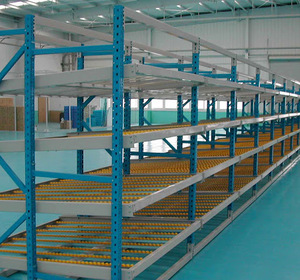 High Efficiency
Warehouse Display Steel Industrial Carton Flow Metal Shelf Racks
- Structure: Integrated Gravity Roller Tracks
- Capacity: 300 - 1000 kg / Layer
- Ideal For: Order Picking & Split-Case Fulfillment
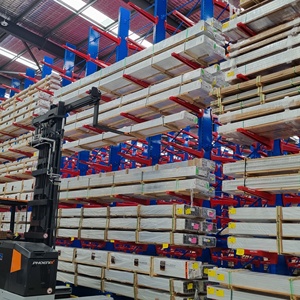 CE Certified
Heavy Duty Steel 5-Layer 1500kg/Arm Roll-Formed Cantilever Rack
- Arm Payload: 1500 kg per Arm
- Finish: Corrosion-Resistant Powder Coating
- Application: Timber, Pipe & Steel Profile Storage
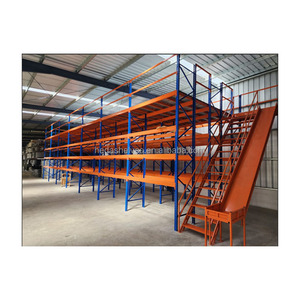 Space Multiplier
Steel Platform Mezzanine Floor Pallet Racking Shelves & Stacking System
- Floor Load: 300 - 1200 kg / sqm
- Level Option: 2-Tier or 3-Tier Multi-Level Layout
- Access: Integrated Staircases & Catwalks
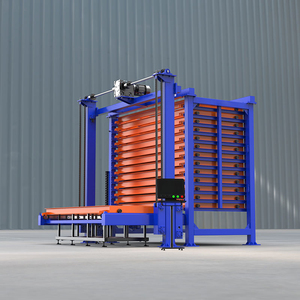 Automated
Heavy Duty Automated Vertical Panel & Sheet Metal Racking System
- Design: High-Density Drawer/Cassette Matrix
- Automation: Crane & Hoist Interfacing
- Use Case: Heavy Sheet Metal & Plate Goods
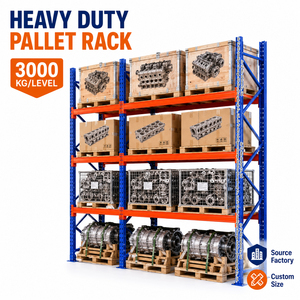 Ultra Heavy Duty
3000KG Heavy Duty Warehouse Shelf Rack for Pallet & Carton Storage
- Bay Rating: 3000 kg per Beam Level
- Tiers: 4 Levels Adjustable Pitch
- Steel Grade: Structural Q235B / Q355B Steel
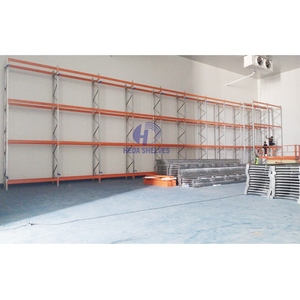 High Density
Double Deep Pallet Rack Heavy Duty Storage (1000-3000kg/Layer)
- Density: Increases Capacity by Up to 30%
- Handling: Deep-Reach Pantograph Forklifts
- Safety: Structural Cross-Beams & Upright Guards
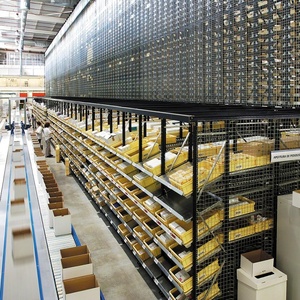 FIFO Flow
High Efficiency Durable 5-Layer Carton Gravity Flow Rack for Distribution
- Rotation: First-In, First-Out (FIFO) System
- Rollers: Aluminum Roller Tracks & Brake Wheels
- Efficiency: Cuts Picking Travel Time by 40%
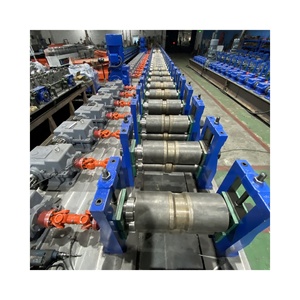 Engineered Beam
Storage Mezzanine Floor Sigma Beam & Upright Roll Formed Racking System
- Beam Profile: High Moment of Inertia Sigma Section
- Finish: Continuous Pass Powder Coating Line
- Certification: ISO 9001:2015 & SGS Audited
Why Enterprise Logistics Engineering Teams Partner with Rackzzszn
Headquartered in Guangzhou's industrial core with a 20,000 square meter manufacturing plant, Rackzzszn Storage Equipment Co., Ltd. represents the peak of Chinese structural steel racking engineering. Unlike trading intermediaries, we control the entire value chain from cold-roll forming to automated powder spraying.
High-Yield Certified Steel Sourcing
We source prime cold-rolled steel coils exclusively from premier state-owned mills (Baosteel, Shougang). Upright columns and box beams utilize Q235B and Q355B structural grades to ensure tensile strength exceeds 490 MPa, preventing structural fatigue under cyclic load dynamic stress.
Precision Roll-Forming & Tooling
Operating 80+ automated punching, roll-forming, and robotic welding stations, our profile tolerance is maintained within tight limits (±0.5mm). Upright teardrop and omega-profile patterns ensure rigid connector engagement, eliminating beam rotation under heavy loading.
South China's Longest Coating Line
Our facility houses a continuous multi-stage pre-treatment and electrostatic powder coating line. Components undergo 9-stage phosphating, degreasing, and pure epoxy-polyester thermosetting powder application, yielding a scratch-resistant 80-120 micron protective layer.
Pallet Racking System Engineering Comparison Matrix
Selecting the optimal warehouse storage system requires balancing volumetric storage density against individual SKU selectivity. Below is an engineering evaluation designed to guide warehouse operations directors and procurement heads.
| Racking Architecture | Volumetric Density | SKU Selectivity | Aisle Width Requirement | Forklift Compatibility | Ideal Application Profile |
|---|---|---|---|---|---|
| Selective Pallet Racking | Moderate (40-50%) | 100% Direct Access | 3.0m - 3.8m (Standard) | Counterbalance / Reach Truck | High SKU count, fast turn inventory, third-party logistics (3PL) |
| Double-Deep Pallet Rack | High (60-65%) | 50% Immediate Access | 3.0m - 3.5m | Pantograph / Deep Reach Truck | High-volume homogeneous SKUs, batch manufacturing storage |
| Drive-In / Drive-Through | Very High (75-85%) | Low (LIFO / FIFO by lane) | 1.8m - 2.2m (Lane entry) | Standard Counterbalance | Cold storage, frozen foods, seasonal goods with low rotation rates |
| Carton / Pallet Flow Rack | High (70-80%) | Automatic Rotation (FIFO) | Dedicated Load/Pick Aisles | Reach Truck / Gravity Assisted | Perishable food, pharmaceuticals, high-speed picking operations |
| Radio Shuttle Automation | Ultra-High (85-90%) | Automated Lane Access | 3.0m (Main Aisle Only) | AGV / Forklift + Autonomous Shuttle | High-throughput cold storage, distribution centers, automated logistics |
| Structural Cantilever Racks | Custom Density | 100% Linear Access | Variable (Product length dependent) | Side Loader / Heavy Counterbalance | Pipes, steel tubing, timber, building materials, extrusions |
Future Procurement Trends in Industrial Storage Systems
Global warehouse procurement is experiencing a paradigm shift. Buyers are no longer purchasing isolated steel frames; they are investing in integrated, future-proof logistics infrastructure. Sourcing managers must evaluate four core trends shaping the market over the next decade.
1. Transition to ASRS & Hybrid Automation Compatibility
Traditional manual racking is rapidly adapting to accommodate Autonomous Mobile Robots (AMRs) and Automated Storage and Retrieval Systems (AS/RS). Modern pallet racking specs increasingly mandate tighter manufacturing tolerances (±1.0mm vertical alignment across 12 meters), specialized guide rail integration, and sensor-compatible structural uprights capable of interfacing with robotic shuttles.
2. Cold-Chain Resiliency & Sub-Zero Steel Metallurgy
With the exponential growth of refrigerated pharmaceuticals and food distribution, demand for cold-storage racking is surging. Sub-zero environments (-25°C to -40°C) cause standard carbon steel to suffer hydrogen embrittlement and catastrophic dynamic failure. Future procurement focuses on micro-alloyed structural steels, specialized cold-galvanized finishes, and ductility-tested beam connectors.
3. Decarbonization & Green Steel Certification
Multinational enterprises require ESG (Environmental, Social, and Governance) compliance throughout their supply chains. Top Chinese racking manufacturers are adopting low-emission electric arc furnace (EAF) steel, solvent-free eco-friendly powder coatings, and container loading optimization algorithms that minimize the carbon footprint per delivered cubic meter of steel.
4. BIM Modeling & Digital Twin Engineering
Procurement teams now expect manufacturers to provide full 3D Building Information Modeling (BIM) files (.RVT, .IFC) alongside engineering quotes. Integrating racking geometry directly into architectural BIM models ensures structural clearance, fire sprinkler alignment, and floor slab point-load safety verification long before physical steel fabrication commences.
Manufacturing Innovations in China's Racking Industry
The manufacturing process for pallet racks has evolved from crude manual welding to computerized precision engineering. Leading Chinese manufacturers like Rackzzszn rely on advanced metallurgical automation to deliver high structural stability.
Multi-Stage Cold Roll Forming
Continuous multi-station roll-forming mills shape steel strip gradually to minimize internal residual stress. This guarantees uniform profile geometry across upright lengths exceeding 12 meters, ensuring consistent structural integrity under maximum column loading.
Robotic Arc Welding Array
Beam end-connectors (claws) are welded using multi-axis robotic arc welding systems under Argon-CO2 shielding gas. This yields full-penetration, spatter-free weld seams that withstand heavy shear stresses caused by forklift placement dynamic impacts.
Automated Powder Spray Lines
Utilizing 100% electrostatic powder coating with automated reciprocators ensures even film thickness (80-120 microns) across complex internal radii. Components pass through a high-temperature curing oven to form a tough polymer barrier resistant to impacts, chemical exposure, and humidity.
Frequently Asked Questions by Global Racking Buyers
Expert engineering answers addressing load safety, floor slab verification, international standard compliance, and overseas project execution.