High-Performance Low Level & Heavy-Duty Racking Systems
Explore our core engineering catalog designed for warehouses, distribution hubs, commercial centers, and cold-storage facilities.
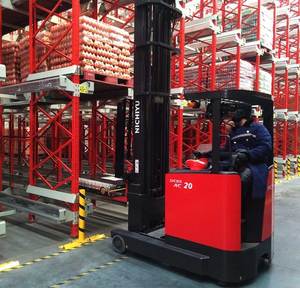
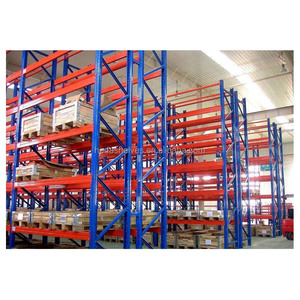
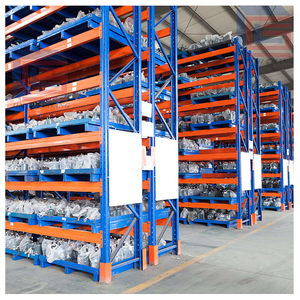
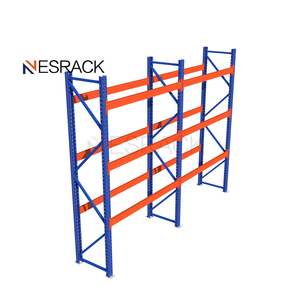
Engineering Excellence in Low Level Pallet Racking Manufacturing
A comprehensive analysis of structural load distribution, material yield strengths, ergonomic picking efficiencies, and quality standards for low-tier industrial storage infrastructure.
1. Defining Low Level Pallet Racking: Ergonomics, Velocity, & Safety
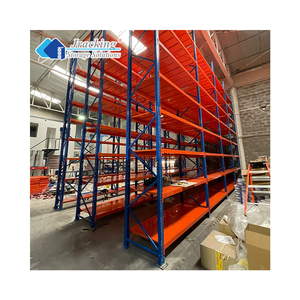
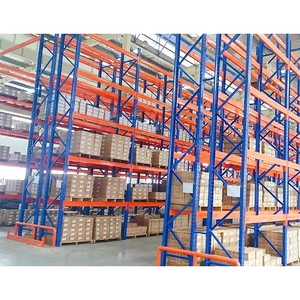
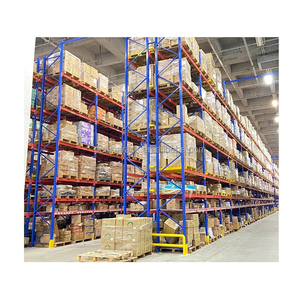
In modern industrial material handling, low level pallet racking refers to structural racking configurations typically engineered between 1.5 meters to 4.5 meters in height, encompassing 1 to 3 active beam tiers. Unlike high-bay narrow aisle (VNA) systems that prioritize extreme vertical space utilization via specialized reach trucks, low level pallet racking systems focus on direct human accessibility, fast manual SKU selection, floor-level pallet jack operations, and high-frequency inventory turnover.
From an operational standpoint, low level pallet racking eliminates the need for expensive high-reach forklift equipment and specialized operator certifications. Facilities utilizing low level racking achieve significantly faster order fulfillment cycle times because ground and first-tier levels serve as active pick locations while upper levels act as buffer storage. As a leading low level pallet racking manufacturer, our engineering team optimizes beam heights to match human reach envelope statistics (the neutral worker zone between 700mm and 1600mm above finished floor level), dramatically reducing worker fatigue, lower-back strain, and accidental product damage during manual picking routines.
2. Structural Metallurgical Standards: Q235B vs. Q355 High-Tensile Steel
The structural reliability of any industrial warehouse rack depends fundamentally on steel chemistry and cold-roll section design. Our factory exclusively sources high-grade structural steel coil from tier-one steel mills. We utilize hot-rolled continuous cast coils processed into cold-formed open C-profiles, omega upright posts, and step-beams engineered according to global structural codes (including FEM 10.2.02 and EN 15512).
Below is a comparative technical specification of the raw materials utilized in our low level pallet racking manufacturing line:
| Steel Grade Standard | Yield Strength ($R_{eH}$) | Tensile Strength ($R_m$) | Elongation ($A_5$) | Primary Application in Low Level Racking |
|---|---|---|---|---|
| Q235B (Structural Carbon Steel) | $\ge 235$ MPa | 370 – 500 MPa | $\ge 26\%$ | Standard duty uprights, horizontal & diagonal braces, base plates, step beams under 2,000 kg/level load. |
| Q355B / Q355D (High-Strength Alloy) | $\ge 355$ MPa | 470 – 630 MPa | $\ge 22\%$ | Heavy-duty seismic upright frames, high-impact low level dock racks, dynamic flow-bed beam supports. |
| SS400 (Equivalent JIS G3101) | $\ge 245$ MPa | 400 – 510 MPa | $\ge 21\%$ | Export-standard general storage systems, deck support bars, structural connector hooks. |
By strictly enforcing beam deflection limits strictly to $L/200$ (where maximum allowed beam bending under full load does not exceed 1/200th of the clear span length), we guarantee that safety margins far exceed nominal ratings, eliminating plastic deformation risk under sudden dynamic forklift placement.
3. Beam-to-Column Connection Physics & Safety Lock Integration
A crucial point of failure in poorly manufactured racking systems is the mechanical connection between horizontal load beams and vertical upright columns. Our factory utilizes multi-claw connector brackets precision-punched from 3.5mm to 4.5mm thick heavy steel plate. These claws engage tightly into teardrop or diamond-shaped upright slots designed with a tapered self-locking wedge effect.
As payload increases on the beam, gravity pulls the connector downward, driving the tapered lugs tighter into the column profile. To prevent accidental dislodgement caused by upward forklift driver error, every connection point features an automatic spring-loaded steel safety pin or bolted lock-key with a minimum shear resistance of 1,000 kg per connector pin assembly.
Why Global Buyers Trust Our Manufacturing Infrastructure
With over 23 years of dedicated storage equipment engineering, state-of-the-art automated production, and SGS verified auditing, we power global supply chains.
SGS Audited & ISO Certified Quality
Our 20,000 m² factory operates strictly under ISO 9001:2015 quality management protocols. Every manufacturing batch undergoes full material spectrometry, dimensional tolerance check, and dynamic loading validation certified by SGS auditors.
Longest Spray Line in South China
We operate an automated continuous pre-treatment and electrostatic powder-coating line featuring 3-stage chemical washing, zinc phosphatizing, and high-temperature curing oven pass. The result is a 60–80 micron thick impact-resistant coat impervious to corrosion.
In-House 2D/3D BIM & Engineering
Our in-house design office provides full CAD floor plan layouts, 3D structural rendering, seismic calculations, and clear-aisle optimization prior to production order release, ensuring zero site interference during installation.
Technological Evolution & Product Innovation Trends
How low level pallet racking systems are evolving to integrate with autonomous robotics, IoT inventory tracking, and sustainable warehouse architecture.
1. AMR & AGV Integration with Low Level Base Framing
The modern logistics ecosystem is rapidly shifting from manual forklift handling toward Autonomous Mobile Robots (AMRs) and Automated Guided Vehicles (AGVs). This technological transition directly impacts low level pallet racking section geometry. Standard low level racking systems are now manufactured with expanded bottom clearance frames, guide rails, and magnetic strip recessed baseplates to accommodate under-pallet AMR docking modules.
As a progressive low level pallet racking factory, our R&D department has engineered specialized floor-level beam profiles that allow robotic lifters to navigate underneath ground-tier pallets cleanly. By removing lower horizontal tie beams and replacing them with high-rigidity structural cantilevered upright feet, AMRs can pick up and deposit unit loads up to 1,500 kg directly from floor level without operator intervention.
2. Modular Gravity Flow Beds & Hybrid Cart-Pushback Modules
To support high-velocity order picking in e-commerce fulfillment centers, low level racking is increasingly converted into dynamic pick modules. By inserting modular gravity roller tracks and tilt-tray beds into low level beam steps, traditional static pallet storage transforms into a FIFO (First-In, First-Out) picking lane. Pallets loaded from the rear replenish aisle seamlessly glide to the front pick face on inclined steel rollers equipped with speed-controller brake drums.
This hybrid approach increases pick face density by up to 60% compared to traditional single-deep selective racking, while guaranteeing full ergonomic visibility for operators picking individual split-case items.
3. Eco-Friendly Coatings & Zero-VOC Thermosetting Powders
Global ESG (Environmental, Social, and Governance) compliance mandates that industrial facility components reduce carbon footprint and chemical outgassing. Traditional solvent-based liquid paint has been completely replaced in our manufacturing operations by non-toxic, TGIC-free polyester epoxy thermosetting powders. Our automated reclamation systems capture 98% of oversprayed powder, eliminating chemical waste while providing zero volatile organic compound (VOC) emissions inside client cold-storage and food-processing warehouses.
Future Procurement Trends in Industrial Racking Acquisition
How global procurement directors, facility managers, and supply chain leaders evaluate cost of ownership, freight efficiency, and international standards.
1. Shift Toward Total Cost of Ownership (TCO) vs. Initial CapEx
International racking buyers are moving away from selecting manufacturers based solely on initial purchase price per frame. Historical field data demonstrates that cheap, under-engineered racking manufactured from sub-standard thin-gauge steel leads to premature frame twisting, beam sagging, upright column buckling under forklift impact, and catastrophic inventory collapse.
Modern procurement strategies evaluate Total Cost of Ownership (TCO) across a 15-to-20 year operational horizon. TCO calculations incorporate frame repair downtime costs, availability of standardized replacement parts, modular expandability, surface powder durability, and scrap steel residual value. High-quality low level pallet racking manufactured with heavy-gauge footplates and high yield steel reduces lifetime maintenance interventions by over 75%.
2. Container-Optimized Knocked-Down (KD) Export Packaging
Ocean freight rates directly impact delivered cost per pallet position. Leading export racking factories now utilize high-density Knocked-Down (KD) frame packaging techniques. Upright columns, horizontal braces, diagonal struts, and baseplates are bundled separately with heavy plastic strapping, wooden corner protectors, and moisture-barrier shrink wrapping.
This optimized nested bundling method increases 40ft High-Cube container payload utilization by up to 35% compared to pre-assembled frames, saving procurement managers thousands of dollars per shipping container in ocean freight costs while ensuring zero transit scratches or structural deformation.
Procurement & Engineering Frequently Asked Questions
Detailed technical responses to common questions raised by warehouse developers, procurement managers, and structural consultants.