Featured Automated Stacker Crane & AS/RS Racking Systems
Explore our ISO & CE-certified high-density warehouse storage systems engineered specifically for integration with stacker cranes, radio shuttles, and automated material handling equipment.
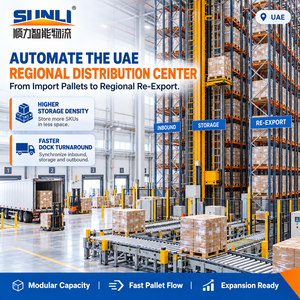
SHUNLI SL-AS004 Factory Customized Heavy Duty Automated AS&RS Pallet Stacking Rack Alloy Steel 500kg-1500kg Capacity OEM
Get Catalog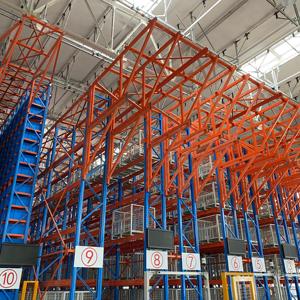
Industrial Warehouse Shelves ASRS Racks Heavy Duty Automatic Retrieval Storage Rack System for Distribution Centers
Get Catalog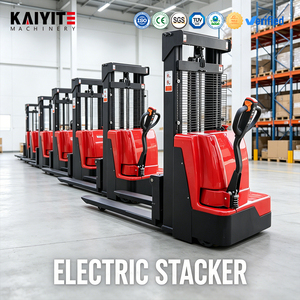
Industrial Electric Stacker 1Ton 2Ton Pallet Stacking Truck 3500mm Lift Height For Racking System
Get Catalog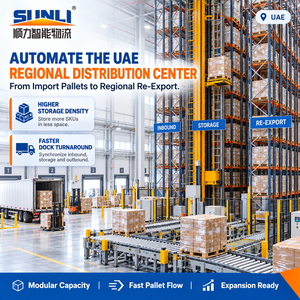
SHUNLI Cold Rolled Steel 5 Layer Heavy Duty Industrial Warehouse Storage Anti-corrosion Adjustable Bolt Free Powder Coated Shelf
Get Catalog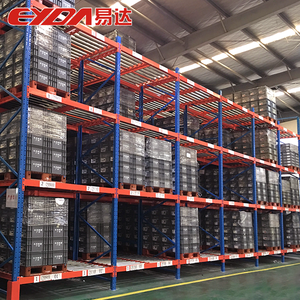
5 Layer Metal Pallet Flow Rack Gravity Storage Racks Heavy Duty Multi-Level Warehouse Industrial Cargo Storage Equipment
Get Catalog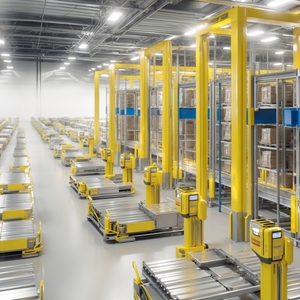
Pteris ASRS Shuttles Pallet Racking System Smart Warehouse Forklift Automation with Radio Control Cargo & Storage Equipment
Get Catalog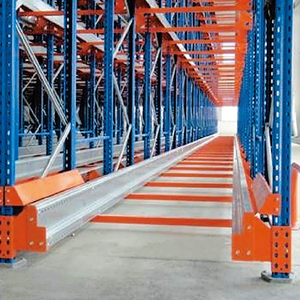
Durable 5-Layer Heavy Duty Cold Rolled Steel Powder Coated Shuttle Warehouse Racking High Density Automated Storage Racks Bulk
Get Catalog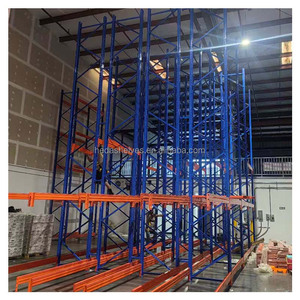
CE Industrial Rack Steel Metal Shelving Heavy Duty Warehouse Storage Racking System Selective Pallet Rack
Get CatalogEngineering Blueprint: High-Bay Stacker Crane Storage Racking Systems
Understanding the mechanical physics, structural tolerances, and fabrication standards required for modern rail-guided stacker crane AS/RS integration.
The Critical Role of Racking Precision in Automated Stacker Crane Operations
In high-bay Automated Storage and Retrieval Systems (AS/RS), the storage racking structure is not merely a static steel framework—it acts as the mechanical skeleton and guiding system for high-speed automated stacker cranes (ASRS cranes). Operating at vertical travel speeds up to 240 m/min and reaching heights exceeding 45 meters, stacker cranes demand millimetric structural tolerances that traditional forklift pallet racks cannot provide.
Leading stacker crane storage racking manufacturers engineer these systems under strict adherence to FEM 9.831 (Stacker Crane Tolerances), EN 15620 (Tolerance, Deformation and Clearances), and ANSI MH16.1 specs. When a dual-mast or single-mast stacker crane travels along top guide rails and bottom floor tracks, any lateral deflection, sway, or angular sway of the upright frames can lead to crane positioning errors, mechanical jams, or severe structural collisions. Therefore, choosing a qualified factory capable of manufacturing high-strength cold-rolled steel profiles with tight dimensional tolerances is paramount to operational safety and ROI.
Ultra-Tight Deflection Limits
Standard racking allows deflection limits of L/200. Stacker crane racks enforce tight limits down to L/400 or L/500 on beam spans and vertical posts to ensure telescopic crane forks insert smoothly into pallet locations without binding.
Integrated Guide Rails
Top guide rails are directly integrated into the high-bay racking frame top ties, transferring lateral acceleration forces generated by the stacker crane safely into the cross-bracing structural network.
Custom Alloy Steel Profiles
Utilizing high-tensile cold-rolled alloy steel (such as Q355B or Q420 grade) with continuous multi-pass roll forming ensures uniform structural density and high seismic resistance across tall rack structures.
Global Procurement & Future Development Trends (2025–2035)
As global supply chains shift toward hyper-automation, smart material handling, and green building footprints, stacker crane racking systems are undergoing pivotal architectural evolution.
Rack-Supported Buildings (Clad-Rack AS/RS)
Modern logistics developers are moving away from traditional building construction housing internal racking. The market is shifting rapidly toward Rack-Supported Buildings (Clad-Rack Systems), where the stacker crane racking framework serves a dual purpose: supporting the unit loads inside while holding the exterior wall cladding and roof structure.
This trend cuts construction timelines by 25–35% and eliminates the need for roof support columns, maximizing cubic footprint utilization up to 45 meters in height.
Hybrid Stacker Crane & Radio Shuttle Ecosystems
Traditional single-deep or double-deep stacker cranes are being combined with 4-way radio shuttles to achieve ultra-high density. In these hybrid systems, the stacker crane acts as the vertical elevator and main aisle transport, while satellite shuttles travel deep into racking channels to deposit or retrieve pallets.
Procurement directors favor this setup because it significantly lowers energy consumption per pallet move while boosting storage density by up to 60% compared to selective rack layouts.
Deep-Freeze & Cold Chain Automation Optimization
With food safety regulations tightening and labor shortages in cold storage environments (-25°C to -30°C), demand for cold-chain automated stacker crane racking is surging. Racking factories now deploy specialized low-temperature alloy steels resistant to cold embrittlement, paired with heat-cured epoxy powder coatings to prevent moisture micro-fracturing and structural rust over decades.
Digital Twin Integration & Predictive Maintenance
Future-ready stacker crane racks are designed with integrated IoT sensor mounting nodes. Digital Twin WMS/WCS software continuously tracks structural stress, ambient thermal expansion, frame alignment, and micro-vibrations induced by crane motion, allowing warehouse engineers to perform predictive structural maintenance before mechanical wear impacts throughput.
Automated Stacker Crane Racking Selection Matrix
Compare core technical configurations to select the ideal automated storage structure tailored to your material handling equipment, payload specs, and building height.
| Racking System Type | Max Height Range | Load Capacity / Level | Pallet Depth Setup | Ideal Industry Application | Action |
|---|---|---|---|---|---|
| Single-Deep Stacker Crane AS/RS | Up to 45 meters | 500 kg – 2,500 kg | Single Deep (100% Selectivity) | High-SKU E-commerce, Auto Spare Parts, Pharma | Get Spec Sheet |
| Double-Deep Stacker Crane AS/RS | Up to 40 meters | 800 kg – 2,000 kg | Double Deep (Telescopic Forks) | FMCG, Finished Goods, General Warehousing | Get Spec Sheet |
| Radio Shuttle + Crane Hybrid | Up to 35 meters | 500 kg – 1,500 kg | Multi-Deep Channel (High Density) | Cold Storage, Beverage, Grain & Bulk Goods | Get Spec Sheet |
| Clad-Rack High-Bay Structure | Up to 50 meters | 1,000 kg – 3,000 kg | Customized Modular Layout | New Greenfield Logistics Hubs, Chemical Distribution | Get Spec Sheet |
| Heavy-Duty Stacking Rack (Modular) | Up to 8 meters | 500 kg – 1,500 kg | Stackable 4–5 Tiers | Seasonal Overflow, Flexible Manufacturing Lines | Get Spec Sheet |
Why Top Global Brands Partner with Our Storage Engineering Factory
With 23+ years of specialized racking manufacturing in South China, Rackzzszn Storage Equipment Co., Ltd. combines advanced automation, structural engineering expertise, and global export capability.
20,000m² Production Base
Our massive facility operates 80+ continuous automated punching, roll-forming, laser cutting, and robotic welding lines capable of processing over 50,000 tons of high-grade steel annually.
SGS Audited & CE Certified
Every batch undergoes strict 6-stage quality control—from steel coil thickness verification and weld ultrasonic testing to powder coating salt-spray tests and full load deflection verification.
Longest Spray Line in South China
Our state-of-the-art automated powder coating line applies durable anti-corrosion finishes up to 3 colors in a single pass, ensuring exceptional adhesion and long surface service life in humid or cold conditions.
End-to-End Turnkey Engineering
From preliminary on-site laser measuring and 3D structural CAD modeling to container export packaging, global shipping logistics, and remote or on-site installation supervision.
Frequently Asked Questions on Stacker Crane Storage Racks
Get authoritative technical answers from our senior warehouse engineering team before initiating your automation RFP or purchasing project.
What structural tolerances are required for stacker crane racking compared to normal pallet racks? +
Can stacker crane storage racks be installed in existing warehouse facilities? +
What raw materials and surface treatments ensure long service life in cold storage? +
How does your factory ensure precise alignment during overseas installation? +
What is the typical production lead time for a high-bay stacker crane racking project? +
Consult Our Senior Racking Engineers Today
Send us your building architectural drawings, floor slab specs, and pallet load requirements. Our technical team will deliver a comprehensive 2D/3D racking layout plan, structural load calculations, and competitive factory quotation within 24 hours.