High-Density Shuttle & Storage Systems
Precision-Engineered Heavy Duty Racking, Automated Shuttle Cars, and Custom Warehouse Fixtures
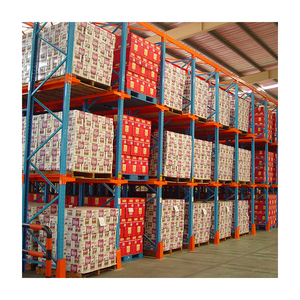
Factory Price Drive-in Rack Multi-tier Through Racking System Customized Industrial Warehouse Heavy Duty Rack
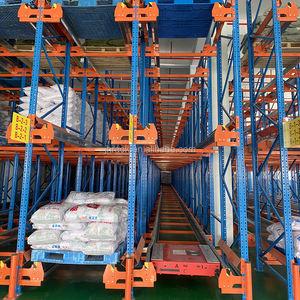
Advanced High-Density Automated Storage & Retrieval System (AS/RS) With Pallet Shuttle Rack
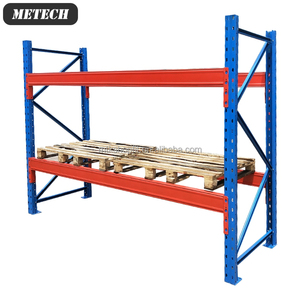
Pallet Racking Heavy Duty Metallic Rack Teardrop Style Upright Frames & Wire Mesh Decking
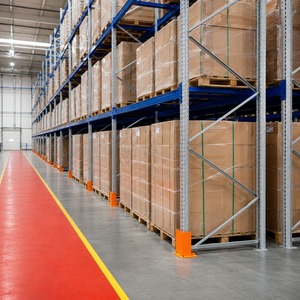
Heavy Duty Industrial Pallet Storage Racking System Q235B Cold Rolled Steel Tire & Cargo Rack
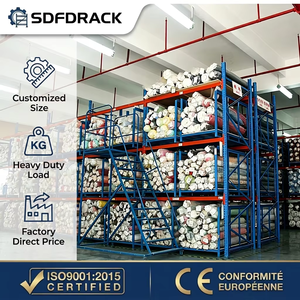
Customized Adjustable Heavy Duty Selective Pallet Racking System Fabric Roll Industrial Rack
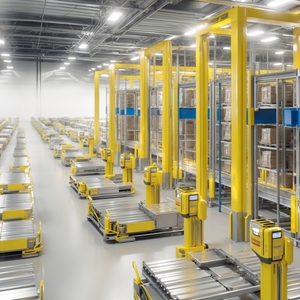
ASRS Shuttles Pallet Racking System Smart Warehouse Radio Control Cargo Storage Equipment
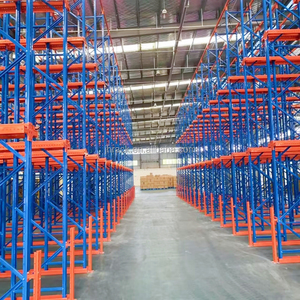
Industrial Storage Drive-In Rack Steel Stacking Pallet System For Chemical Warehousing
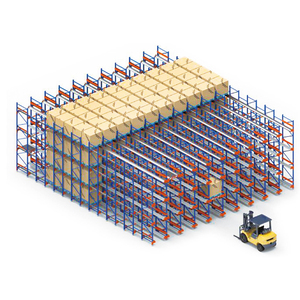
Industrial Cold Rolled Steel Shuttle Racking Intelligent High Efficiency Pallet Storage Solution
Engineering Whitepaper: Next-Gen Two-Way Radio Shuttle Racking Architecture
Modern intra-logistics and supply chain infrastructure demand maximum spatial utilization, rapid order throughput, and strict operational safety. The Two-Way Radio Shuttle Racking System (also referred to as a 2D Pallet Shuttle system) represents a transformative leap in high-density semi-automated warehousing technology. By integrating self-powered robotic shuttle cars that navigate along engineered guide rails inside storage channels, enterprise facilities eliminate the need for forklifts to enter racking aisles, thereby drastically cutting pallet cycle times and structural collision risks.
Core Operational Principle: A two-way shuttle car travels longitudinally inside dedicated racking channels to lift, transport, and deposit pallet loads under wireless radio remote control or Warehouse Control System (WCS) integration. Operating under both First-In, First-Out (FIFO) and Last-In, First-Out (LIFO) configurations, shuttle systems maximize cube utilization by up to 85% compared to traditional static storage setups.
Technical Matrix: Two-Way Shuttle vs. Drive-In vs. Selective Racking
Selecting the optimal structural layout requires evaluating volumetric efficiency against operational dynamics and labor requirements. The comparative metrics below highlight why global distribution hubs are rapidly upgrading from manual drive-in systems to automated two-way shuttle platforms:
| Performance Dimension | Two-Way Radio Shuttle | Traditional Drive-In Rack | Selective Pallet Rack |
|---|---|---|---|
| Volumetric Utilization | 80% – 85% (Extreme Density) | 65% – 75% (High Density) | 35% – 40% (Low Density) |
| Forklift Safety Profile | Zero aisle entry; low collision risk | High aisle collision hazard | Standard aisle maneuvering |
| Operational Throughput | High (up to 40 pallets/hr per shuttle) | Slow (manual entry required) | High direct access speed |
| SKU Selectivity | Channel-based high SKU volume | Strict block storage / low SKU flexibility | 100% immediate selectivity |
| Cold Storage Performance | Exceptional (-30°C certified LiFePO4) | Moderate (High operator exposure) | Poor energy utilization |
| Labor Cost Reduction | Reduces forklift drivers by 50% | High driver headcount needed | Standard labor requirement |
Structural Kinematics & Mechatronic Components
A certified heavy-duty shuttle racking system comprises two primary engineering subsystems: the structural cold-rolled steel matrix and the intelligent mechatronic shuttle vehicle.
1. Structural Steel Matrix (EN 15512 / FEM 10.2.02 Standards): Constructed from high-tensile Q235B or Q355B structural steel, the upright frames feature precision teardrop or continuous diamond punching. Specialized shuttle rails perform a dual function: acting as structural beam ties while providing a precision-guided running surface for shuttle polyurethane wheels. Rail alignment tolerances are maintained within ±1.0 mm across 50-meter channel runs to prevent shuttle binding or optical sensor drift.
2. Autonomous Shuttle Navigation & Safety Sensors: Equipped with dual-axis photoelectric sensors, obstacle collision avoidance bumpers, and laser distance meters, the shuttle dynamically calculates channel depth, pallet boundaries, and target drops. Advanced models feature 433MHz or 2.4GHz industrial wireless communications capable of anti-interference operation within complex metal warehouse environments.
Why Enterprise Global Buyers Partner with Rackzzszn
As a premier South China storage equipment manufacturer with over two decades of engineering heritage, Rackzzszn Storage Equipment Co., Ltd. operates a 20,000 square meter state-of-the-art production base. Processing over 50,000 tons of high-grade steel annually, our facility integrates heavy industrial automation with stringent European design standards to deliver durable, defect-free racking systems exported to more than 60 countries.
SGS-Verified Manufacturing Facilities
Full ISO 9001:2015 and SGS factory audits guarantee fully traceable raw material procurement, precision roll-forming, and automated robotic welding integrity.
Longest Powder Coating Line in South China
Our proprietary continuous multi-stage pre-treatment and electrostatic powder coating line applies durable 80-120μm coatings tested against salt-spray, impact, and sub-zero thermal shock.
Engineering & Custom CAD/3D Layout Design
Our in-house structural engineering department delivers finite element analysis (FEA) models, seismic compliance checks, and optimal 2D/3D building integration plans prior to production.
1,000+ Export Containers Annually
Extensive experience in international logistics packaging, steel palletized strapping, customs documentation, and container loading optimization ensures pristine arrival at overseas ports.
Rapid Turnaround & Supply Chain Resilience
Over 80 automated machinery units—including multi-station punch presses and automatic roll-formers—guarantee project delivery timelines even during peak global procurement cycles.
End-to-End Installation Guidance & Support
We provide comprehensive assembly manuals, high-resolution CAD schematics, step-by-step video tutorials, and remote or on-site engineering supervision for overseas installations.
Future Industry Trends: The Next Horizon in Shuttle Racking
As global supply chains navigate labor shortages, soaring industrial real estate costs, and aggressive ESG carbon reduction targets, shuttle racking technology is evolving along four critical development tracks:
1. Deep Integration with WMS/WCS and IoT Telemetry
Modern two-way shuttle systems are transitioning from standalone remote-controlled cars to fully networked IoT nodes. Utilizing open API protocols (RESTful, MQTT), shuttle cars communicate in real time with enterprise ERP/WMS platforms. Intelligent algorithms auto-assign shuttles to channels based on stock turnover velocity, execute automatic pallet consolidation during night shifts, and send predictive maintenance alerts regarding motor brush wear or wheel friction coefficients.
2. Advanced Lithium Iron Phosphate (LiFePO4) & Fast-Charge Capacitors
Legacy lead-acid shuttle batteries are being replaced by high-density LiFePO4 power units. Featuring rapid 30-minute charging capabilities and over 3,500 lifecycle charges, contemporary shuttles operate across continuous 16-hour shifts without battery swaps. Integrated thermal management circuits prevent battery capacity degradation even when operated in demanding -30°C cold storage facilities.
3. Evolution Toward 4D Multi-Directional & AGV Swarms
While two-way shuttles excel in dedicated deep-channel high-volume storage, supply chains are increasingly deploying hybrid layouts that combine 2D shuttle channels with vertical lift mechanisms and Automated Guided Vehicles (AGVs). This convergence enables dynamic, unmanned pallet transfer from receiving docks directly into deep storage channels without manual forklift intervention.
4. Strategic Global Procurement Frameworks (2025–2030)
Procurement directors and EPC logistics consultants are shifting focus from simple initial capital expenditure (CAPEX) to Total Cost of Ownership (TCO). Procurement trends emphasize modular expandable designs, standard replaceable off-the-shelf electronic components (Siemens, Schneider, Omron), and multi-tier structural certifications that lower insurance premiums in earthquake-prone regions.
Structural Engineering & International Safety Standards
A high-density shuttle racking system carries hundreds of metric tons of structural payload elevated overhead. Ensuring long-term structural integrity requires rigorous engineering compliance during both raw material selection and roll-forming processes.
Quality Assurance Protocol: All Rackzzszn structural columns undergo rigorous Finite Element Analysis (FEA) to simulate dynamic buckling loads, seismic ground acceleration, and local stress concentrations under maximum pallet load conditions (up to 1,500 kg per pallet position).
Steel Grade Selection & Mechanical Standards
We exclusively select high-yield cold-rolled steel coils from tier-1 steel mills (such as Baosteel and Shougang). Our structural uprights and beam profiles utilize standard Q235B steel or high-tensile Q355B steel, providing yield strengths up to 355 MPa. Rail profiles incorporate specialized stiffening ribs to minimize deflection under concentrated shuttle wheel loads.
Surface Treatment & Cold-Chain Corrosion Prevention
In cold storage or high-humidity environments, condensation can accelerate rust formation at rack joint connections. Our South China powder coating line features a multi-stage chemical wash, zinc-phosphate conversion coating, and high-baked epoxy-polyester powder application. For harsh chemical warehouses or outdoor staging areas, hot-dip galvanizing per ISO 1461 standards guarantees 30+ years of maintenance-free service life.
Procurement FAQ: Critical Questions Global Buyers Ask
Direct answers from our senior warehouse engineering staff to assist procurement teams, logistics project directors, and facility operators during project planning:
How does a Two-Way Shuttle Racking System compare to a Four-Way (4D) Shuttle System in terms of cost and throughput?
What warehouse floor flatness specifications are required for shuttle racking installation?
Can Rackzzszn shuttle racking systems operate reliably in sub-zero cold storage facilities?
What safety features prevent a shuttle car from falling off the rails or colliding with pallets?
How do you handle installation and commissioning for overseas projects?
What details are required to receive a complete 2D/3D racking layout and budget quote?
Optimize Your Warehouse Density with Industry Specialists
Consult with our senior structural engineers to receive customized CAD layouts, load calculations, and competitive factory-direct pricing for your next storage expansion project.