Cold Storage Warehouse Racking System Architecture
Maximize volumetric thermal efficiency, reduce per-pallet refrigeration CAPEX, and prevent structural low-temperature embrittlement with custom engineered steel racking systems built for down to -30°C environments.
Cold chain infrastructure operating between +4°C chill rooms and -30°C blast freezers represents one of the highest operational cost profiles in global logistics. Unlike ambient distribution centers where floor space is the primary financial variable, cold storage CAPEX and OPEX are governed by volumetric thermal efficiency—the electrical cost of chilling air per cubic meter relative to stored pallet volume.
The Structural Challenge of Sub-Zero Metallurgy
When conventional carbon steel (such as standard Q235B) is exposed to sustained sub-zero temperatures, it undergoes a transformation in its crystal lattice known as the ductile-to-brittle transition. Micro-yield strength under dynamic loading—such as forklift impacts or sudden pallet seating—can lead to catastrophic structural shear if the steel grade lacks guaranteed impact toughness values at low temperatures.
At Rackzzszn Storage Equipment Co., Ltd., every Cold Storage Warehouse Racking System undergoes rigorous structural finite element analysis (FEA). We specify high-tensile Q355B, Q355D, or structural steel grades tested under Charpy V-Notch impact protocols at -20°C to -40°C. This metallurgical assurance ensures that structural frames absorb kinetic energy without brittle fracturing, preserving warehouse safety across decades of continuous operation.
Choosing the correct Cold Storage Warehouse Racking System configuration directly dictates warehouse throughput, SKU selectivity, and energy consumption per pallet position.
Semi-automated high-density storage where self-propelled carts transport pallets deep within cold storage channels. Eliminates forklift entry into cold aisles, reducing thermal loss from door cycles and operator exposure to extreme cold.
Deep Freeze CompatibleHigh Density LIFO/FIFO80% Volume Fill
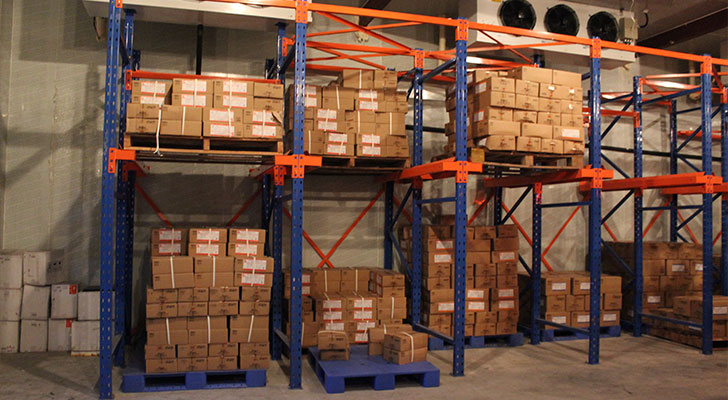
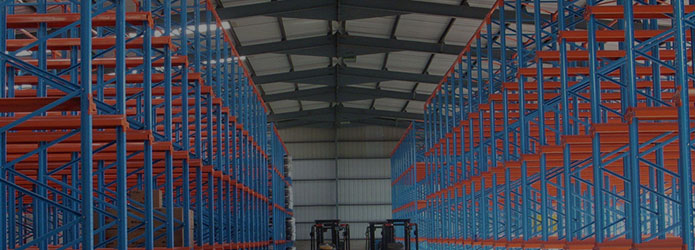
Designed for large volume batch storage of uniform cold chain SKUs (e.g., frozen poultry, seafood, dairy). Forklifts drive directly into storage lanes. Maximizes space utilization up to 75% while minimizing refrigerated cubic footprint.
LIFO StorageBatch CommodityHeavy Structural Support
Racking blocks mounted on electronically driven mobile bases guided by floor rails. Opens a single access aisle on demand. Combines 100% pallet selectivity with high density, offering maximum ROI for pharmaceutical and multi-SKU cold logistics.
Nested cart systems operating on inclined rails. As pallets are loaded, subsequent pallets push earlier ones back up to 2 to 6 deep. Gravity-fed discharge provides high density with faster handling than drive-in systems in medium cold rooms.
Standard selective pallet racks upgraded with sub-zero powder coating or hot-dip galvanized structural profiles. Best suited for chilled distribution centers (0°C to 4°C) with fast turnover and high SKU variety requiring immediate access.
100% SKU AccessGalvanized FinishFast Order Fulfillment
Heavy-duty steel mezzanine platforms designed for manual sorting, value-added packaging, or cold room processing areas. Custom engineered to distribute dead and live loads across insulated floor slabs without compromising thermal barrier integrity.
Multi-Tier SortingInsulated Base PlatesCustom Loading Gates
Cold Storage Racking Architecture Decision Matrix
Engineering evaluation framework based on 23+ years of global cold chain project deployments by Rackzzszn
Future Procurement Trends in Cold Storage Racking (2026–2030)
Global logistics managers, cold chain real estate developers, and enterprise procurement leaders are shifting strategies to address rising electricity costs, ESG carbon compliance, and labor scarcity in sub-zero environments.
1. Dense Automation & Dark Cold Storage
As human labor becomes increasingly difficult to recruit for -25°C environments, global procurement is pivoting toward automated "Dark Cold Rooms." Racking structures are no longer designed solely for human-driven forklifts, but as precision structural frameworks carrying stacker cranes, AS/RS shuttles, and automated guided vehicles (AGVs). Tolerances are narrowing from millimeters to sub-millimeter precision.
2. Net-Zero Energy & Dynamic Airflow Racking
Future cold storage racking systems integrate thermal airflow modeling (CFD analysis). Racking beams and upright frames are engineered to channel cold air evenly through product stacks, avoiding heat pockets near ceiling zones while minimizing fan static pressure. This reduces compressor workload and cuts annual refrigeration electricity bills by up to 25%.
3. Hot-Dip Galvanizing & Eco-Coatings
Environmental regulations are pushing buyers away from heavy solvent paints toward non-VOC, ultra-durable hot-dip galvanizing (HDG) and zero-emission powder coating systems. Buyers demand rack finishes that withstand repeated condensation freeze-thaw cycles without surface micro-flaking or rust creep over a 25-year service life.
Technology Innovations
Product Development Trends: Material Science & Structural Engineering
How cutting-edge metallurgical advances and structural design updates are reshaping Cold Storage Warehouse Racking Systems.
Micro-Alloys with Enhanced Notch Toughness:
Modern sub-zero racking uses niobium and vanadium micro-alloyed steel formulations. These additives refine grain structure, lowering the ductile-brittle transition temperature threshold below -40°C while maintaining elevated yield strength under dynamic loading.
Why Global Buyers Choose Rackzzszn Storage Equipment Co., Ltd.
From initial site survey and thermal layout engineering to automated manufacturing and international export, Rackzzszn delivers verified expertise for sub-zero warehouse projects.
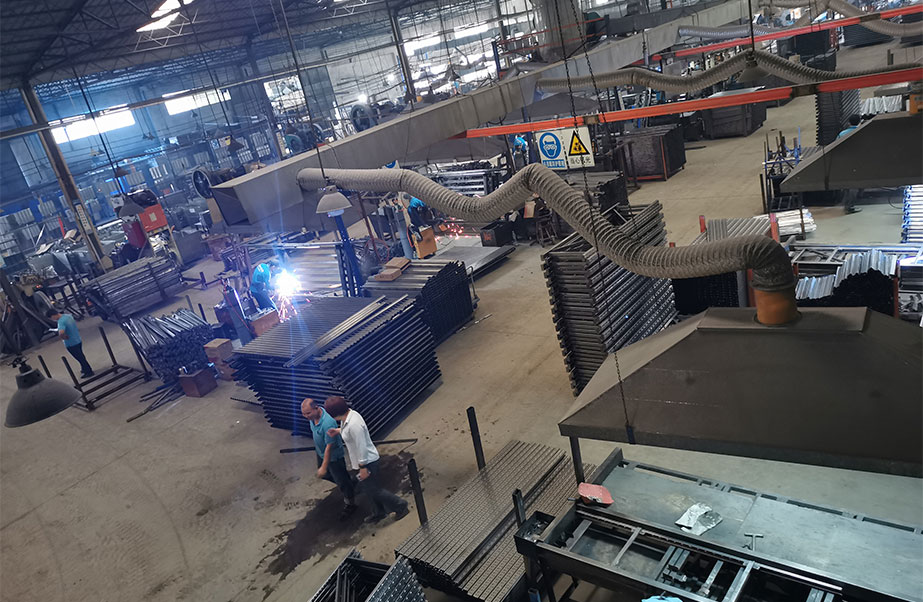
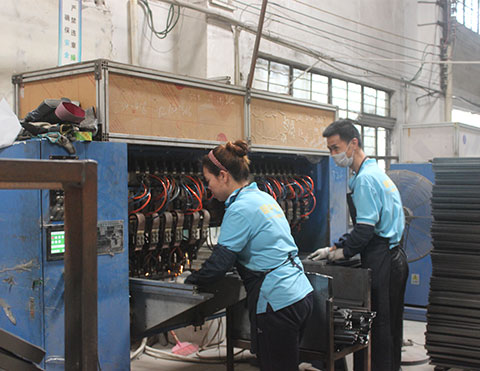
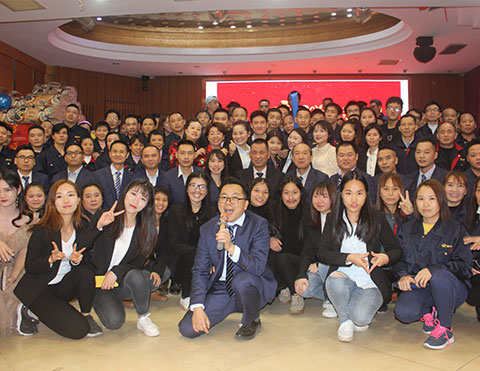
Rackzzszn Storage Equipment Co., Ltd. stands as one of South China’s premier engineered storage racking manufacturers. Spanning over 20,000 square meters of advanced production floor space, our facility processes in excess of 50,000 tons of structural steel annually.
With over 23 years of specialized experience in high-density pallet racks, cantilever racks, work platforms, and cold room storage equipment, Rackzzszn has successfully exported over 1,000 containers per year to client facilities across 60+ countries worldwide.
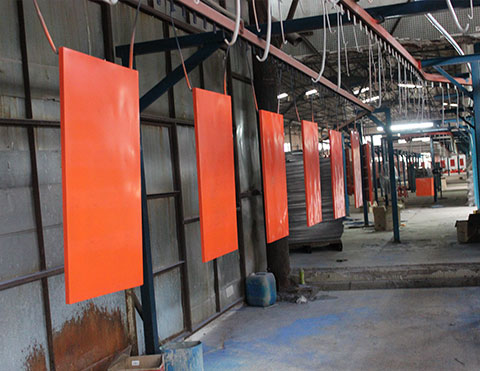
Longest Powder Spray Line in South China (3-color single pass)
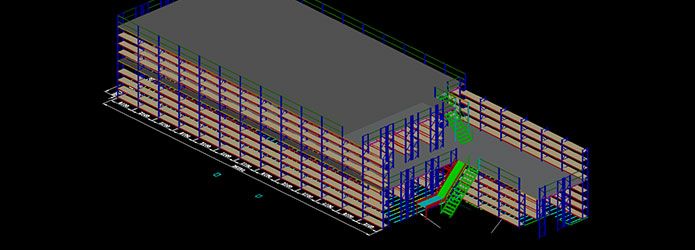
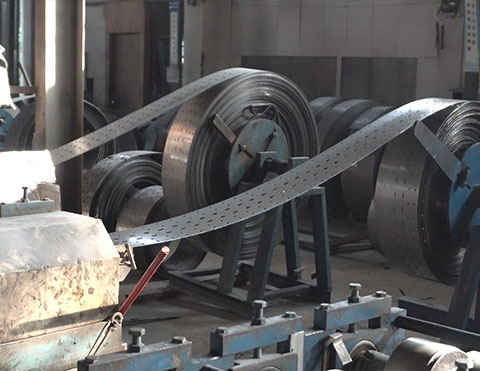
Designing a sub-zero racking system demands strict precision. Structural tolerances, floor slab insulation thickness, evaporator positions, and door air curtains must be calculated before steel roll-forming begins.
Critical Field Risk Prevention
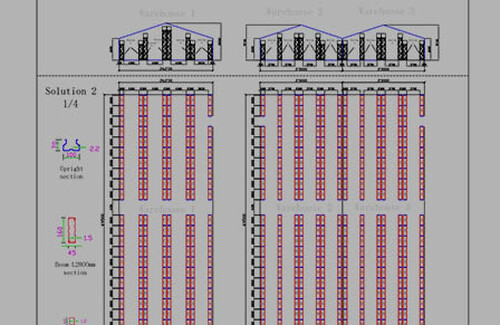
A measurement deviation of merely 20 mm in a cold room can obstruct ceiling air defrost blowers or puncture floor insulation layers. Rackzzszn conducts rigorous CAD verification prior to production.
Detailed engineering answers to top global procurement queries regarding low-temperature racking specifications. Contact [email protected] for project-specific calculations.
How does temperature below freezing affect cold storage pallet rack load capacity and steel selection?
Sub-zero temperatures decrease ductile toughness in structural carbon steel, inducing thermal contraction stresses and risk of brittle fracture under impact loads. Rackzzszn specifies low-temperature high-tensile structural steel (such as Q355B/Q355D grade steel verified by Charpy V-notch impact testing at -20°C to -40°C) with cold-resistant powder coatings or hot-dip galvanizing to preserve structural integrity.
What is the ROI payback period when upgrading from selective racking to automated shuttle racking in a cold storage facility?
Because cooling refrigerated cubic space costs 3x to 5x more than ambient warehousing, high-density radio shuttle racking can increase volume storage density by up to 80% while reducing refrigeration energy consumption per pallet by 30% to 45%. Typical CAPEX payback is achieved within 18 to 28 months.
How do you prevent frost expansion and anchor shear in cold warehouse floor slabs?
Cold storage upright footplates require specialized insulation pad barriers and thermal shock-resistant chemical anchor bolts to avoid thermal bridging into the insulated floor slab. This prevents sub-floor freezing, floor heave, and anchor bolt shear caused by thermal expansion cycles.
What surface finish is recommended for blast freezers (-30°C) vs standard cold rooms (0°C to 4°C)?
For ambient-to-cool environments (0°C to 4°C), thermosetting epoxy-polyester powder coating applied over pre-treated steel works effectively. For deep-freeze (-25°C to -30°C) and blast freezer (-35°C to -40°C) rooms with condensation risk during maintenance cycles, hot-dip galvanizing (HDG) per ISO 1461 or specialized low-temperature powder coatings are recommended to eliminate micro-cracking and rust corrosion.
Can Rackzzszn supply custom CAD layouts and load calculations optimized for low-temperature airflow?
Yes. Engineers at Rackzzszn Storage Equipment Co., Ltd. perform structural finite element analysis (FEA) and layout optimization to balance storage density with cold air circulation, ceiling evaporator clearance, and aisle widths tailored to specific material handling equipment.
Industry Applications
Cold Storage Racking Deployments
Serving cold chain operations, pharmaceutical logistics, and food processing plants in 60+ countries worldwide.
01
Frozen Meat & Seafood
Drive-in and radio shuttle systems configured for high-density -25°C storage.
02
Dairy & Fresh Produce
FIFO gravity flow racks ensuring fast rotation of date-sensitive inventory at 2°C to 4°C.
03
Pharmaceutical Cold Chain
Mobile heavy-duty pallet racks providing 100% selectivity under strict climate controls.
04
3PL Cold Logistics Hubs
Flexible selective racking engineered with heavy-duty galvanized structural frames.
05
Galvanized Steel Pallets
Corrosion-proof steel pallets replacing wood in sub-zero hygienic environments.
 HIGHEST ENERGY SAVING