Featured Industrial Racking & Warehouse Equipment
Precision-engineered pallet racks, stackable frames, cantilever systems, and automated shuttles optimized for Canadian logistics centers.
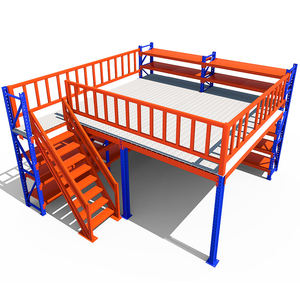
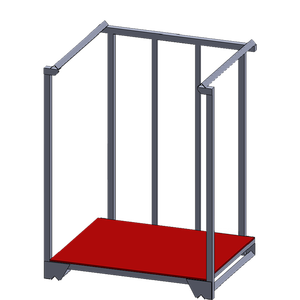
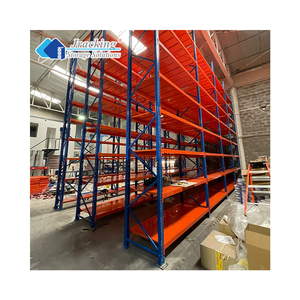
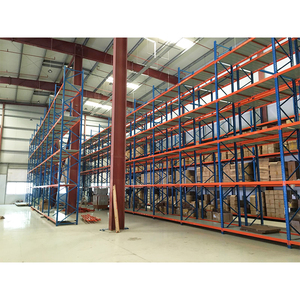
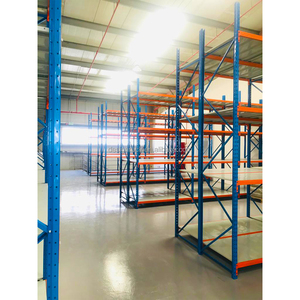
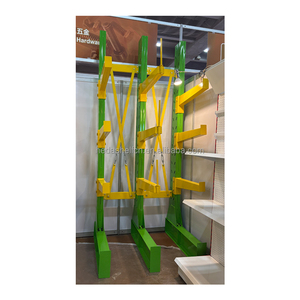
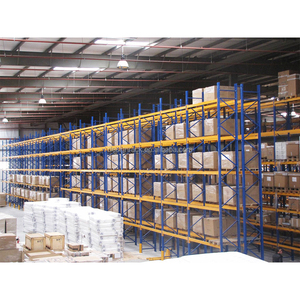
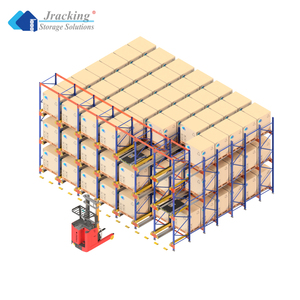
Engineering Lane Storage Racking Systems for the Canadian Industrial Landscape
In modern industrial logistics, facility operators across Canada face dual operational pressures: rapidly escalating land acquisition costs in urban distribution hubs (such as the Greater Toronto Area, Metro Vancouver, and Montreal) and extreme thermal gradients in cold-storage infrastructure. Addressing these operational challenges requires transitioning from traditional selective pallet racking to engineered Lane Storage Racking Systems—comprising Drive-In, Drive-Through, Pallet Flow, and Automated Four-Way Radio Shuttle Lane configurations.
As a global OEM racking manufacturer and exporter, our engineering group custom-manufactures high-density lane racking systems engineered strictly in compliance with Canadian structural codes, including CSA A344.1/A344.2 (User Guide and Design Standard for Steel Storage Racks) and the National Building Code of Canada (NBCC). Understanding the mechanical behavior of cold-formed structural steel under high-cube static loads and regional seismic accelerations is fundamental to ensuring long-term operational safety and maximizing volumetric efficiency.
Structural Mechanics & Load Path Analysis in High-Density Lanes
Unlike standard single-deep racking where beams support pallets directly across horizontal clear spans, lane storage systems utilize continuous cantilevered support rails (lane rails) anchored to vertical upright frames. This alters the structural dynamics of the racking assembly:
- Eccentric Load Coefficients: Forklift entry into standard Drive-In lanes introduces torsional moment forces on outer frame columns. Our structural engineers utilize cold-formed high-tensile structural steel (Q235B/Q355B grades equivalent to ASTM A1011 SS Grade 50) with heavy-duty top-bracing and back-bracing portals to absorb lateral impacts and prevent rack leaning.
- Pallet Runner Rail Deflection Limits: In radio shuttle and gravity flow lanes, rail deflection must not exceed $L/200$ under full static capacity (up to 1,500 kg per pallet position) to guarantee smooth semi-automated shuttle traversal or consistent gravity-driven pallet flow without jamming.
- Seismic Resistance (NBCC 2020 Compliance): Facilities operating in seismically active Canadian zones—such as British Columbia's Lower Mainland or the St. Lawrence Valley in Quebec—require calculated baseplate surface area, high-embedment anchor bolts, and heavy gauge diagonal frame bracing designed to withstand regional spectral acceleration response factors $S_a(0.2)$.
| Lane Storage System Type | Volumetric Density Utilization | Selectivity & Inventory Logic | Forklift Interaction Level | Ideal Canadian Industry Application |
|---|---|---|---|---|
| Drive-In / Drive-Through Racking | Up to 75% High Density | LIFO (Drive-In) / FIFO (Drive-Through) | High (Forklift drives inside lanes) | Seasonal bulk goods, FMCG batch storage |
| Radio Shuttle Lane Racking | Up to 85% Maximum Density | Flexible LIFO & FIFO Execution | Zero (Shuttle moves autonomously in lane) | Sub-zero cold storage, food & beverage hubs |
| Pallet Flow (Gravity Lane) Racking | Up to 80% High Density | Strict FIFO (First-In, First-Out) | Low (Loading bay rear, picking bay front) | Perishable food, pharmaceuticals, retail distribution |
| Push-Back Lane Racking | Up to 65% Medium-High Density | LIFO (2 to 6 pallets deep per lane) | Low (Forklift stays in front aisle) | Medium SKU counts, high-turnover general logistics |
Canadian Logistics Corridors & Regional Deployment Scenarios
How specialized lane racking configurations solve spatial, thermal, and regulatory demands across key Canadian provinces.
Greater Toronto Area (GTA) & Southern Ontario Logistics Hubs
In Peel Region (Brampton, Mississauga) and York Region, warehouse lease rates remain among the highest in North America. High-cube automated Radio Shuttle Lane systems optimize vertical clearance up to 40 feet (12 meters), maximizing pallet density per square foot while complying with Ontario’s Pre-Start Health and Safety Review (PSR) under Section 7 of the Industrial Establishments Regulation.
Metro Vancouver Port & Fraser Valley Cold Storage Facilities
In British Columbia, limited flat industrial land coupled with high seismic activity (Zone 4 seismic design considerations) mandates structural integrity. Hot-dip galvanized cold-storage lane racking systems prevent surface oxidation caused by high coastal humidity while supporting heavy seafood and agricultural export unit loads under strict NBCC seismic lateral drift limits.
Calgary-Edmonton Supply Chain & Energy Corridor
Serving Alberta’s industrial distribution networks requires heavy-duty pallet racking capable of supporting dense machinery components, oilfield equipment, and retail inventory. Cantilever and heavy-duty Drive-In lane systems are fabricated with high-yield structural steel profiles designed to withstand severe indoor ambient temperature drops down to $-40^\circ\text{C}$ without brittle steel fracture.
Montreal & St. Lawrence Food, Beverage & Pharma Sector
Quebec food distributors operating under strict Canadian Food Inspection Agency (CFIA) cleanliness directives rely on hygienic, powder-coated or stainless-steel pallet flow lanes. Seamless drop-in wire mesh decking and sanitary structural column footings ensure wash-down compatibility and full traceability for batch-controlled grocery distribution.
Macro Trends Shaping Canadian Warehousing & Lane Racking (2025–2030)
1. Decarbonization and Thermal Volume Optimization in Cold Storage
With Canadian federal carbon pricing driving up energy costs for refrigerated logistics, thermal efficiency is now directly tied to rack layout architecture. Traditional selective racking wastes over 50% of cold room volume on access aisles. By replacing aisles with Semi-Automated Four-Way Radio Shuttle Lanes, Canadian cold storage operators achieve up to 85% cubical air-space utilization. Storing more pallets within a smaller refrigerated footprint reduces overall kilowatt-hour consumption per pallet position, significantly lowering operating expenditures.
2. Transition from Manual Drive-In to Semi-Automated Radio Shuttle Lanes
While traditional manual Drive-In racking offers high density, it carries inherent operational risks: forklift drivers maneuvering inside narrow steel lanes often collide with upright columns, leading to costly maintenance downtime and safety hazards. Canadian warehouse operators are rapidly retrofitting traditional Drive-In lanes with automated radio shuttles. Shuttles lift and transport pallets autonomously down internal rails, eliminating forklift entry into the rack structure, reducing frame damage by up to 90%, and ensuring compliance with CCOHS (Canadian Centre for Occupational Health and Safety) workplace guidelines.
3. Integration with North American Standard Pallet Sizes
Canadian logistics corridors are fully integrated with the North American supply chain, relying primarily on GMA standard $48"\times40"$ (1219 mm $\times$ 1016 mm) wood and plastic pallets, as well as CHEP and PECO 4-way entry pallets. Our factory custom-engineers lane depths, rail spacing, and beam lengths specifically tailored to GMA pallet overhang and load distribution standards, ensuring seamless compatibility with standard Canadian counterbalanced and reach truck attachments.
Canadian Procurement FAQ: Engineering, Compliance & Logistics
Technical and commercial clarity for Canadian engineering leads, warehouse managers, and procurement officers.
How do Rackzzszn lane storage racking systems comply with Canadian CSA A344 standards and local building codes?
What is the typical shipping lead time for racking containers from your factory to major Canadian ports?
How does sub-zero cold storage affect steel grade selection and column baseplate design?
Can these lane racking systems be custom-engineered to integrate with our existing Canadian forklift fleet?
What export packaging standards are used to prevent shipping damage across ocean transit?
Factory Capacity & Corporate Engineering Superiority
Rackzzszn Storage Equipment Co., Ltd. is one of South China’s premier warehouse racking and industrial shelving manufacturers. Spanning over 20,000 square meters of specialized manufacturing space, our facility processes more than 50,000 tons of high-tensile structural steel annually, exporting over 1,000 ocean shipping containers per year to buyers across 60+ countries.
Our integrated manufacturing line includes over 80 advanced automated production machines: continuous cold roll-forming mills, automated CNC steel punching stations, robotic laser welding cells, automatic edge-bonding lines, and South China's longest automated electrostatic powder-coating spray line. This long spray line allows three distinct paint colors to be applied and cured in a single automated pass, guaranteeing superior finish adhesion, uniform micron thickness, and rapid turnaround times on custom corporate color matching.
In-House Technical R&D
Our engineering division delivers tailored 2D floorplan layouts, 3D structural renderings, and static/dynamic finite element load simulations prior to production rollout.
SGS Audited & Certified Quality
Every batch of raw coil steel undergoes incoming material spectroscopy and thickness checks. Structural welds undergo penetration testing to ensure zero defect rates.
Optimize Your Canadian Warehouse Capacity Today
Connect directly with our engineering team to request customized 2D/3D lane racking layouts, CSA structural calculations, and factory-direct pricing for your facility.
Inquire Now